REVIEW · ROME
Vatican Pasta Class with wine and tiramisù
Book on GetYourGuide →Operated by Cheforaday · Bookable on GetYourGuide
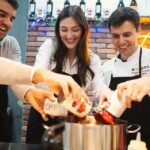
Rome tastes better when you make it. Near the Vatican, this hands-on class turns dinner into a little celebration: you’ll roll and cut fresh pasta and finish with tiramisu you assemble yourself. I love that it’s not a lecture, it’s real work at your station. One possible drawback: the sauces are prepared by the restaurant’s kitchen, so you’re not making every single component from scratch.
The vibe is relaxed and social, and the teaching style gets repeated praise across different instructors like Riccardo/Riccardo, Paolo, Mark, and Iryna. You’ll cook with an English- or Spanish-speaking guide, taste wine (red or white), do a limoncello toast, and leave with a participation certificate and recipes. If you’re late, plan ahead: arriving at least 15 minutes early matters, and latecomers may be rescheduled.
In This Review
- Key things to know before you go
- Where this pasta class fits in Rome (and why it’s a smart choice)
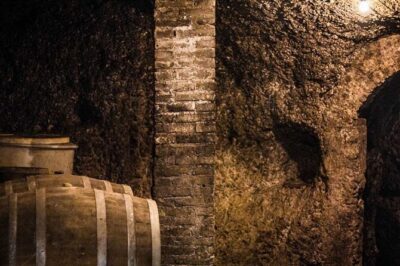
- Meeting at TAVERNA VARRONE and what the setting is like
- Rolling your own pasta: what you’ll make and what you’ll learn
- A practical tip for getting better fast
- Tiramisù with real teamwork, then your own plate
- Dietary and allergy reality check
- Wine tasting, limoncello toast, and eating what you made
- The teaching style: friendly, structured, and not overly serious
- Value and pacing: is $57 for two hours worth it?
- Who should book this class (and who should skip it)
- Should you book the Vatican Pasta Class with wine and tiramisù?
- FAQ
- Where do I meet for the cooking class?
- What will I cook during the class?
- Is wine included?
- Is limoncello included?
- Are the sauces cooked by you?
- Do I get to make my own tiramisù?
- What languages are the instructors?
- Is the class suitable for vegans or wheelchair users?
- Can children attend?
Key things to know before you go
- Handmade dough time, not just watching: you work the pasta and assemble your dessert.
- Kitchen-handled sauces: your effort goes into pasta and tiramisù.
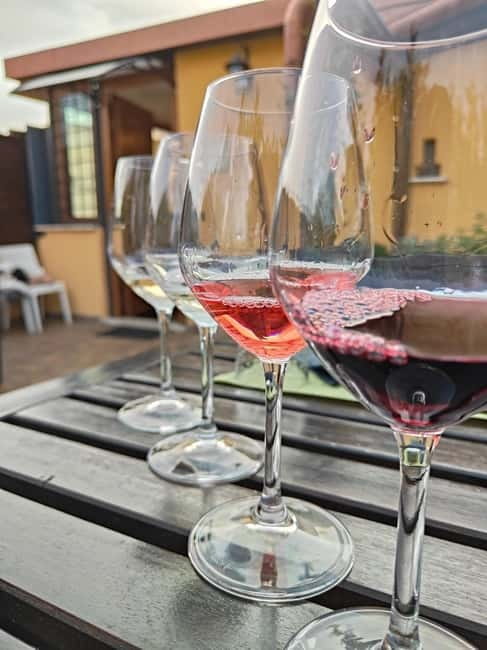
- Wine plus a limoncello toast: one glass of red or white included, plus a toast.
- A small-group feel: people often mention groups around eight for more individual attention.
- Recipes and a certificate included: you leave with both skills and a keepsake.
Where this pasta class fits in Rome (and why it’s a smart choice)
This cooking class puts you in Lazio, near the Vatican, with a meeting point at TAVERNA VARRONE. That location matters because you’re not spending your evening commuting across Rome. You’re also close to a cluster of sights, so this can work well as a “food-first” activity that doesn’t steal your whole day.
The experience is built around two Italian favorites: fresh pasta and tiramisù. If you’ve ever wondered what changes when you go from store-bought to hand-rolled pasta, this is the practical way to find out. Even the dessert teaches technique, not just assembly.
Also, the class is described as informal and fun, with instructors using jokes and conversation to keep the mood light. That’s a big deal if you don’t want your vacation to feel like homework. You’ll cook, taste, and then eat what you made, which is the fastest route to actually remembering the steps.
You can also read our reviews of more wine tours in Rome


Meeting at TAVERNA VARRONE and what the setting is like
You meet at TAVERNA VARRONE and ask for the cooking class. That’s straightforward, but still plan to arrive early so you can get oriented before the group starts. The instructions ask you to be there at least 15 minutes ahead, and late arrivals may not be accepted.
A recurring detail from past sessions is that the setting can be on a rooftop or terrace above the street level. If that’s the case on your day, you’ll likely feel a little separation from the Vatican-area chaos and noise below. It’s a nice contrast: Rome outside, kitchen energy inside.
You’ll also get practical comforts that make the evening easier. Water is available throughout the class, and everything you need (equipment and ingredients) is provided. That means you don’t arrive with a guessing game about what you’ll be expected to bring.
Rolling your own pasta: what you’ll make and what you’ll learn
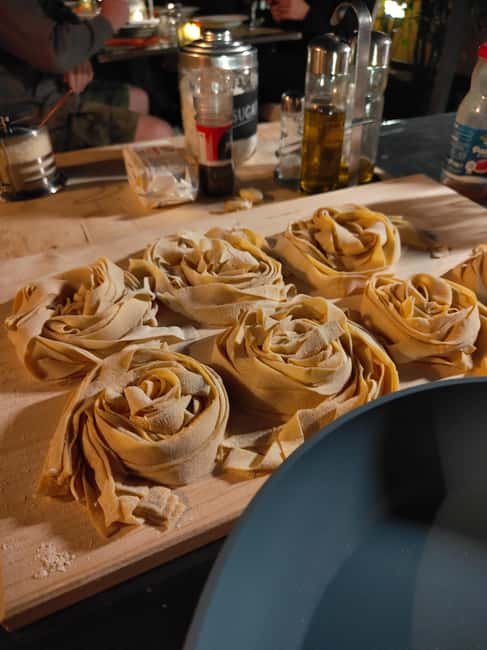
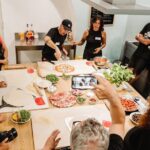
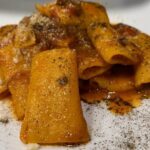
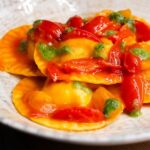
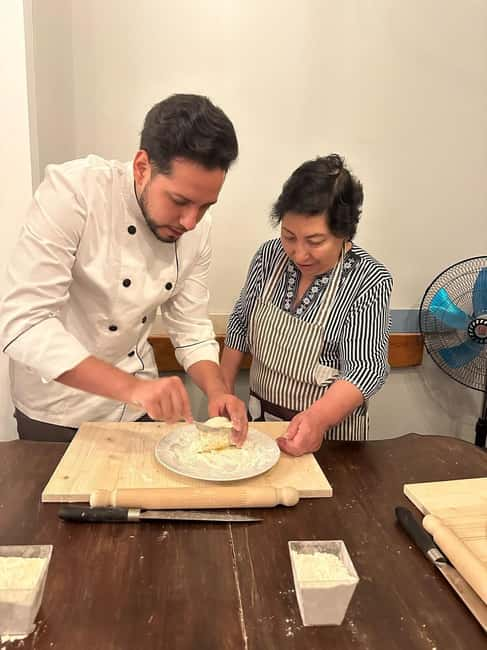
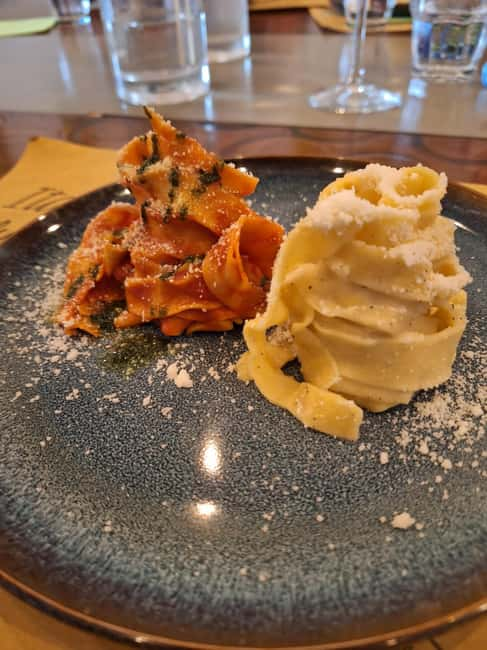
This is the core of the class, and it’s designed to be doable. You’ll make fresh pasta like tagliatelle and fettuccine (the exact shapes you’re guided toward), and you’ll learn how to roll and shape the dough so it’s not just edible—it’s satisfying.
Here’s the important detail: pasta will be cooked collectively and then divided by sauce. In plain terms, you’ll work on dough and shaping, while the kitchen handles the timing and final cooking logistics in a shared way. It’s efficient, and it also prevents the class from turning into a long wait while everyone’s pasta finishes one by one.
Another helpful note: sauces are prepared by the restaurant’s kitchen. That can actually be a plus if you want results quickly. Instead of spreading your energy across multiple complex sauces, you can focus on what you came to learn—working with the dough and understanding the texture you’re aiming for.
Instructors are also highlighted for clear explanations and the way they adjust to different skill levels. People talk about learning more than they expected because the steps are broken down and demonstrated in a way that makes sense. If you’re even slightly nervous about pasta, you’ll probably feel better once you’re at the table rolling and cutting.
A practical tip for getting better fast
Pay attention to consistency more than speed. When your dough feels right, shaping becomes easier and the final pasta texture holds up better. It’s also the kind of thing you can recreate at home later, especially with the recipes you’ll receive.
Tiramisù with real teamwork, then your own plate
After the pasta, the class shifts to dessert: tiramisu. This part is set up so you’re not stuck watching someone else do everything. You’ll create the components with the group, and then you’ll make your own tiramisù.
One key operational detail: the tiramisu cream will be prepared as a group, and each participant makes their own tiramisù. That structure keeps the class moving while still letting you feel ownership at the end. You’ll get hands-on time, but you won’t be trying to figure out timing and mixing while the whole group is waiting.
Also, plan on dessert being generous enough to satisfy you. The overall class is designed to function like a full small meal: pasta course, then tiramisù, with tasting drinks in between. People repeatedly leave describing the food as genuinely good, not just “fine for a class.”
A few more Rome tours and experiences worth a look

Dietary and allergy reality check
If you have allergies, tell the operator in advance. The class notes that they’ll do their best, but they can’t guarantee a completely allergen-free environment and cross-contamination can’t be ruled out. So if your allergy requires strict separation, plan carefully and consider discussing it directly before booking.
And note the limitations: the experience is listed as not suitable for vegans. If you’re vegan, you’d need a different kind of class or a custom menu, which isn’t promised here.
Wine tasting, limoncello toast, and eating what you made
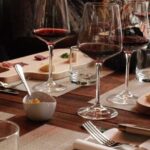
Food classes in Rome can be hit-or-miss if the drinks are just a prop. Here, wine is included as part of the meal format. You’ll get one glass of wine as a tasting—red or white—plus a limoncello toast to close the evening on a sweet note.
A recurring theme in the feedback is that people really liked the wine. Some mention that the wines were among the best they’d tasted, which is meaningful because a cooking class is a long way from a professional wine bar. It suggests the wine is selected to be enjoyable, not just to check a box.
Then comes the limoncello moment. The toast gives the event a finish, and it also helps the group relax right after dessert. When instructors keep the mood light—jokes, conversation, and easy instruction—it tends to make the drinking part feel natural rather than forced.
After everything, you eat what you made. That might sound basic, but it’s not always how cooking classes work. In this one, the meal is the product, so the final payoff matches your effort.
The teaching style: friendly, structured, and not overly serious
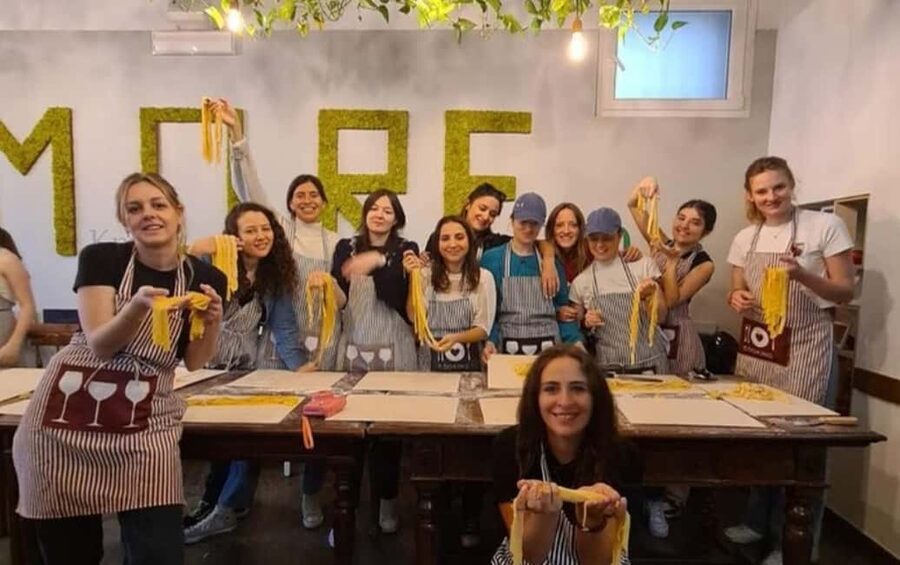
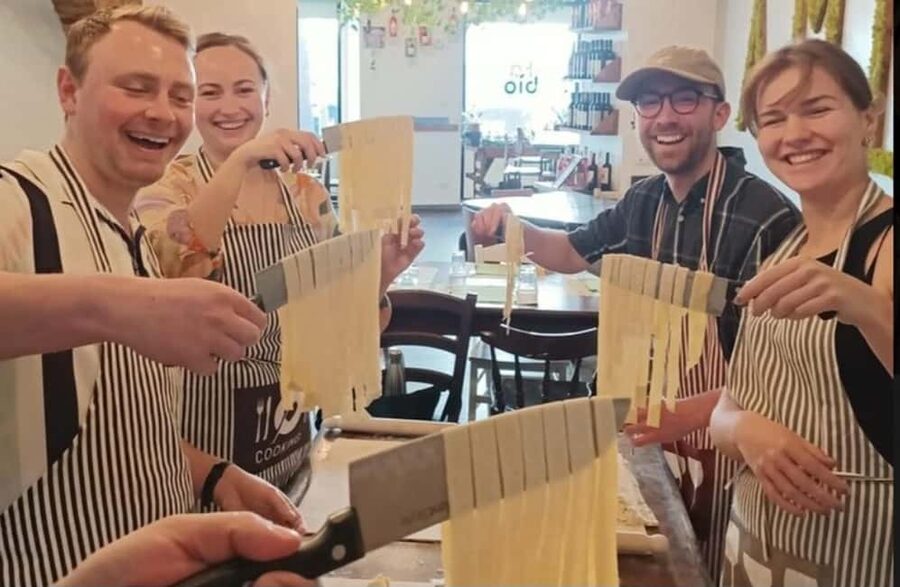
One of the most praised aspects is the way the instructors teach. People describe classes as fun, informal, and easy to follow, with chefs who crack jokes and make you feel welcome quickly. You’re not expected to be a chef; you’re expected to participate.
There’s also a theme of personal attention. Some sessions are described as small, including one report mentioning a group size of eight. In a class that short—just two hours—small group size matters because it affects how quickly you can get help if your dough is sticking or your shaping feels off.
The class is also run in English and Spanish, so you’re not stuck translating instructions in your head. If you’re comfortable in either language, you should be able to follow along without stress.
Finally, you’ll get a participation certificate and recipes to recreate the dishes at home. That’s practical. You don’t just walk away with memories; you walk away with a roadmap for how to do it again with your own ingredients and tools.
Value and pacing: is $57 for two hours worth it?
For $57 per person (2 hours), you’re paying for more than a food demo. You’re getting:
- Hands-on pasta and tiramisù work
- Wine tasting (1 glass red or white)
- A limoncello toast
- Recipes and a certificate
- Equipment and ingredients provided, plus water throughout
When you price that against paying for wine and dessert separately plus doing a standalone food workshop, the math usually works better if you plan to eat and drink anyway. The key is that the class includes the full meal payoff: you don’t just taste tiny bites and leave hungry.
The two-hour pacing also helps. Rome is busy, and it’s easy to burn a whole afternoon on transit and lines. Here, you’re scheduled for a focused block near the Vatican, and you finish with a meal instead of just a lesson.
Who should book this class (and who should skip it)
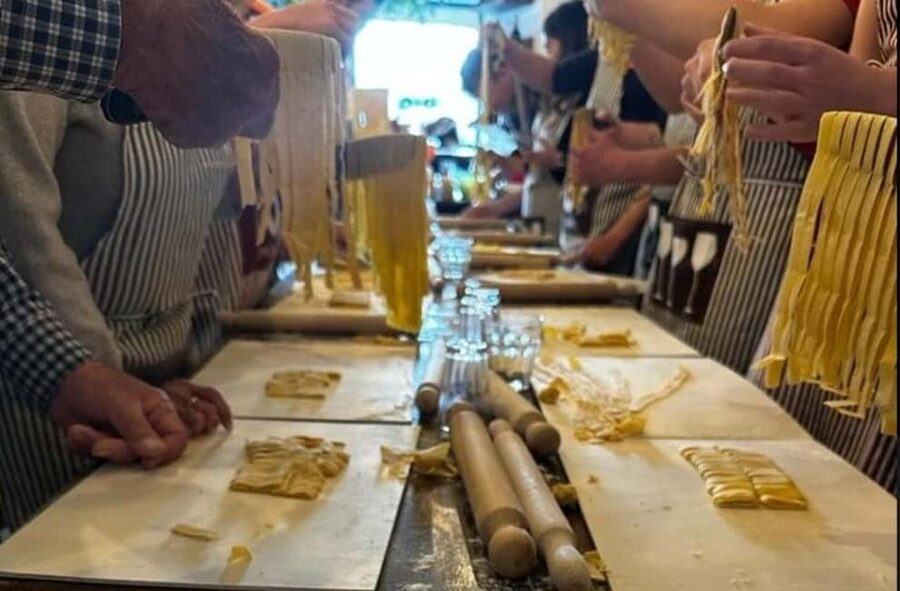
This experience is a good fit if you want an authentic-feeling evening without the stress of complicated cooking. It’s also great if you’re the type of traveler who learns best by doing. You’ll get real technique practice—rolling and shaping pasta, then building tiramisù—while still enjoying the social side of cooking together.
It’s less of a fit if:
- You use a wheelchair (not suitable)
- You’re vegan (listed as not suitable for vegans)
- You need a strictly allergen-free environment (they can’t guarantee that, and cross-contamination is possible)
It can also work for families in a specific way. Children under 7 are welcome for free, but they must share a workstation with an accompanying adult. So it’s not a kids-only class, but it’s designed to include younger ones with supervision.
One more booking consideration: the class has a minimum number of participants. If it doesn’t reach that minimum, you’ll be offered an alternative date or a full refund. For flexible travel plans, that’s usually manageable.
Should you book the Vatican Pasta Class with wine and tiramisù?
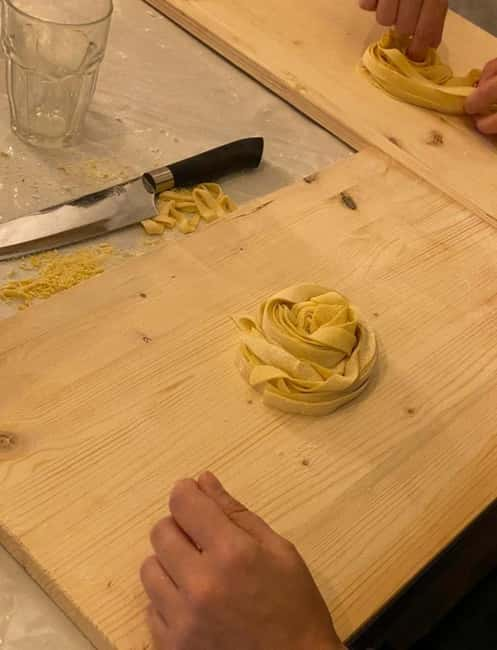
If you want a high-payoff activity near the Vatican that ends with you eating real food you made, I’d book it. The combination of handmade pasta + hands-on tiramisù + wine and limoncello is the kind of package that feels worth your time and money in Rome.
I’d especially recommend it if you’re trying to balance sightseeing with something memorable and practical. You’ll get technique you can repeat at home, not just photos. And if you like a social, laugh-friendly atmosphere, the teaching style described across instructors is exactly that: warm, structured, and not overly serious.
If you’re vegan, need strict allergen control, or rely on wheelchair accessibility, look for another option. Otherwise, this is a strong, food-centered evening that fits neatly into a Vatican-area itinerary.
FAQ
Where do I meet for the cooking class?
Meet at TAVERNA VARRONE and ask for the cooking class.
What will I cook during the class?
You’ll make fresh handmade pasta (including shapes like tagliatelle and fettuccine) and then prepare tiramisù.
Is wine included?
Yes. A wine tasting is included, with one glass of red or white.
Is limoncello included?
Yes. You’ll have a limoncello toast as part of the experience.
Are the sauces cooked by you?
No. The sauces are prepared by the restaurant’s kitchen.
Do I get to make my own tiramisù?
Yes. The tiramisù cream is prepared as a group, and then each participant makes their own tiramisù.
What languages are the instructors?
The instructor guidance is available in English and Spanish.
Is the class suitable for vegans or wheelchair users?
No. It is listed as not suitable for wheelchair users and not suitable for vegans.
Can children attend?
Yes. Children under 7 are welcome for free, but they must share a workstation with an accompanying adult.