REVIEW · PARIS
Paris: French Wine and Cheese Guided Tasting
Book on GetYourGuide →Operated by L’Oeno’Vice · Bookable on GetYourGuide
A good wine class should change how you order in Paris. This one, hosted by Simon at L’Oeno’Vice, teaches you the taste mechanics step by step, then pairs each pour with cheese in a way that actually sticks. I also like the perfume-style smell exercises using samples to help you notice what’s going on in the glass. The only watch-out: you’ll drink five tastings (2 whites, 2 reds, 1 Champagne) in about two hours, so pace yourself.
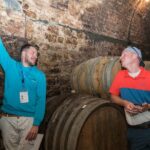
Here’s the deal: you start with a short orientation to French wine regions and how grapes and climate shape flavor, then you move into guided tasting (look, smell, sip) with quizzes and explanations. With a group capped at 8, you get time to ask questions and train your nose, not just listen.
In This Review
- Key things that make this tasting worth your time
- Where L’Oeno’Vice Fits Into a Paris Eating Plan
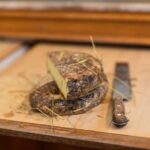
- What You’ll Taste: 2 Whites, 2 Reds, 1 Champagne and 5 Cheeses
- The Look–Smell–Sip Method (Plus Smell Training With Perfume Samples)
- How Simon Explains French Wine Regions Without Making It Complicated
- Pairing Wine With Cheese: The Rules You Can Actually Use
- The New Year Special: More Champagne and More Wine on Certain Dates
- Pacing, Group Size, and Timing in a 2-Hour Session
- Price and Value: Is $70 a Good Deal for Paris?
- Who Should Book This Wine and Cheese Tasting (and Who Should Skip)
- Should You Book This Paris Wine and Cheese Tasting?
Key things that make this tasting worth your time
- A real wine-bar owner guides the session with practical talk you can use right away when you’re hungry and ordering
- Five cheese pairings tied to each wine tasting, not random snacks
- Perfume smell comparisons that help you recognize aromas beyond just fruit
- Simple tasting method (color, aroma, then sip) that turns wine into something you can explain
- Small group size (max 8) so questions don’t get lost
- Champagne credit in the mix, including Simon’s family’s Champagne when available
Where L’Oeno’Vice Fits Into a Paris Eating Plan

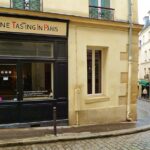
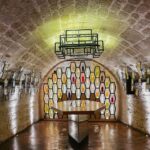
If you’ve ever stood in front of a Paris wine list thinking, I know nothing, you’ll get why this format works. The meeting place is L’Oeno’Vice, a wine bar setting that keeps the whole experience grounded in real choices people make day to day—what to pour, what to pair, and why.
I like that the class is built like a practical workshop, not a lecture. The guide starts with the big picture—how French wine regions, grapes, and climate affect taste—then pulls you into the glass quickly. That means by the time you’re tasting, you understand what you’re looking for.
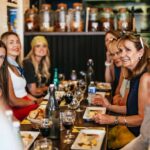
Also, the group is small. Limited to 8 participants, it’s easier to keep the pace conversational. You’re not stuck watching someone else’s questions while you quietly wonder when you’ll get to ask your own.
One more point that matters: the experience runs 2 hours. That’s long enough to learn a method and taste widely, but short enough that it doesn’t steal your whole evening.
You can also read our reviews of more food & drink experiences in Paris

What You’ll Taste: 2 Whites, 2 Reds, 1 Champagne and 5 Cheeses
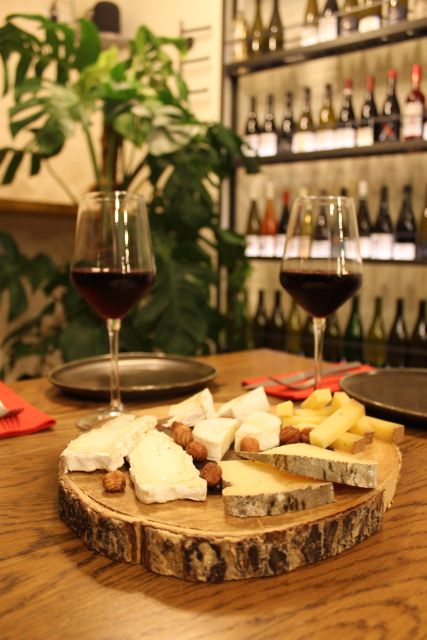
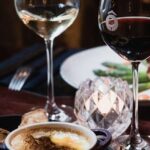
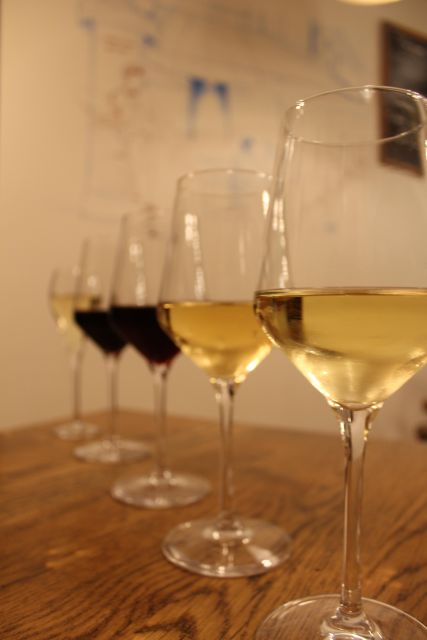
The tasting is structured around five wine pours:
- 2 white wines
- 2 red wines
- 1 glass of Champagne
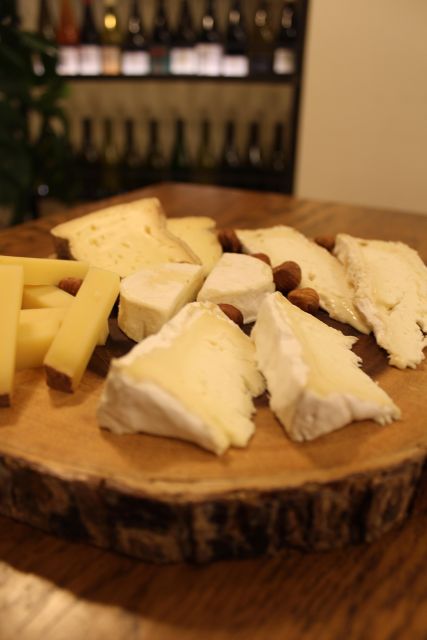
And each one lands with a different cheese, for a total of 5 kinds of cheese. This matters because wine and cheese pairing isn’t about one “perfect” match. It’s about how one flavor changes the way you perceive another. When you taste them in sequence like this, you start to see patterns you can repeat at restaurants.
You’ll also get explanations while you taste—how to think about what you’re detecting and what makes the pairing work. The goal isn’t to turn you into a sommelier. It’s to get you comfortable tasting and choosing without fear.
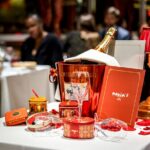
One extra detail that makes it feel more personal: the session includes Simon’s family’s Champagne as a special highlight when that’s part of the program. That’s not just a brand flex. Family production often comes with stories about where the grapes come from and what the maker cares about, and that context helps the wine make sense in your head.
If you’re the type who likes your learning with a payoff, this hits. You’re not just tasting. You’re also learning to connect the dots between region, grape, aroma, and pairing.
The Look–Smell–Sip Method (Plus Smell Training With Perfume Samples)
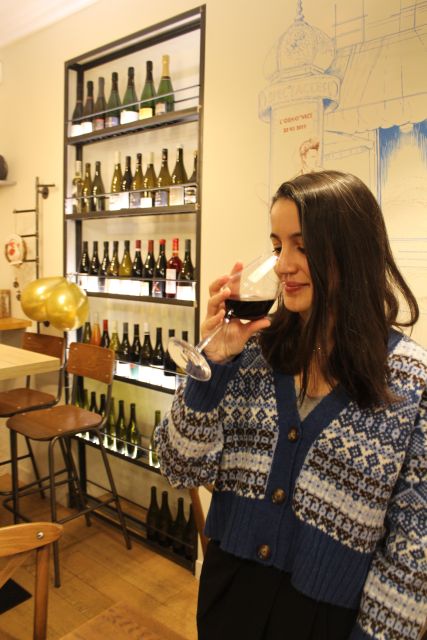
This is where the class earns its keep. The guide walks you through wine tasting in the classic order:
1) Look at the wine color
2) Smell the wine
3) Taste and talk about it
You might think wine is mostly about flavor, but a lot of what you call flavor is aroma. That’s why the smell work matters. During the tasting, you compare each wine’s smell to a different perfume sample. The idea is to train your brain to name what you’re noticing.
This is clever for two reasons. First, it’s practical: you’re building a vocabulary of aromas instead of guessing randomly. Second, it reduces pressure. If you can pick out a scent from a perfume sample, you can start mapping that ability onto wine aromas.
I like that it’s interactive. There are smell-comparison quizzes and encouragement to comment and share what you notice. In a small group, those moments don’t feel awkward. They feel like a game with real payoff.
And even if you start out thinking you’re bad at wine, the structure helps. Color gives quick clues, smell gives you leads, and taste confirms what you’ve learned to expect.
How Simon Explains French Wine Regions Without Making It Complicated
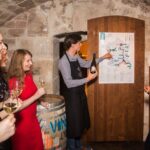
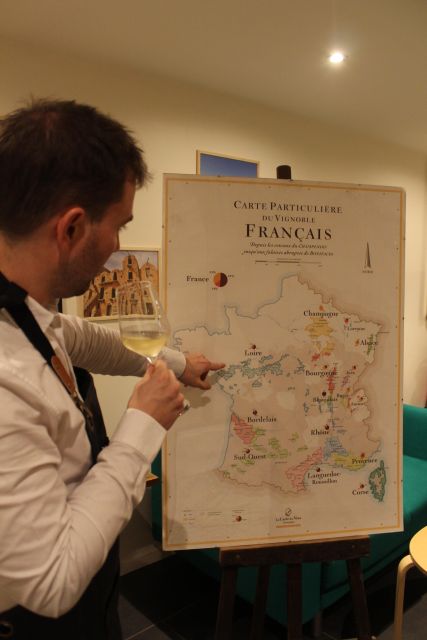
Before the tasting gets going, you get a short intro to how French wine works. The session covers:
- the history of wine
- major wine regions in France
- how climate, grape type, and location affect taste
This is the part that often turns wine tours into homework. Here, it stays focused on what will show up in your glasses. You’re not memorizing a textbook; you’re learning what to look for when you see a region name on a menu.
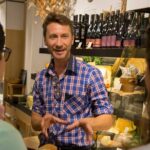
There’s also a personal angle. Simon runs the bar, and he’s connected to wine through his family background. In other words, you’re not hearing a scripted pitch—this is someone who genuinely talks about wine and expects you to ask questions.
From what people report, the explanations are clear and paced. You get enough structure to feel confident, even if you’ve never taken a tasting before.
The practical payoff: after the session, you’re ready to choose a favorite wine at Paris restaurants. That’s not marketing fluff. If you can predict the style you like, ordering becomes easy.
Pairing Wine With Cheese: The Rules You Can Actually Use
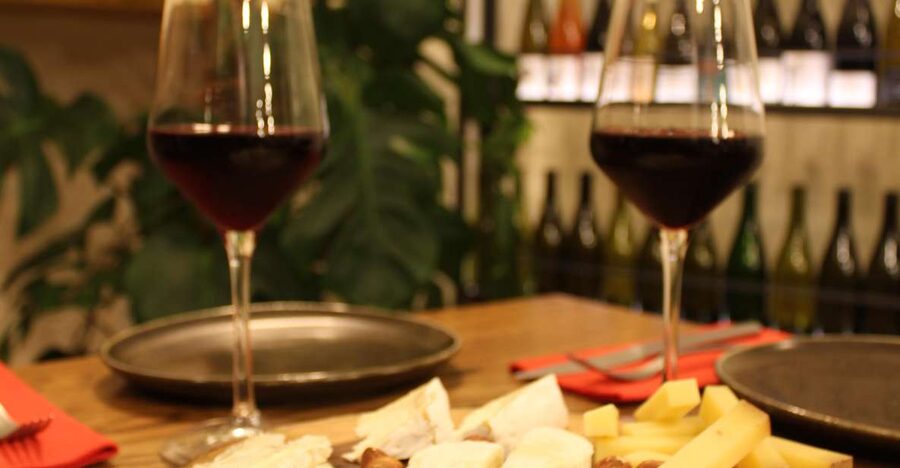
Most wine-and-cheese pairings fall into one of two traps: either they’re random, or they’re so technical you forget it five minutes later. This one keeps the pairing logic simple and repeatable.
As you go through the tasting, you’ll taste each wine with a different cheese, then get explanations about why those combinations work. You learn how aroma and taste interact, and how one food can amplify or calm the effects of wine.
This is useful even if you don’t plan to buy cheese boards for every meal. In Paris, cheese and wine are everywhere—at casual bars, sit-down bistros, and that late-night spot you find when your feet hurt. After this class, you won’t just order based on what sounds cute. You’ll understand what the pair is trying to do.
If you’re picky about learning from “why,” this is the sweet spot. You come away with tactics:
- how to match the wine’s character to the cheese’s character
- how to pay attention to aroma shifts while tasting
- how to think about balance, not just taste preference
And because you’re tasting multiple combinations in a short time, you build intuition fast.
You can also read our reviews of more guided tours in Paris

The New Year Special: More Champagne and More Wine on Certain Dates
The activity notes call out a New Year special, with more Champagne and more wine. If you’re booking around that season, factor it into your plans.
What that means for you is straightforward: Champagne becomes an even bigger presence, and the tasting may feel more celebratory than a standard run. If you like sparkling wine or want a more festive evening, that’s exactly what you want.
If you’re sensitive to alcohol or prefer lighter sessions, consider timing and how you’ll pace yourself before and after. This class still runs 2 hours, and the base structure already includes a Champagne pour. On special dates, you may want to eat a proper meal beforehand so you’re not starting from low energy.
Pacing, Group Size, and Timing in a 2-Hour Session
This is not a slow, wandering wine museum experience. You’ll taste in a deliberate order, with guidance at each step. The benefit is speed with clarity: you learn the method and apply it immediately.
Group size matters. With limited capacity to 8, you get a more personal flow. It’s easier to:
- ask follow-up questions
- hear answers that match your level
- participate during smell exercises
For timing, you should plan for a full 2-hour block. It’s enough to learn and enjoy, but not enough to turn into a long, lingering night unless you extend your evening afterward on your own.
If you’re planning dinner immediately after, give yourself a buffer. Even with small tastings, five pours adds up quickly for some people. The goal is to leave feeling smarter, not needing a nap.
Price and Value: Is $70 a Good Deal for Paris?
At $70 per person for 2 hours, you’re paying for three things at once:
- instruction (wine regions, grapes, climate, how to taste)
- guided tasting volume (2 whites, 2 reds, 1 Champagne)
- matching value (5 cheeses paired purposefully with the pours)
A lot of wine tastings in Europe are either heavy on alcohol with little instruction, or heavy on talking with small tastings. This one aims for balance: you learn a method you can repeat, and you get enough variety to actually notice differences.
The small group size supports the value. When you’re capped at 8, you don’t just get more wine; you get more interaction. That makes your questions more likely to get answered in a way that fits your preferences.
So is it worth it? If you want to walk away with practical pairing skills and a better way to order in Paris, yes. If you only want a casual sip-and-chill, you might find it more structured than you expected.
Who Should Book This Wine and Cheese Tasting (and Who Should Skip)
This experience is best for you if:
- you enjoy hands-on learning, not just watching
- you want help ordering wine in Paris
- you like pairing food and drink and figuring out why they work
It may not suit you if:
- you’re bringing children (not suitable under 18)
- you’re pregnant (not suitable for pregnant women)
- you want a very light alcohol session, since the format includes five tastings
Also, if you dislike interactive quizzes, know that the smell training is built around comparisons and participation. It’s fun, but it is part of the structure.
Should You Book This Paris Wine and Cheese Tasting?
I’d book it if your goal is simple: leave with a method. You’ll taste multiple styles, train your nose with perfume comparisons, and learn pairing logic you can use tonight, tomorrow, and back home.
Skip it if you’re looking for a long, scenery-heavy tour or if five wine tastings in two hours feels like too much. That’s the main trade-off.
If you want the sweet spot—guided tasting that improves how you order—this one is a strong choice. Book it for your first few days in Paris so you can apply what you learn at your next wine-and-cheese stop.