REVIEW · PARIS
Paris: French Wine and Cheese Guided Tasting
Book on GetYourGuide →Operated by L’Oeno’Vice · Bookable on GetYourGuide
Learning wine in Paris can feel mysterious. This one turns it into a simple, guided routine in Simon’s own bar. I like the step-by-step way you see, smell, then sip, and I like the practical pairing lesson with 5 cheese tastings. One consideration: at $82 for two hours, it’s not the cheapest wine stop, so it’s best if you want instruction, not just drinking.
You meet at L’Oeno’Vice and keep things tight with a small group (up to 8). The format stays clear and paced: you’ll sample multiple wines and match each one to a different cheese, with explanations along the way. If you’re sensitive to strong smells, you should know this includes perfume samples used to train your nose.
Afterward, you’ll be better at ordering wine in Paris without guessing. You’ll also have a few concrete ideas for pairing wine with food, so the next cheese board or restaurant meal makes more sense fast.
In This Review
- Key highlights that matter
- Meeting Simon at L’Oeno’Vice: a small-group wine bar setting
- The 2-hour routine: what you’ll do from first sip to last champagne
- The tasting method that trains your nose: perfume samples and the smell game
- Your wine lineup: 2 whites, 2 reds, and champagne you can compare
- Cheese pairings: 5 kinds that teach you how food changes wine
- The region lesson: why climate, grape, and location show up in your glass
- After the tasting: how to order wine in Paris without guessing
- Price and value: is $82 worth a 2-hour tasting?
- Who this French wine and cheese tasting is best for
- Who should skip it
- Should you book this tasting with Simon?
- FAQ
- How long is the Paris wine and cheese tasting?
- Where is the meeting point?
- What wines are included?
- How many cheeses will I try?
- What group size should I expect?
- What languages are available?
- Is this experience wheelchair accessible?
- Is it suitable for kids or pregnant women?
- What’s the cancellation policy?
- Do I need to pay right away?
Key highlights that matter

- Perfume samples help you practice smelling like a taster, not a guesser
- Five pours (2 white, 2 red, 1 champagne) follow a clear tasting order
- Five cheeses get paired one-by-one as you learn the logic behind combinations
- Small group up to 8 means more back-and-forth and easier questions
- Simon’s focus on regions gives you a map for tasting and ordering later
- You choose a favorite at the end, so the learning sticks
Meeting Simon at L’Oeno’Vice: a small-group wine bar setting
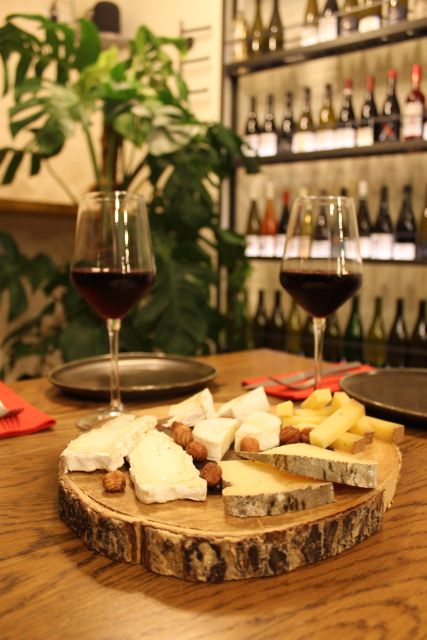
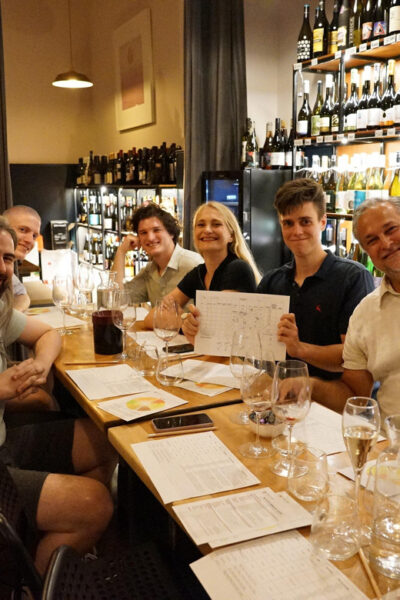
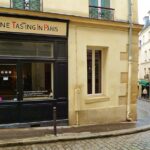
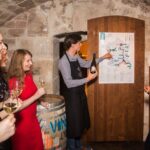
This tasting is built around a real neighborhood wine bar vibe, not a big formal classroom. You meet at L’Oeno’Vice, and once you’re inside, the whole experience stays close and personal because the group is limited to 8 people.
That size matters. With more space, it’s easy for tastings to turn into passive milling around. Here, the structure keeps you at the table, moving through the wine routine together, and asking questions without having to fight for attention.
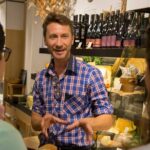
The guide is Simon, and the setup is bilingual, with English and French offered. In practice, that means you can ask the kind of basic questions that usually feel awkward in larger groups, like what you’re actually supposed to notice in the glass.
You can also read our reviews of more food & drink experiences in Paris

The 2-hour routine: what you’ll do from first sip to last champagne
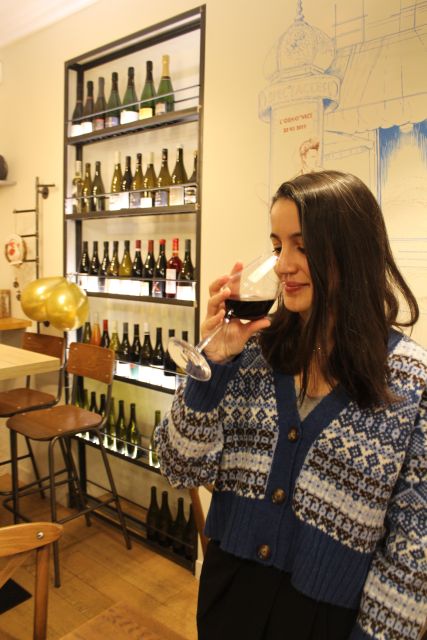
The whole session is scheduled for 2 hours, and it follows a rhythm that keeps the lesson from dragging. First you start with an intro to how wine works in France, including wine regions and how factors like climate, grape type, and location affect flavor.
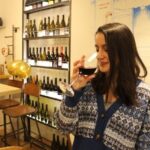
Then you switch gears into hands-on tasting. The pacing follows a classic three-step approach: look at the color, smell the wine, and then taste. You don’t need prior wine vocabulary to follow along, because the guide is focused on what to pay attention to at each stage.
The “lesson” part stays practical because you’re not tasting randomly. Across the 2 hours, you’ll drink 2 glasses of white, 2 glasses of red, and finish with 1 glass of champagne. Each pour comes with its own cheese pairing, so you learn to connect flavor to food instead of treating wine as a separate hobby.
The tasting method that trains your nose: perfume samples and the smell game
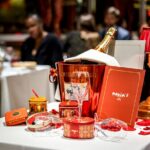
Here’s what makes this tasting more useful than a basic sampling: the guide uses perfume samples to sharpen your sense of smell. The idea is simple. If you can recognize scents on purpose, you’ll be less likely to say things like it tastes good and move on without learning anything.
In the class, you compare what you smell in each wine to a perfume scent meant to highlight aroma components. That turns tasting into something closer to troubleshooting. You start realizing that a wine isn’t just a taste. It’s also aroma, and aroma is where a lot of the “why does this feel different?” feeling comes from.
The method is also forgiving for beginners. If you don’t have words for flavors yet, you still get direction. You learn to point to what you notice: light vs. heavy aromas, fruit vs. something more earthy, and how the smell changes before the sip.
Your wine lineup: 2 whites, 2 reds, and champagne you can compare
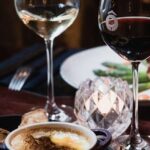
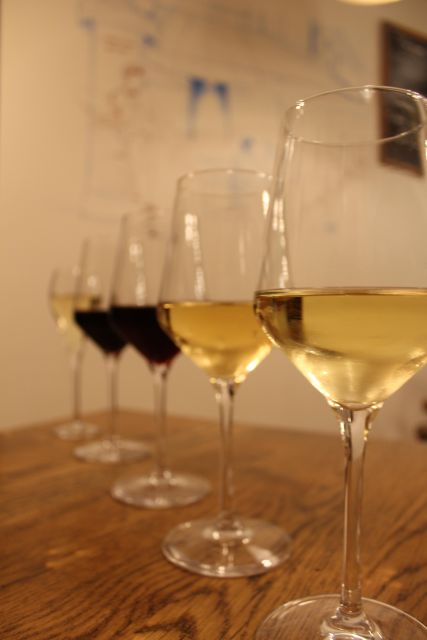
The tasting includes five wines total, split into 2 whites, 2 reds, and 1 champagne. The structure is smart because it forces comparisons. You don’t just taste one white and one red and call it a day; you experience variety within each style.
First come the whites, which helps because whites often feel more “open” early in the process. Reds follow, and you start noticing how tannin, weight, and aroma can shift from glass to glass. Finally, you end with champagne, which is a great way to reset your palate and wrap up the lesson with something celebratory.
The guide also uses the glass as a lesson tool. You look at color before smelling. That’s not fancy for show. Color can hint at how intense, mature, or style-driven a wine might be, and it trains you to observe rather than react.
Cheese pairings: 5 kinds that teach you how food changes wine
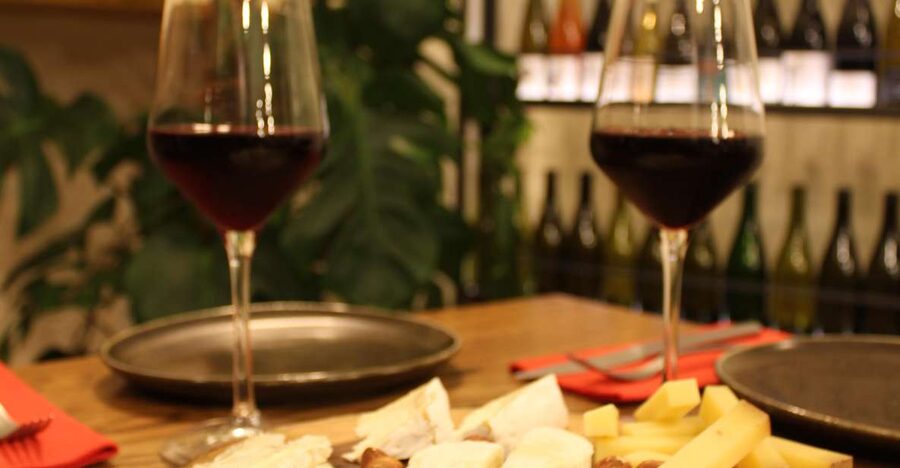
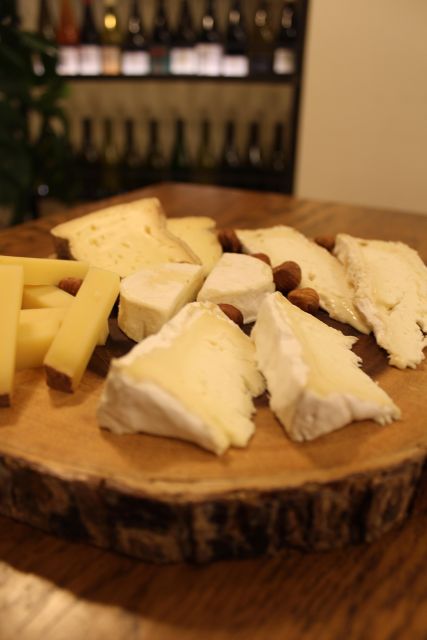
Wine is only half the equation here. You’ll taste 5 kinds of cheese, and each one is paired with a specific wine as you go through the flight.
That pairing-by-pairing setup is the best part for most people, especially if you’ve ever eaten cheese and wondered why one wine made everything better while another felt flat. In this class, the pairs are used like examples. You taste the wine, taste the cheese with it, and then learn what you should have been noticing.
One useful theme from the way the pairing is taught is connecting flavors to their source. The tasting leans into how regions overlap between wine and cheese, so you start thinking like a French shopper: if you like a certain regional character, you’ll often like the foods that go with it.
You also learn a simple pairing skill that transfers to restaurants. Some cheeses amplify acidity or fruit, while others can overpower lighter wines. The guide shows you the “why,” not just the “do this.”
You can also read our reviews of more guided tours in Paris

The region lesson: why climate, grape, and location show up in your glass
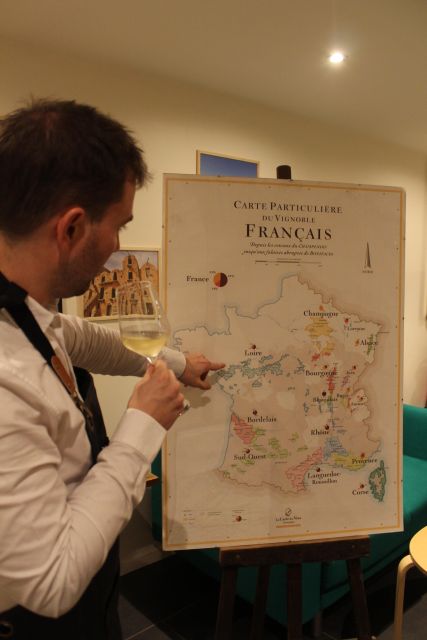
During the intro, the guide explains how French wine connects to geography. You talk through how climate, grape type, and location shape taste, and you get a map for interpreting what you’re experiencing.
This part matters because it helps you stop treating wine as a random lottery. When you understand that a cooler climate tends to support freshness, or that a grape can bring a certain flavor signature, the tasting becomes a translation exercise. You’re not memorizing names. You’re learning how to read the glass.
It also makes it easier to order later. Instead of walking into a Paris restaurant with a blank mind, you’ll have a few “if this, then that” instincts. That’s the big value in a guided tasting: it upgrades your confidence in real-world situations.
After the tasting: how to order wine in Paris without guessing
By the end of the session, you’re encouraged to pick your favorite wine. That’s more than a fun wrap-up. It’s a practical way to lock in your preferences while your senses are still dialed in.
Then comes the part you can use immediately. You’ll know how to describe what you like in a more useful way. You’ll also have a pairing sense, so you can think about the cheese or meal you’re ordering and select wine accordingly.
This is where the guided structure pays off. Without guidance, people often leave wine tastings with one favorite and no tool for repeating it. With this format, you’ve practiced the tasting steps in a short window, and that makes repeat ordering easier.
And yes, you might even find yourself more curious about French wines when you see them on menus. Instead of avoiding the wine list, you’ll feel like you can decode it.
Price and value: is $82 worth a 2-hour tasting?
At $82 per person for 2 hours, the price can feel steep if you’re only looking for free-flow fun. But the value equation changes once you look at what’s included: you get wine tasting (2 whites, 2 reds, 1 champagne) plus cheese tasting of 5 kinds, guided by an expert instructor.
You’re basically paying for a structured lesson. The perfume comparison, the see-smell-taste method, and the region explanations are not the kind of stuff most casual bars offer to customers for an hour, let alone two.
Is it pricey? A few people in the feedback did note the cost as a consideration. So my practical advice is this: if you want to learn, go. If you just want a couple sips and a snack, you’ll likely do better elsewhere.
Who this French wine and cheese tasting is best for
This tour works well for beginners. Some people who didn’t start as wine drinkers found it easy to follow because the guide focused on what to notice, not on intimidating terminology.
It’s also great for couples and small groups who want a guided evening activity with a relaxed social pace. Since the group is capped at 8, you get better conversation and questions than you would in larger tastings.
One more point: the bar environment can feel warm, and it’s a compact setting. If you’re easily uncomfortable in tight spaces, it’s worth thinking about timing and what you’ll wear.
Who should skip it
The activity is not suitable for children under 18 and is also not suitable for pregnant women. If either applies to your group, you’ll want a different kind of Paris food experience.
Also, because the tasting uses perfume samples to train smell, anyone who has strong aversions to scent-based activities should take that into account.
Should you book this tasting with Simon?
I’d book it if you want more than a drink. This is a guided, structured way to learn how to taste and how to pair in a setting you can actually enjoy in real life. The small group size and the step-by-step method make it feel doable, even if wine isn’t your thing yet.
I’d skip it if wine education sounds like homework. If you just want a quick, casual tasting with no method and no pairing lesson, spend your time elsewhere.
If you’re the type who enjoys learning while you eat, this one is a strong bet for a memorable Paris evening.
FAQ
How long is the Paris wine and cheese tasting?
It lasts 2 hours.
Where is the meeting point?
You meet at L’Oeno’Vice.
What wines are included?
You taste 2 glasses of white, 2 glasses of red, and 1 glass of champagne.
How many cheeses will I try?
You’ll have 5 kinds of cheese.
What group size should I expect?
It’s a small group limited to 8 participants.
What languages are available?
The tour guide offers English and French.
Is this experience wheelchair accessible?
Yes, it is wheelchair accessible.
Is it suitable for kids or pregnant women?
No. It is not suitable for children under 18 and not suitable for pregnant women.
What’s the cancellation policy?
You can cancel up to 24 hours in advance for a full refund.
Do I need to pay right away?
You can reserve now & pay later, meaning you can book and pay nothing today.