REVIEW · PARIS
Paris Montmartre Food & Wine Tour with Eating Europe
Book on Viator →Operated by Eating Europe Food Tours Paris · Bookable on Viator
Montmartre tastes like a real neighborhood. This 3-hour food-and-wine walk turns hilltop sights into a simple, delicious way to learn what locals actually eat—starting with bakery staples and finishing with Sacré-Cœur views. You’ll also be eating plenty of sweet items, so if you’re not a dessert person, plan your expectations (and pace yourself).
What I like most is how the stops feel practical, not staged: artisan shops, classic regional flavors, and a guide who adds context as you go. In my favorite moments, guides like Salma, Nora, Jesita, Lilly, and Selma bring the neighborhood to life, including easy-to-use tips so you’ll know where to go next.
In This Review
- Key points before you go
- Price and what you’re really paying for
- Start at Le Pain Quotidien, then head into Montmartre like a local
- Boulangerie Alexine: the bread basics taste like France
- La Mascotte Montmartre: oysters plus crisp white wine
- Boucherie Jacky Gaudin: pâté en crout in a real butcher shop
- Le Saint-Jean: aligot sausage served tableside
- Butte Fromagère: a curated PDO cheese tasting with fruit jelly
- Chocolate and citrus stops: bean-to-bar and sunshine in a jar
- Belle Époque moments: Le Bateau-Lavoir, La Maison Rose, Clos Montmartre, Le Lapin Agile
- Pierre Hermé macarons, then the Sacré-Cœur finish with real views
- Who this Montmartre tour is best for (and who should think twice)
- Should you book this tour?
- FAQ
- How long is the Paris Montmartre Food & Wine Tour?
- Where does the tour start and end?
- Is the tour offered in English?
- What types of food and drinks are included?
- Can the tour accommodate dietary requirements?
- Is this tour suitable for severe food allergies?
Key points before you go
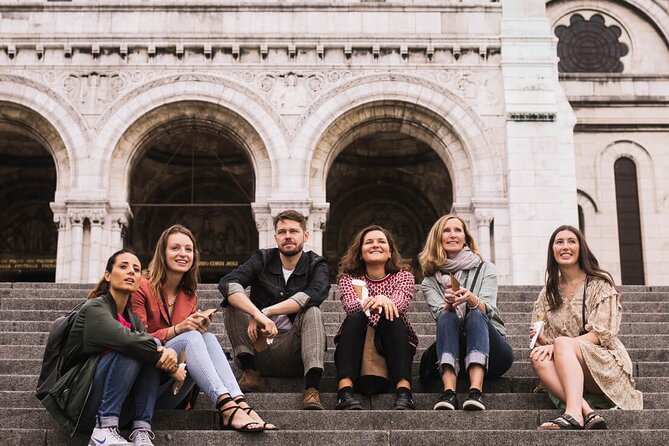
- Small group size (max 10) keeps the walk friendly and makes it easier to hear your guide.
- Wine is built in, not treated as an optional add-on, especially with the oyster stop.
- You’ll hit both savory and sweet classics, from sourdough and cheese to chocolate-hazelnut spread and macarons.
- Montmartre landmarks aren’t just photos—you’ll also pause for art-history moments like Le Bateau-Lavoir and Le Lapin Agile.
- The finish is a payoff: ending at Sacré-Cœur gives you a strong “done and earned” view.
Price and what you’re really paying for
At $162.05 per person for about 3 hours, this isn’t a bargain in the “cheap snacks” sense. But it does feel like good value once you picture what’s included: multiple tastings at specialist shops (bakery bread, oysters with wine, pâté, sausage with aligot, PDO cheese samples, chocolate and citrus goodies, plus a macaron tasting) along with a local English-speaking guide.
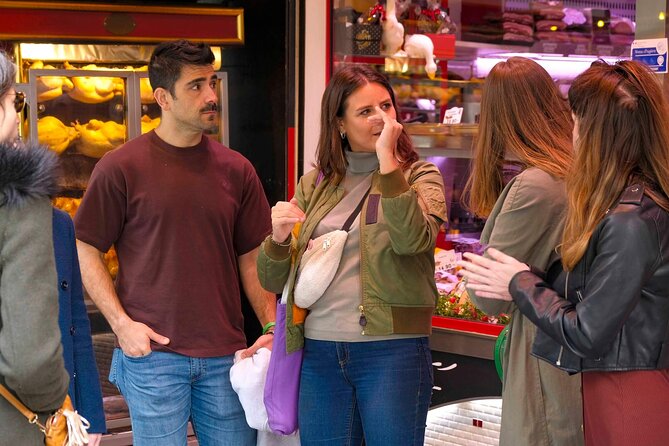
Instead of buying separate tickets for each place yourself, you’re paying for two things that are hard to DIY well in Montmartre: a curated route that makes sense on foot, and tastings that are coordinated so you’re not hunting menus and trying to guess portion sizes. And since it’s a small group, the guide can keep the pace steady and explain what you’re tasting as you go.
You can also read our reviews of more food & drink experiences in Paris


Start at Le Pain Quotidien, then head into Montmartre like a local
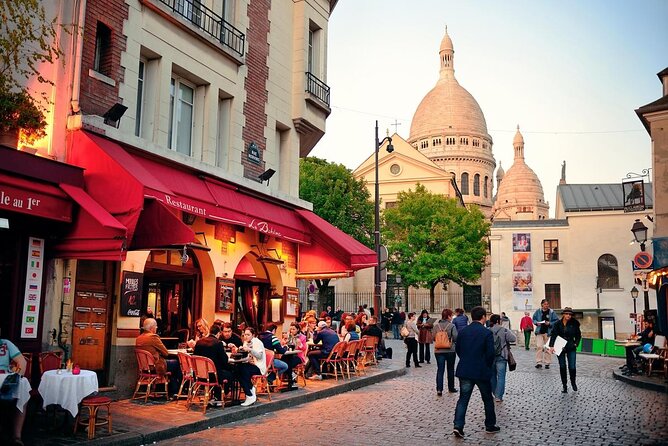
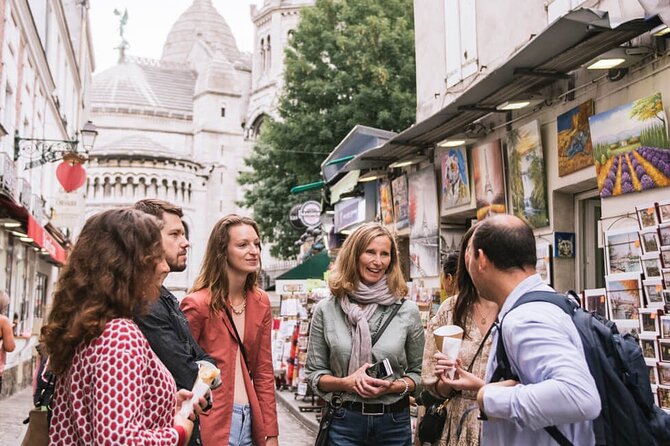
Your tour starts at Le Pain Quotidien on Rue Lepic, right in Montmartre’s working neighborhood. That’s a smart setup because it gets you moving immediately into the kind of streets you’d otherwise wander past while chasing only postcard landmarks.
This also matters because Montmartre is famous for views, but the best experiences come from the in-between blocks: neighborhood bakeries, cheese shops with knowledgeable staff, and family-run eateries. The tour keeps you from bouncing around randomly. You follow a plan, then you get to enjoy the wandering.
From a practical standpoint, plan for a moderate walking-and-hill experience. The ending at Sacré-Cœur alone tells you this will be more active than a flat city stroll, and several stops are set up to work in a tight time window.
Boulangerie Alexine: the bread basics taste like France
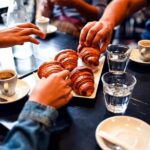
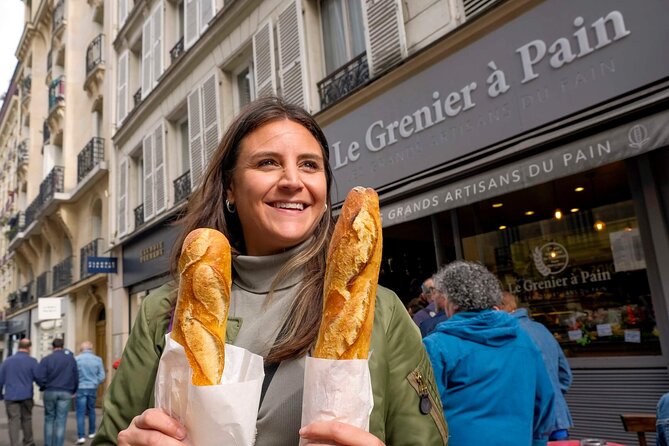
Your first stop is Boulangerie Alexine, a real boulangerie de quartier with an emphasis on organic ingredients and traditional sourdough. The tastings are simple but powerful: a piece of their baguette tradition and a flaky pain au chocolat.
This is where you learn something useful fast: French pastry isn’t just about sugar. The baguette part gives you a baseline for what “good bread” means here—crust, chew, and flavor coming from fermentation. Then the pain au chocolat shows you how serious French bakers are about butter and technique, not just filling.
A small consideration: this early stop is baked-food focused, so come hungry. If you arrive having already eaten a big breakfast, the later cheese and savory tastings may feel smaller than they should.
La Mascotte Montmartre: oysters plus crisp white wine
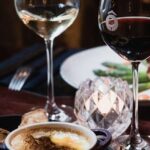
At La Mascotte Montmartre, you step into a family-owned institution with local roots reaching back to 1889. Their specialty is seafood, and the tasting is a flight of four French oysters, each from a different coastal region, paired with crisp white wine.
This isn’t “one oyster, move on.” The idea is comparison: you’re tasting how different origins change salinity, texture, and the ocean flavor. Pairing it with white wine makes it easier to judge balance instead of getting stuck with only briny impressions.
If you’re not an oyster person, don’t ignore this stop too quickly. The tour is designed for education as much as eating, and the wine pairing helps you taste more than you think you will. For many people, oysters become the surprise highlight.
Boucherie Jacky Gaudin: pâté en crout in a real butcher shop
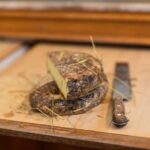
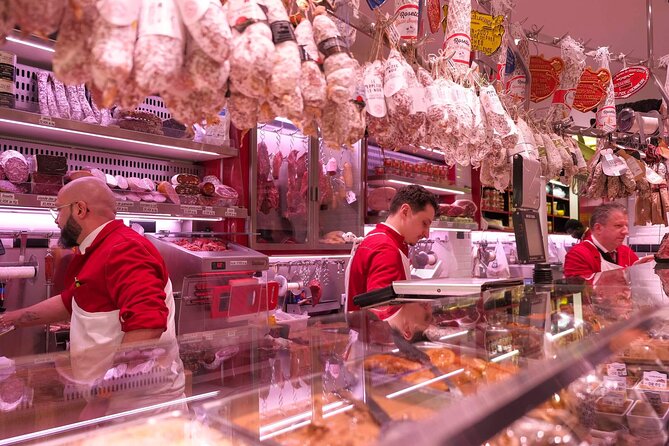
Next is Boucherie Jacky Gaudin, an artisan butcher shop known for French meats and house-made specialties. Here, you sample a slice of their pâté en crout, a classic charcuterie item.
This stop works well because it turns “French food” from a vague idea into an ingredient lesson. You get to taste the relationship between pastry and filling—how the crust protects moisture and adds structure, while the meat brings deep savory flavor.
One drawback to note: if you’re hoping for a lot of variety in temperature (hot vs cold) or lots of different meat textures, this stop is short and focused. It’s meant as a taste and a snapshot of everyday Parisian food.
A few more Paris tours and experiences worth a look

Le Saint-Jean: aligot sausage served tableside
At Le Saint-Jean, you’ll experience a classic regional specialty: sausage with aligot. Aligot is mashed potatoes mixed with fresh cheese and cream, stretched tableside so you see the famous cheesy texture right as it’s served.
This is comfort food with theater, and it’s one of the most memorable parts of the tour because it’s not just about eating—it’s about watching technique. The tableside stretch changes the whole experience: you’re more likely to notice texture, thickness, and that long, elastic pull that aligot is known for.
If you like rich food, this is a win. If you prefer lighter meals, plan to slow down here. Aligot is filling, and you still have cheese, chocolate, and macarons ahead.
Butte Fromagère: a curated PDO cheese tasting with fruit jelly
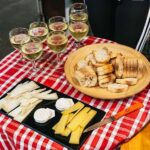
Then you visit a cheese shop—Butte Fromagère—focused on high-quality cheeses from small independent producers. You get a curated tasting of PDO cheeses made from cow, goat, and sheep’s milk, paired with sweet fruit jelly.
This stop is valuable because it trains your palate in a way that transfers to the rest of France. You’re not just eating cheese. You’re learning how milk type and production quality change flavor, and how fruit jelly can soften sharpness or highlight sweetness.
The fruit jelly pairing is also a smart move if you’ve ever had cheese and fruit that didn’t work. Here it’s used to create balance, not just to add another flavor for decoration.
Chocolate and citrus stops: bean-to-bar and sunshine in a jar
After cheese, the tour turns sweet-smart.
First comes Le Chocolat Alain Ducasse, Le Comptoir A l’Etoile d’Or. This artisan shop is known for roasting 100% of its own cocoa beans in their central city workshop, so you’re tasting a more direct bean-to-bar approach. You’ll sample signature chocolate plus a chocolate-hazelnut spread.
Then you go to Lemon Story, where citrus-based liqueurs and jams are made from rare varieties grown on their family farm. You’ll taste a citrus jam and a house-made amaretti cookie flavored with almond and citrus zest.
These two stops are not random desserts. They each represent a different way France treats sweetness: chocolate that emphasizes ingredient sourcing, and citrus products that feel bright and grown-up, not just sugary.
A practical tip: since you’ll be tasting several sweets in a row, drink water when you can. It helps reset your mouth so you can actually notice differences between chocolate, jam, and cookie flavors.
Belle Époque moments: Le Bateau-Lavoir, La Maison Rose, Clos Montmartre, Le Lapin Agile
Food fuels the tour, but Montmartre’s identity is art and bohemian history. Between tastings, you’ll pause at a set of historic landmarks that explain why this neighborhood mattered.
You’ll explore the historic Le Bateau-Lavoir, known as a hub of Belle Époque art, linked to artists like Picasso and Modigliani. You’ll also admire La Maison Rose, tied to a tragic love story that inspired Picasso’s Blue Period.
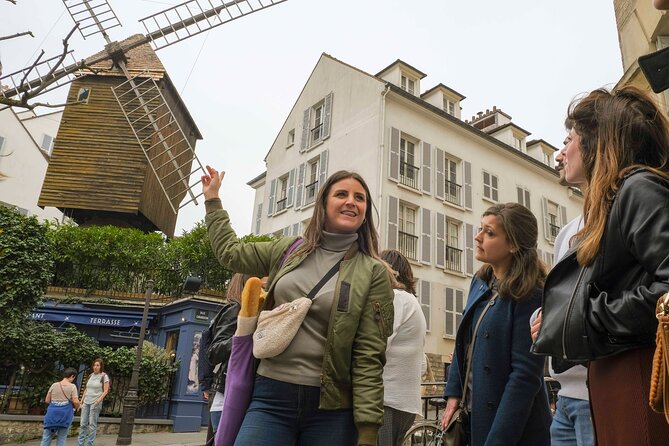
Then comes Clos Montmartre, one of the last vineyards in central Paris. Even if you don’t think of vineyards as a city thing, this stop is a reminder that Montmartre still holds layers of farming and seasonal celebration—especially with the Harvest Festival connection.
Finally, you’ll step into Le Lapin Agile, an iconic cabaret dating back to the 1850s, once a gathering spot for struggling artists like Picasso, Modigliani, and Utrillo.
The value here is timing. You’re learning the neighborhood as you walk it, not after it. The stops make the area feel lived-in, and they help you connect the “pretty streets” with the stories that created Montmartre’s reputation.
Pierre Hermé macarons, then the Sacré-Cœur finish with real views
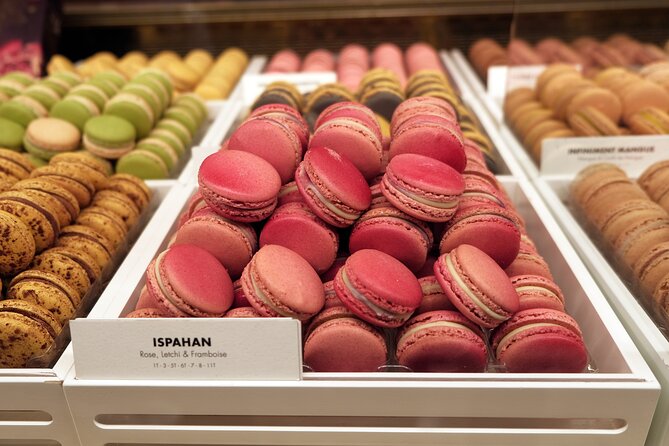
The tour ends with a famous pastry name: Pierre Hermé. You’ll enjoy a macaron tasting with signature flavors such as rose, raspberry, and lychee, or milk chocolate and passion fruit.
This stop is a strong closer because it brings everything together: pastry craft, seasonal flavor thinking, and that final bite you can take home in your head even if you share it (or don’t).
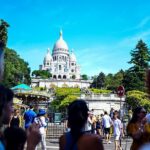
Then you finish at Sacré-Cœur. Seeing the basilica isn’t the hard part—it’s what it gives you afterward: a top-of-the-hill moment where you look back over Paris and understand why people come to Montmartre for views in the first place. If you’re taking photos, give yourself time at the end. The tour naturally puts you there right when the day feels like it’s reaching its point.
Who this Montmartre tour is best for (and who should think twice)
This is ideal for you if:
- you want a guided walk through Montmartre that includes real food stops, not just sightseeing
- you enjoy a mix of savory and sweet (bread, oysters, cheese, sausage, chocolate, macarons)
- you like having an expert explain what you’re tasting while you’re still standing in front of the shop
- you appreciate small group energy; the tour caps at 10 people and many groups feel very manageable
Think twice if:
- you don’t like eating a lot of sweets in one session. Between pain au chocolat, chocolate, citrus cookies/jam, and macarons, dessert is a main theme.
- you have a sensitivity to rich, filling foods. Aligot and sausage come partway through, and the later cheese and chocolate add more weight.
- you’re hoping for a mostly flat stroll. Montmartre’s hills mean you’ll be walking uphill.
Should you book this tour?
If you’re the type of traveler who wants your day to feel both delicious and purposeful, I’d book it. You get a high density of tastings across very specific food categories—bakery, seafood, butcher counter, cheese counter, chocolate workshop, and pastry icon—plus wine where it fits naturally.
The biggest decision is your personal taste balance. If you love French classics and don’t mind that dessert shows up more than once, this tour is an easy yes. If you prefer savory over sweet, you’ll still likely enjoy it, but go in hungry for food lessons and ready to pace desserts rather than sample everything in one rush.
FAQ
How long is the Paris Montmartre Food & Wine Tour?
It runs for about 3 hours.
Where does the tour start and end?
It starts at Le Pain Quotidien, 31 Rue Lepic, 75018 Paris, and ends at Basilique du Sacré-Cœur de Montmartre, 35 Rue du Chevalier de la Barre, 75018 Paris.
Is the tour offered in English?
Yes. The guide is listed as a local English-speaking guide and the tour is offered in English.
What types of food and drinks are included?
You’ll taste items including baguette and pain au chocolat, an oyster flight with white wine, pâté en crout, sausage with aligot, PDO cheese with fruit jelly, artisan chocolate and chocolate-hazelnut spread, citrus jam with an amaretti cookie, plus a macaron tasting.
Can the tour accommodate dietary requirements?
The company says it will do its best to accommodate vegetarians, gluten-free guests, or other dietary needs if you add a note at booking or email ahead.
Is this tour suitable for severe food allergies?
No. It isn’t suitable for those with severe or life-threatening food allergies to ingredients found on the tour.