REVIEW · LYON
From Lyon: Golden Stones Beaujolais Wine Tasting Tour
Book on GetYourGuide →Operated by TASTY LYON · Bookable on GetYourGuide
Beaujolais feels close when you taste it. This Lyon-to-southern-Beaujolais tour mixes wine education, hilltop scenery, and the medieval magic of Oingt with its famous golden-stone streets. You’ll finish at a family winery for a friendly tasting and local bites.
Two things I really like: the small group size (limited to 8) keeps the day relaxed and question-friendly, and you don’t just sample wine—you learn the why behind it from the winemakers themselves. You also get a proper food pairing with a traditional mâchon breakfast style spread, not just a token snack.
One consideration: it’s a half-day format, so plan on some time in the van and a relatively short walk in Oingt.
In This Review
- Key highlights worth planning for
- From Bellecour Square to Beaujolais hills: the day’s rhythm
- How the Beaujolais learning actually works (terroir, then taste)
- The viewpoint stop: wine with a sense of place
- Oingt and the golden-stone streets: medieval charm on a tight schedule
- The family winery finish: meet the winemaker, then taste with mâchon
- Value for money: what $116 really buys you
- Who this tour suits best (and who might want a different format)
- Practical tips so you enjoy every stop
- Should you book the Golden Stones Beaujolais Wine Tasting Tour?
- FAQ
- What’s the duration of the Lyon to Beaujolais Golden Stones tour?
- Where do I meet the tour?
- Is wine tasting included?
- What food is included?
- Is bottled water provided?
- Is the tour wheelchair accessible?
- Are pets or baby strollers allowed?
- How big is the group and what language is the guide?
Key highlights worth planning for
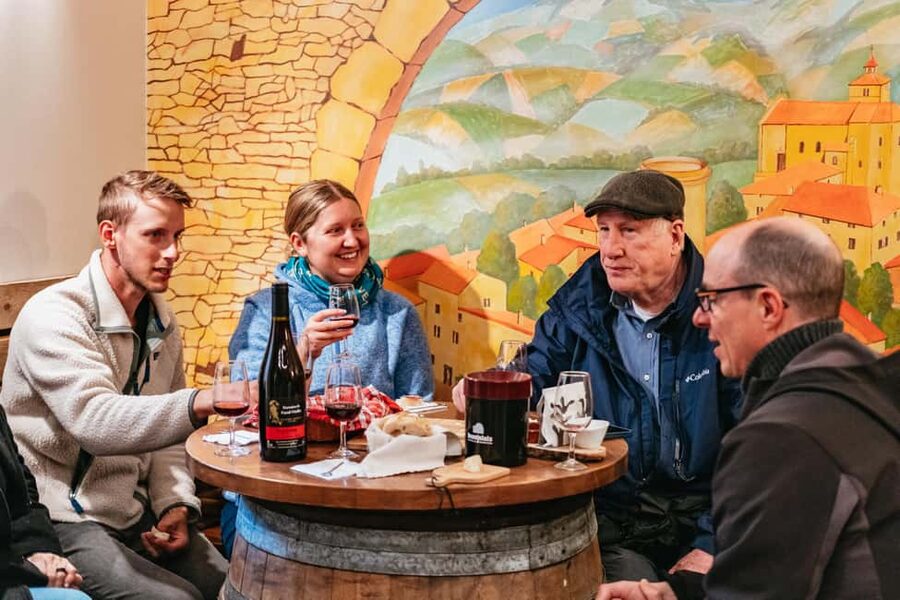
Small group capped at 8 for a more personal feel
Wine tasting plus terroir talk in a vaulted cellar (great for learning the basics fast)
Oingt, a 12th-century village with golden-stone streets and medieval squares
Family winery visit with the winemaker and a tasting that’s part craft, part conversation
Mâchon-style breakfast snacks and pastries that make the wine stops feel local
English-speaking driver-guide who keeps the pace moving without rushing you
From Bellecour Square to Beaujolais hills: the day’s rhythm
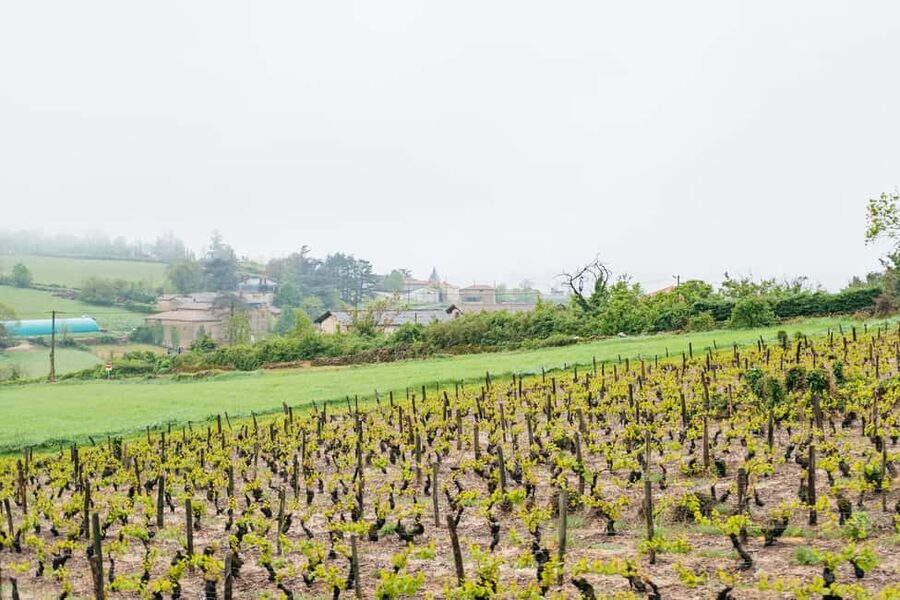
This tour starts right in Lyon, meeting in front of the Lyon tourist office at Bellecour Square. From there, you’re headed north into the hills of Beaujolais, a region often described as the Tuscany of France—think gentle slopes, vineyard rows, and villages perched where you can see for miles.
The schedule is built for “taste and see” rather than slow touring. The total time is 258 minutes (a little over 4 hours), so you’re getting enough stops to feel like you changed scenery, but it’s still short enough that you won’t feel wrecked for the rest of the day.
You’re riding in an air-conditioned minivan, with a professional driver-guide who handles the route and adds the human context—what you’re seeing, what you’re tasting, and how local winemaking works. In reviews, the guides often get praised for keeping the day smooth and making time for questions, so you’re not left guessing what you’re looking at.
You can also read our reviews of more food & drink experiences in Lyon
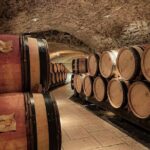
How the Beaujolais learning actually works (terroir, then taste)
The core of this tour is not just pouring wine. It’s building a mental map of Beaujolais—how different vineyards can taste different—using the idea of terroir.
You’ll start with an introduction to wine tasting in a setting that’s described as a vaulted cellar. That matters more than it sounds. A cellar creates a practical classroom atmosphere: quieter, consistent temperature, and less distraction, so you can focus on what to notice in the glass. Then your guide connects that experience to what you’ll see outside later.
Here’s what you can take from the terroir explanation as a useful tool for your trip. When someone talks about terroir, they’re really pointing you to a few big drivers of flavor:
- how grapes grow based on vineyard location
- how soils and microclimates affect ripening and balance
- how winemaking choices interact with what the vineyard already offers
The tasting format varies stop-to-stop, but the tour is built around giving you multiple reference points. Many people come away feeling like they can describe what they liked and why—white, rosé, and reds all show up as you go from viewpoint to village to winery.
The viewpoint stop: wine with a sense of place
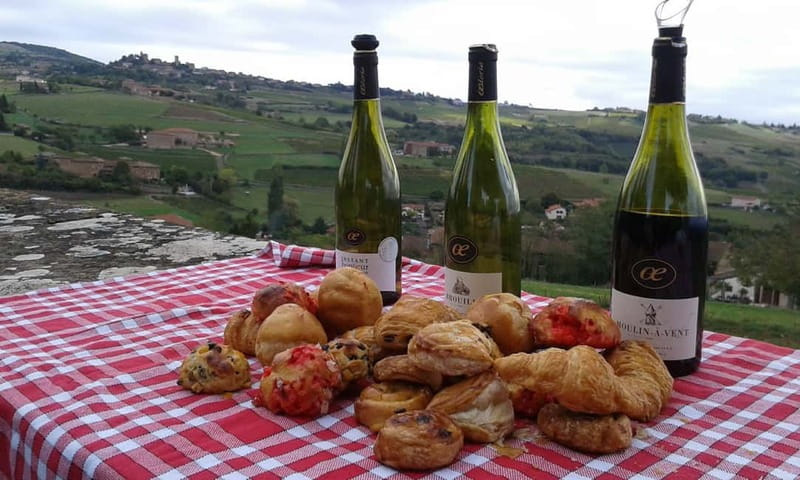
Before you get deep into village wandering, the tour typically includes a scenic break with tastings and small bites. Several groups describe this as an outdoor tasting with a view over the valley, sometimes paired with pastry or croissant-style snacks.
This first tasting moment is a smart way to start. If you taste in the middle of pretty hills, your brain automatically ties the wine to the setting. Even if you’re new to Beaujolais, you’ll start learning faster because you can later compare flavors to what you saw.
Also, this is where the day’s food elements begin. You’re not eating a full meal, but you’re getting snacks and pastries at key times so wine doesn’t feel random or separate from the rest of the experience.
If you’re sensitive to motion sickness, be aware that winding rural roads can add up. At least one past group noted that their van felt like a stick shift and that AC wasn’t running as expected. If that’s you, consider bringing motion-sickness medication and plan to sit where you feel most stable.
Oingt and the golden-stone streets: medieval charm on a tight schedule
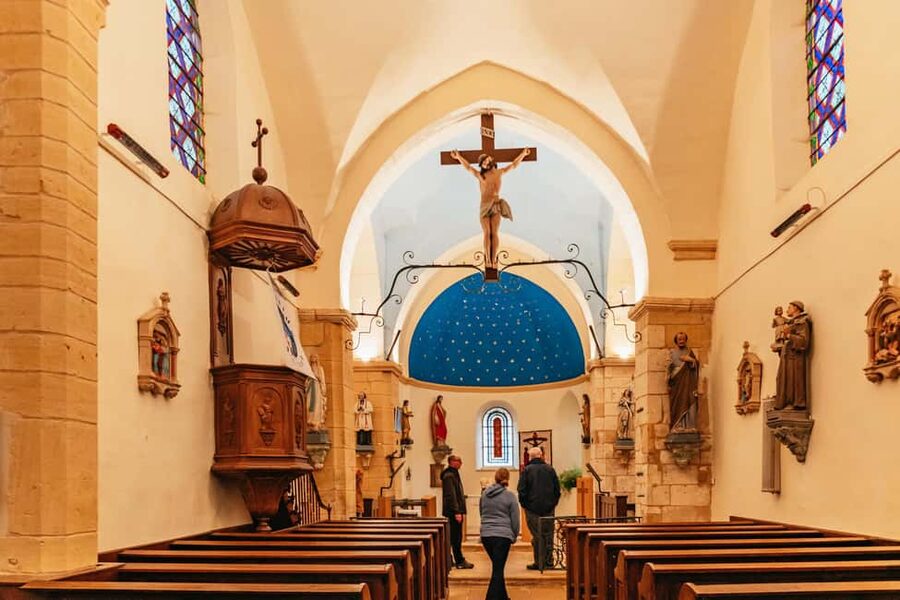
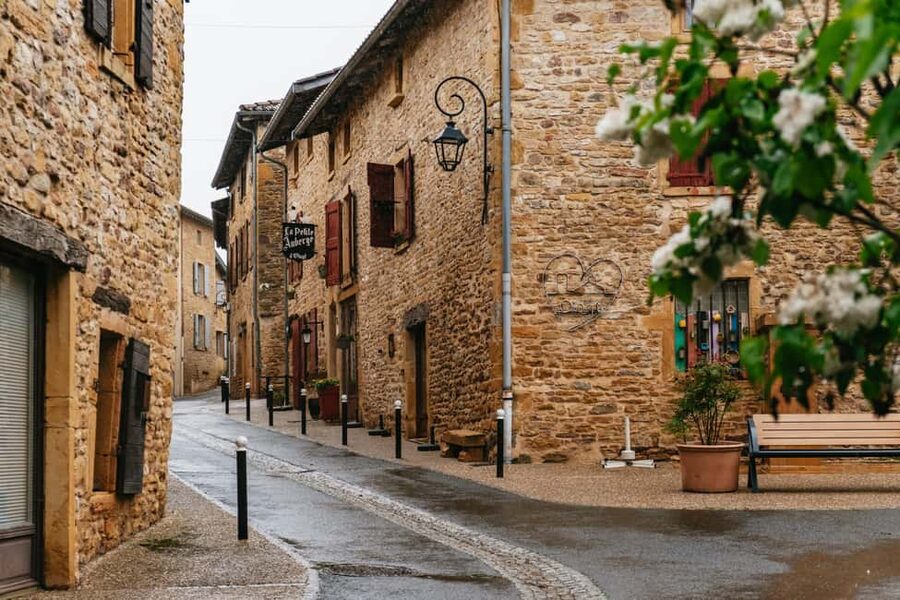
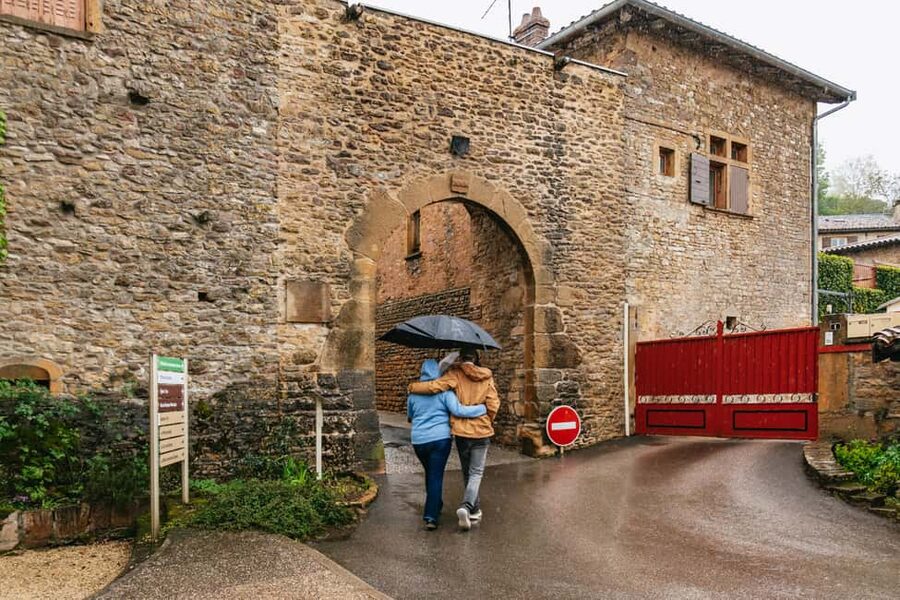
The highlight village on this tour is Oingt, a 12th-century town listed among France’s Most Beautiful Villages. You’ll travel there after the wine introduction and terroir talk, then get time to stroll through its medieval streets and squares.
Oingt’s claim to fame is the golden-stone look—warm-colored masonry that makes the village feel sunlit even when the light changes. It’s a visual break from the vineyard stops and a chance to see how people lived there long before wine tourism existed.
Now for the reality check: because the total tour time is about 4 hours, your Oingt time is limited. That’s not a flaw—it’s the structure—but it does mean you should pick what you want from the village. If you want maximum wandering and shopping time, you’ll likely want to come back on your own afterward. If you’re happy with a quick loop, photo stops, and a few relaxed minutes in a medieval square, this format is a good fit.
In reviews, Oingt consistently ranks as a top moment—especially for the look of the streets and for the simple pleasure of getting out of the van and walking.
The family winery finish: meet the winemaker, then taste with mâchon
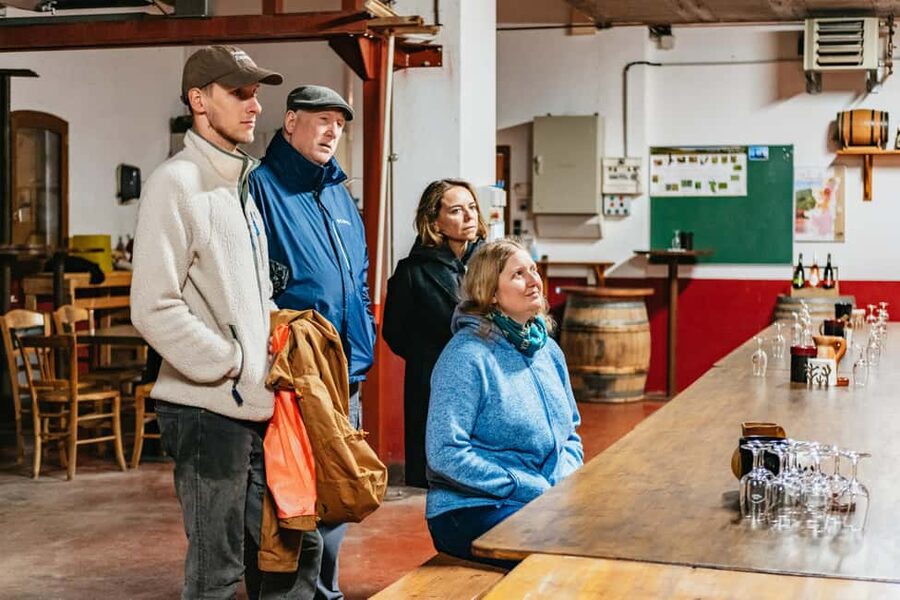
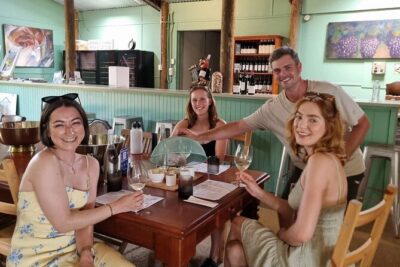
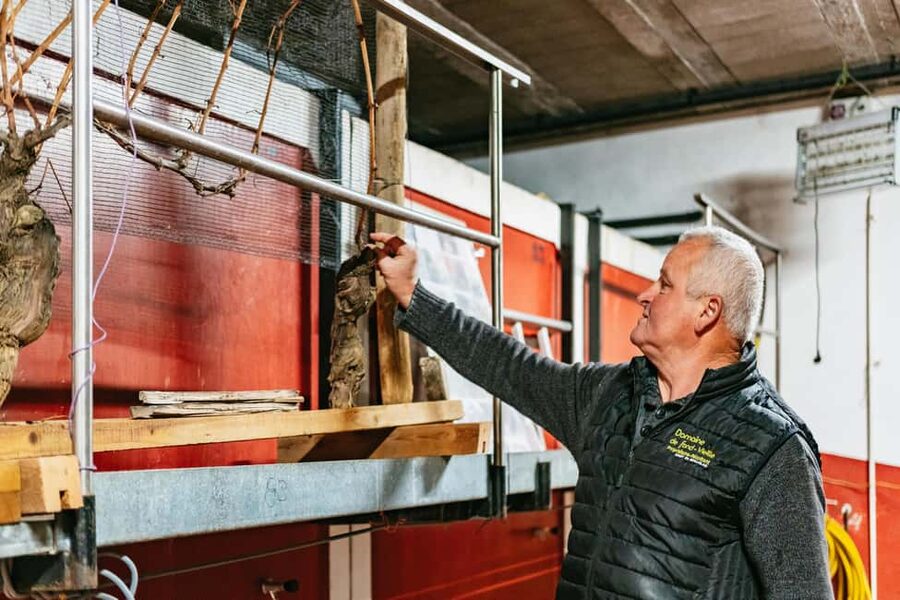
The final stop is the part that most people remember: a family-owned winery where you meet the winemaker and taste their wines in an intimate setting. This is where the tour shifts from education to real craft.
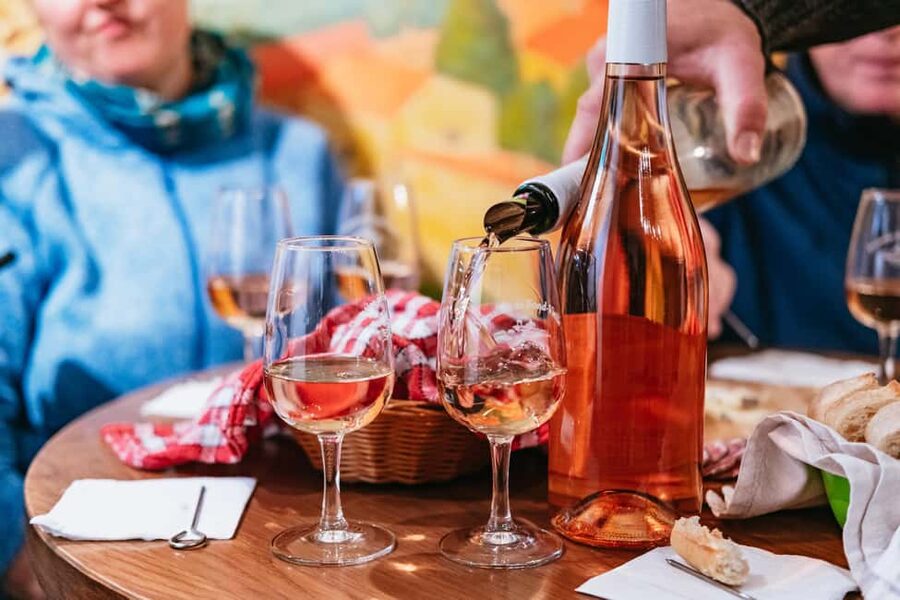
You’ll typically do a winery tour (the kind where you learn how they handle the harvest and the cellar work), and then you’ll taste several wines alongside food. The tour includes alcoholic drinks, and it also includes snacks as part of a traditional Lyon mâchon experience—local cold meats and cheeses, plus pastries.
This combination is more than just food included with wine. It’s how you learn the pairing logic. Many Beaujolais tastings can feel like stand-alone sips, but pairing wine with local charcuterie and cheese helps you understand what the wine is doing—especially with reds where tannin and acidity interact with salt and fat.
Reviews often mention how welcoming the people at the winery feel, and some mention small touches like friendly pets on site. That human atmosphere tends to be the reason the tasting feels more like a visit than a transaction.
If you like buying wine, this is usually your best chance. Several past groups describe picking up bottles to take home after tasting. Just remember: bottled water isn’t provided, so bring a reusable bottle to refill between stops.
You can also read our reviews of more wine tours in Lyon

Value for money: what $116 really buys you
At $116 per person, the question isn’t whether the tour is “cheap.” It’s whether what’s included saves you time and adds real value compared with piecing it together yourself.
Here’s what you’re actually getting for the price:
- transport by air-conditioned minivan with a professional driver-guide
- wine tasting(s) during the day, with alcoholic drinks included
- snacks as part of the Lyon mâchon breakfast style spread and pastries
- an English live guide
- shared small-group format (limited to 8)
That’s a lot packed into a short window. The practical value is that you’re paying for logistics and context at the same time. If you tried to do it independently, you’d need a driver or transit plan, plus you’d still want a guided explanation to make terroir and Beaujolais styles click.
There is one fair trade-off some people note: depending on weather and how the day is paced, you may taste fewer pours at the first stop and then more at the winery, or the reverse. The tour is built for balance, but it’s not designed to turn into an all-day “lots of bottles” drinking event.
If your goal is to leave with a deeper tasting notebook and more wine pours, you might feel the half-day nature. If your goal is a structured introduction plus an authentic village and a winemaker visit, the value holds up well.
Who this tour suits best (and who might want a different format)
This is a strong match if you want:
- a short Beaujolais day from Lyon without renting a car
- a mix of wine education, village time, and a real family winery visit
- tastings paired with local food
- a small-group atmosphere with space for questions
It’s also a good option for solo visitors. A few people in past groups mentioned that they were able to join easily and still felt the tour worked for meeting others.
It may be less ideal if:
- you hate cars or feel motion sickness easily
- you want long hours in one place (this schedule is intentionally tight)
- you use a wheelchair, since it’s listed as not suitable for wheelchair users
- you travel with pets or a baby stroller, since those aren’t allowed
Practical tips so you enjoy every stop
Come with comfortable shoes. Oingt is walkable, and the day includes getting in and out of the van multiple times. Also dress for the weather. Even in wine country, conditions can shift quickly.
Because bottled water isn’t provided, bring a reusable bottle. You can refill anytime, and this keeps you from spending your day thinking about hydration.
Finally, treat the alcohol as part of the experience, not a race. There are legal rules in France around alcohol for under-18s, and the tour is also a reminder to pace yourself—especially when you’re moving between viewpoints, cellar tastings, and walking in a village.
Should you book the Golden Stones Beaujolais Wine Tasting Tour?
Yes, if you want a compact, authentic Beaujolais introduction from Lyon that blends wine learning with a real village and a family winemaker visit. The combination of terroir explanation, Oingt golden-stone wandering, and the mâchon-style food makes it feel local rather than like a generic tasting.
I’d especially book it if you value small-group attention and you’re the type who enjoys asking why a wine tastes the way it does. If you want a longer wine weekend or you’re trying to maximize sheer number of pours, then you might be happier with a longer multi-winery day.
FAQ
What’s the duration of the Lyon to Beaujolais Golden Stones tour?
The tour runs for 258 minutes, which is just over 4 hours.
Where do I meet the tour?
Meet in front of the Lyon tourist office in Bellecour Square.
Is wine tasting included?
Yes. Wine tasting is included, along with alcoholic drinks during the tour.
What food is included?
You’ll have snacks as part of a traditional Lyon mâchon breakfast, plus pastries. Lunch is not included.
Is bottled water provided?
No bottled water is provided, but you can refill a reusable bottle.
Is the tour wheelchair accessible?
No, the tour is not suitable for wheelchair users.
Are pets or baby strollers allowed?
Pets and baby strollers are not allowed. Assistance dogs are allowed.
How big is the group and what language is the guide?
It’s a shared small group limited to 8 participants, with an English live tour guide.
If you tell me what month you’re going and whether you’re more into wine science or simply enjoying tastings, I can suggest the best way to pace the day.