REVIEW · LYON
Taste Wine in Lyon: Burgundy, Beaujolais, Rhône, and more
Book on Viator →Operated by Lyon Wine Tastings · Bookable on Viator
Wine makes Lyon feel like a movie scene. This tasting is a smart way to sample the big styles around town without bouncing between wineries, because it’s built around five sustainable pours and regional guidance in an intimate loft setting.
What I like most is the structure: you start with Crémant de Bourgogne and then work through Beaujolais, Burgundy, and the Northern Rhône, so you leave with a mental map of how French wine regions really differ. The other big plus is the pairing—local cheese and charcuterie show up alongside baguette, so you taste with context, not just on an empty palate.
One thing to consider: this is not a vineyard outing. If you’re hoping for a bus tour to estates and vineyard views, you’ll probably prefer a different style of wine day. Here, the focus is tasting and learning in one place, which is great for most people’s schedule and budget.
In This Review
- Key things to know before you go
- Wines Of Lyon: What You Actually Taste In 2 Hours
- The 1800s Silk Loft Setup: Intimate, Comfortable, English-Friendly
- Finding the Door on Rue de la Croix-Rousse (Yes, It’s Tricky on Purpose)
- The Tasting Sequence: Crémant, Then Beaujolais, Burgundy, Northern Rhône
- 1) Crémant de Bourgogne to “reset” your palate
- 2) Beaujolais: fruit with a different kind of lift
- 3) Burgundy: where nuances start to matter
- 4) Northern Rhône: intensity, structure, and a new flavor language
- 5) A wild card to keep you comparing (not guessing)
- Pairing With Cheese, Charcuterie, and Baguette (and How to Taste Better)
- What You Learn: From Labels to Ordering Without Guessing
- Duration, Timing, and What to Do With the Rest of Your Day
- Price and Value for Wine + Food + Instructor Time
- Who This Lyon Wine Tasting Suits Best (and Who Should Skip It)
- Should You Book This Lyon Wine Tasting?
- FAQ
- What time does the wine tasting start in Lyon?
- How long is the experience?
- How many wines are included?
- Is the tour offered in English?
- What food is included with the wine?
- What if I have dietary restrictions?
- Where do I meet for the tasting?
- Is there a small group limit?
- What is the cancellation policy?
- FAQ
- What should I look for when arriving at the address?
- What kind of setting is the tasting in?
- Does the tasting include a blind test?
- Will I be learning about grapes and regions?
- Is it near public transportation?
- Do I need a printout or ticket?
- Is free cancellation available?
- What if the minimum number of travelers isn’t met?
- Who leads the tasting?
Key things to know before you go
- Five-region tasting flow: Crémant de Bourgogne first, then Beaujolais, Burgundy, Northern Rhône, plus a wild card.
- Small group size (max 10) keeps the pace relaxed and questions easy.
- Expert English guidance from wine educators/sommeliers (guides like Julia, Madeleine, Nicholas, and Margaret Rose have led sessions).
- Cheese and charcuterie board with local flavors and artisan bread makes the tasting feel like a meal.
- Air-conditioned 1800s silk loft adds comfort in warmer months.
- Easy “taste like a pro” takeaways, so you can order more confidently after your trip.
Wines Of Lyon: What You Actually Taste In 2 Hours
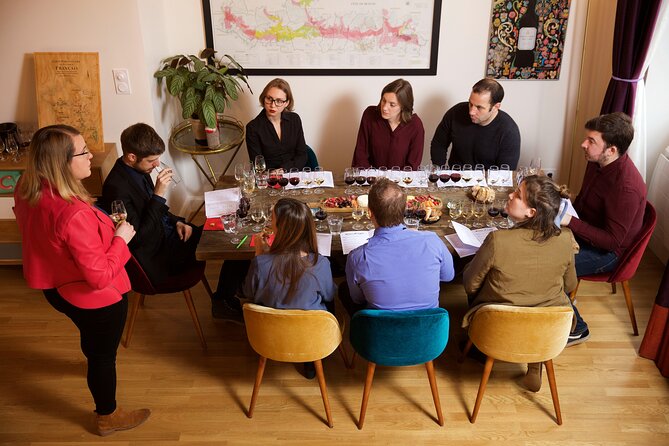
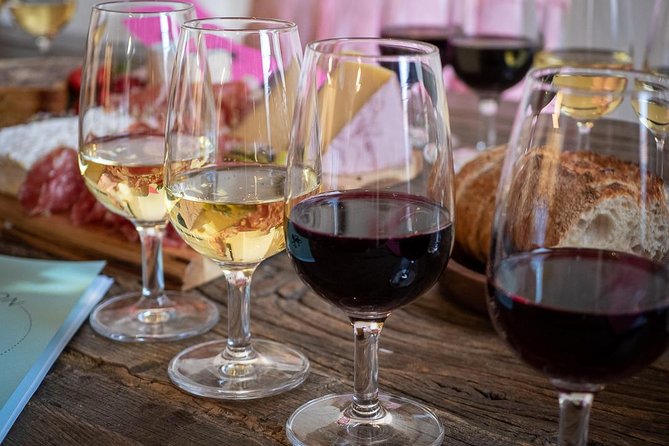
This experience is designed for one simple goal: help you understand French wine by tasting it in a logical order. You’ll sample five sustainable, locally sourced wines, and each one comes with context—what grapes to look for, how the region shapes flavor, and how winemaking choices show up in the glass.
The pacing is important. Two hours sounds short, but the format keeps moving without feeling rushed. You sip, you compare, and you learn what to notice next. If you’ve ever tasted wine and wondered why it tastes the way it does, this session gives you the “decoder ring” fast.
The lineup starts with Crémant de Bourgogne, a sparkling wine from Burgundy’s world that’s also a fantastic baseline. Before you get into still wines, you’re training your palate to recognize acidity, dosage style, and bubble behavior. Then the tasting shifts into still wine styles: Beaujolais, Burgundy, and the Northern Rhône, plus an extra wild card that helps you practice comparing regions rather than memorizing a list.
You can also read our reviews of more wine tours in Lyon
The 1800s Silk Loft Setup: Intimate, Comfortable, English-Friendly
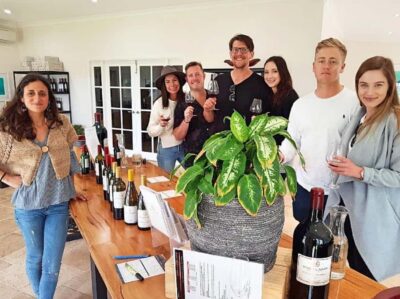
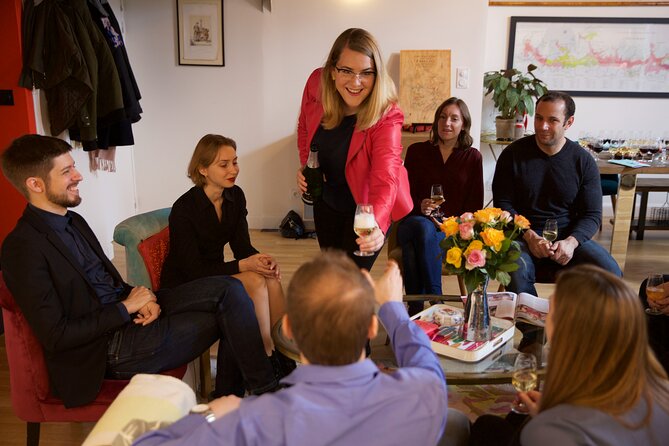
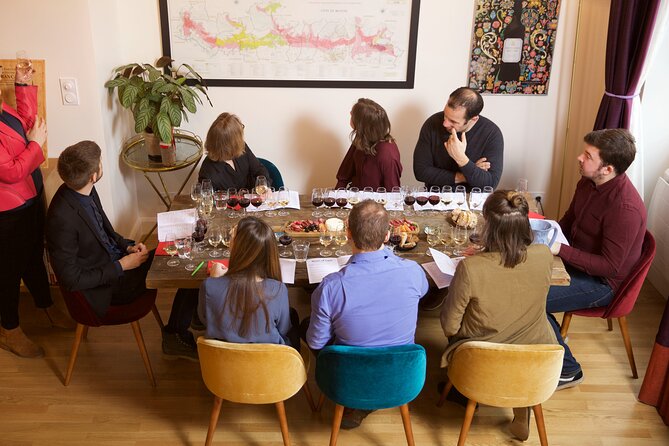
The setting is part of the magic. You meet in a beautifully restored 1800s silk loft, and that matters more than you might think. The room is comfortable enough to make tasting feel social and not stiff, and it’s also practical: the space includes AC, which helps on warm days.
Group size stays small, with a maximum of 10 guests. That usually means you get real conversation, not just a lecture. One of the most consistent themes in the experience is how the guide keeps things friendly and discussion-based—people can ask questions as they come up, and the educator can steer the tasting toward what your group actually wants to understand.
You’ll likely sit in a laid-back setup (think coffee-table style for early sips, then a longer table for the main spread). It’s the kind of arrangement that makes it easy to talk with the people next to you—without you feeling like you have to network.
Finding the Door on Rue de la Croix-Rousse (Yes, It’s Tricky on Purpose)
The meeting point is at 12 Gd Rue de la Croix-Rousse in Lyon (69004). The location is described as a near-public-transport spot, but the entrance is the tricky part.
A practical tip that can save time: look for a large ornate dark wooden door with a 19 above it. One version of the sign can be faded (so the “12” can look like it’s missing), and you may need to spot the right number to find the correct stairwell. From there, you go up a dark staircase to the second floor and knock on the door that the host opens for you.
Also, Rue de la Croix-Rousse can mean a bit of effort on foot. If you’re arriving from the lower parts of Lyon, plan a little time so you don’t show up already tired. The good news is that once you’re inside, it’s calm and comfortable.
The Tasting Sequence: Crémant, Then Beaujolais, Burgundy, Northern Rhône
Here’s the tasting flow you should expect, because it’s the backbone of the whole experience:
1) Crémant de Bourgogne to “reset” your palate
You start with Crémant de Bourgogne. That’s not just a nice warm-up. Sparkling wine helps you notice texture and acidity, and it makes the later still wines feel clearer because your palate is awake.
If you’re the type who likes to remember what a wine “should” taste like, this first pour gives you a reference point. It also makes the whole session feel approachable: even if you usually avoid sparkling wine, the structure helps you pay attention.
2) Beaujolais: fruit with a different kind of lift
Next comes Beaujolais. This is a great region to learn early because it helps you understand how style can shift even when grapes and winemaking techniques stay within French traditions.
You’ll taste, then you’ll get guidance on what to look for: fruit character, how it feels on the palate, and what’s driving the style. This is where the tasting starts feeling like “education you can taste.”
3) Burgundy: where nuances start to matter
Then the session moves into Burgundy. Even if you don’t know the first thing about Burgundy labels, tasting a curated Burgundy bottle after Beaujolais is an easy way to notice the differences. You can pay attention to how the wine behaves beyond fruit—think structure, depth, and how the flavor lingers.
This part is especially useful if you’ve seen words on bottles (or watched people discuss them) and felt lost. Here you get to connect those label terms to actual sensation.
4) Northern Rhône: intensity, structure, and a new flavor language
After Burgundy, you’ll try the Northern Rhône. This is a helpful contrast because Rhône wines often bring a stronger sense of structure and flavor definition.
By this point, the guide can point out how to taste for origin without needing to memorize a textbook. You practice noticing the cues that make different French regions feel distinct.
5) A wild card to keep you comparing (not guessing)
There’s also a wild card wine included. This is one of the smartest choices in the itinerary because it breaks the “I know the answer already” habit. It pushes you to compare rather than rely on what you think you should like.
Some sessions also include a short blind taste test. If you get it, treat it like training: the goal is to learn how to identify style and region clues without naming everything instantly.
Pairing With Cheese, Charcuterie, and Baguette (and How to Taste Better)
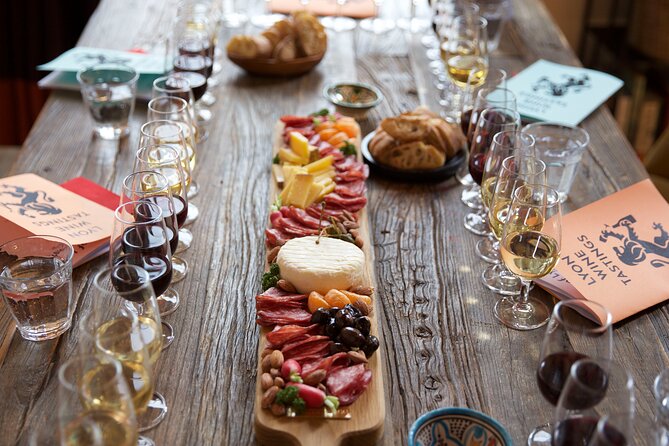
The food isn’t an afterthought. Your board is built from local cheese, charcuterie, and artisan bread (baguette is part of the plan). That matters because pairing changes how wine feels. Salt, fat, and texture can soften harshness and make fruit flavors pop.
As you go, focus on contrasts:
- How does a wine change once you take a bite?
- Does a pairing make the wine taste more fruit-forward or more structured?
- Do you like the same wine more at the end of the meal than at the start?
This is also where people often learn small “mechanics” for tasting. One of the most repeated takeaways is learning how to describe what you’re tasting so you can recreate it later when you’re shopping or ordering in a restaurant.
If you have dietary restrictions, you’ll need to reach out at least 24 hours in advance, since the board is pre-planned with local items.
What You Learn: From Labels to Ordering Without Guessing
The best wine tastings do more than make you say wow. They teach you how to move forward.
This one leans hard into practical recognition. You’ll learn about regional grapes, vineyards, and winemaking traditions in a relaxed way. You also get tips that help you translate French wine into real-life choices.
A few themes I’d bet you’ll feel quickly:
- How to tell which region a wine is likely to represent by tasting structure and flavor behavior
- How to understand basics on labels so they don’t feel like a wall of French you can’t read
- How to ask better questions when you’re in a shop or restaurant
You’ll also get recommendations to help you continue your wine education after the tasting. Different guides (including Julia, Nicholas, Madeleine, and Margaret Rose) are known for being engaging and patient, and the common vibe is that your questions shape the experience—not the other way around.
Duration, Timing, and What to Do With the Rest of Your Day
The tasting runs about 2 hours, with start times at 12pm or 4pm. That scheduling is actually useful because it fits two common travel rhythms:
- A lunch-friendly slot (you’re eating anyway, and there’s plenty of food)
- An afternoon reset (tasting first, then doing sightseeing with a lighter schedule)
Since this is a short session, you can stack it with other Lyon highlights without turning the day into a marathon. It’s also a good option if you want wine knowledge but don’t want the logistics of getting out of the city.
One practical point: the meeting address is up on Croix-Rousse. If you’re going at 12pm and you’re walking from a lower neighborhood, add extra time so you arrive comfortable and ready to taste.
Price and Value for Wine + Food + Instructor Time
At $120.98 per person, it’s not a bargain. But it’s also not “paying for a label” when you look at what you get.
Here’s the value math that makes sense for real travelers:
- Five glasses of wine are included, not one or two token sips
- You get a cheese and charcuterie board, so it’s a full tasting meal component
- The time is guided by an English-speaking wine educator/sommelier, with room for questions
- The group stays small, which usually means you’re not stuck watching from the back
If you’ve ever done tastings where most of your time is standing around and trying to remember what you tasted, this format feels built to reduce that problem. The structure and pacing help you walk away with usable understanding.
Who This Lyon Wine Tasting Suits Best (and Who Should Skip It)
This tour is a strong match if you:
- Want a city-based way to understand Burgundy, Beaujolais, and Rhône without day trips
- Like guided tastings and want help with what to notice
- Prefer a small group where you can actually talk
- Are curious from beginner level to intermediate, since the pace is designed to meet different comfort levels
You might choose something else if you:
- Came specifically for vineyard visits and winery stops
- Expect a big “tour day” with lots of transport and scenery
- Want a DIY tasting where you control every pour and pace
The experience is best understood as a tasting lesson with food, not a winery excursion.
Should You Book This Lyon Wine Tasting?
I’d book it if you want real wine learning in a short time. The combination of five region-spanning wines, a small group, and serious instructor time is the kind of value that pays off later when you’re ordering wine confidently back in your own country.
If you’re worried about it feeling too “formal,” don’t be. The format is designed to be friendly and conversational, and the setting helps: an AC-ready loft, good seating, and food that keeps things relaxed.
And if you’re deciding between multiple options in Lyon, this is a smart pick for the traveler who wants clarity over chaos. You leave with a tasting framework you can use again, not just a memory of pretty bottles.
FAQ
What time does the wine tasting start in Lyon?
The tasting is offered at 12pm or 4pm.
How long is the experience?
The duration is listed as about 2 hours.
How many wines are included?
You’ll taste 5 sustainable, locally sourced wines, with the lineup starting with Crémant de Bourgogne and then moving through Beaujolais, Burgundy, the Northern Rhône, and a wild card.
Is the tour offered in English?
Yes, it’s offered in English.
What food is included with the wine?
You get a cheese & charcuterie board with local cheese, cold cuts, and artisan bread, alongside the tasting.
What if I have dietary restrictions?
Dietary restrictions aren’t listed as covered automatically. You should reach out at least 24 hours in advance so the provider can advise.
Where do I meet for the tasting?
The meeting point is 12 Gd Rue de la Croix-Rousse, 69004 Lyon, France, and the experience ends back at the meeting point.
Is there a small group limit?
Yes. The experience has a maximum of 10 travelers.
What is the cancellation policy?
You can cancel for a full refund if you cancel up to 24 hours in advance of the experience start time.
FAQ
What should I look for when arriving at the address?
Look for a large ornate dark wooden door with a 19 above it, then go up the staircase to the second floor and knock on the door the host opens.
What kind of setting is the tasting in?
It’s hosted in a restored 1800s silk loft with modern comfort, including AC.
Does the tasting include a blind test?
A blind taste test is mentioned as part of the experience in some sessions.
Will I be learning about grapes and regions?
Yes. The guide covers regional grapes, vineyards, and winemaking traditions, tailored to the tasting.
Is it near public transportation?
Yes, the meeting location is described as being near public transportation.
Do I need a printout or ticket?
You receive a mobile ticket.
Is free cancellation available?
Yes, the policy states free cancellation up to the stated cutoff time.
What if the minimum number of travelers isn’t met?
If it’s canceled because the minimum isn’t met, you’ll be offered a different date/experience or a full refund.
Who leads the tasting?
A wine educator/sommelier leads the session, and English-speaking guides for this experience have included people like Julia, Madeleine, Nicholas, and Margaret Rose.