REVIEW · BUDAPEST
Budapest: Guided Street Food Tour with Sweet Wine
Book on GetYourGuide →Operated by Tipsy Tours by Carpe Diem Tours · Bookable on GetYourGuide
Budapest tastes better with a local in tow. This District 7 street food tour starts at the Kazinczy Street Synagogue, then walks you into the Jewish quarter story behind Hungarian comfort food, from gritty street corners to lively nightlife streets. I especially like how the evening has both meaning and motion: history first, then real eating fast.
What I love most is the four-eatery format with priority service, so you’re not wandering hungry or stuck waiting around. The food mix is smart too: quick street bites like Lángos (deep-fried flatbread) and soup, followed by sit-down classics like nokedli dumplings and Flódni pastry.
One thing to consider: alcohol is part of the plan. You’ll get three alcoholic drinks (including sweet wine and shots), and if you’re trying to stick to non-drinking or very specific diets, double-check what’s possible—gluten-free and vegan aren’t accommodated, though vegetarian options exist.
In This Review
- Key things you’ll notice on this tour
- District 7 is where Budapest eats late
- Kazinczy Street Synagogue: the history starter that actually connects to dinner
- District 7 walking: seeing the old neighborhood and the nightlife side
- Street food hour: Lángos, soup, and eating like you mean it
- Sit-down Hungarian classics: nokedli dumplings and Flódni
- The drinks plan: sweet Tokaji wine, beer, and Pálinka
- Priority service and four-stop value
- Who should book (and who should think twice)
- What to bring and what to expect from the guide
- Should you book this sweet-wine street food tour?
- FAQ
- Where does the tour start?
- How long is the experience?
- What language is the guide?
- What food is included?
- Are vegetarian options available?
- Is the tour gluten-free or vegan?
- What drinks are included?
- What should I bring to the meeting point?
- FAQ
- Is there a private group option?
Key things you’ll notice on this tour
- Start at Kazinczy Street Synagogue and get the Jewish roots of Hungarian food fast
- Priority service at four local eateries means less waiting and more tasting
- Street-to-sit-down menu flow: Lángos and soup, then nokedli and Flódni
- Sweet Tokaji wine plus Pálinka and beer gives you a real taste of Hungarian drink culture
- District 7 walk with insider attraction tips beyond just food stops
- English-speaking guide who keeps you moving and chatting with the group
District 7 is where Budapest eats late
Budapest has famous sights, sure. But the city also has an easygoing rhythm: long dinners, quick street snacks, and strong drinks that turn strangers into friends. District 7 is built for that. It’s known for nightlife now, but it also carries older layers, especially around its Jewish history. This tour uses that setting well.
I like that you don’t just get handed a list of dishes. You get a path through a neighborhood. That makes the flavors make sense. Lángos and hearty soups aren’t random comfort food; they’re the kind of food people rely on during busy days, cold seasons, and late nights. You’ll also get recommendations for what to do next in Budapest, including where to go for ruin bars and other local hangs.
Time matters here. The tour runs 150 minutes, so you’re out long enough to see the neighborhood and eat properly, but not so long that you feel dragged when your feet start to complain.
You can also read our reviews of more food & drink experiences in Budapest

Kazinczy Street Synagogue: the history starter that actually connects to dinner
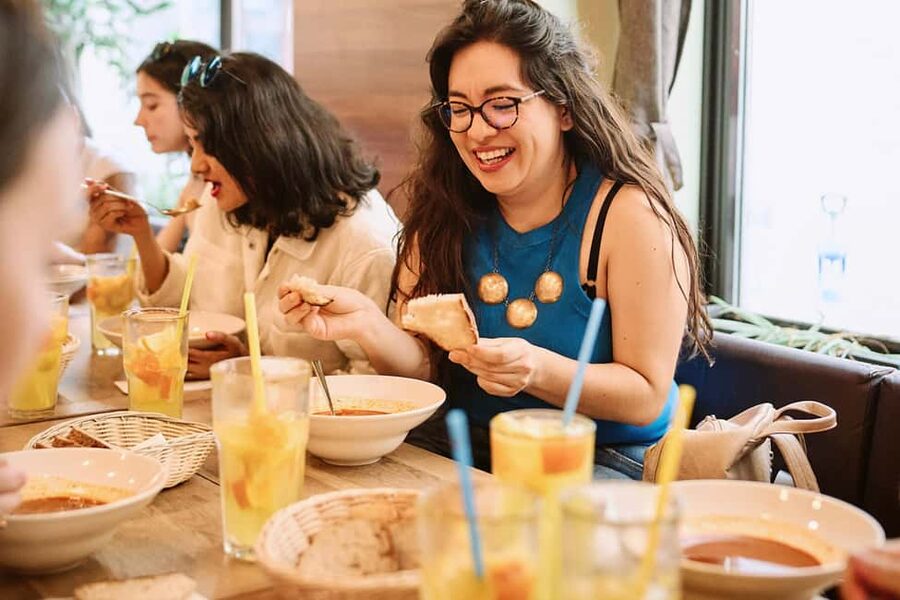
Meeting in front of the Kazinczy Street Synagogue is more than a neat landmark. It’s a smart way to set expectations. The tour frames Hungarian cuisine as something shaped by Jewish culture and tradition, plus the broader mix of Central European influences.
This matters because District 7 is full of visible energy—bars, street life, and people out after dark—but the food routes take you deeper than the obvious. When your guide explains why certain dishes show up in Jewish-Hungarian tradition, you taste the meal with better context. You’re not just eating; you’re decoding.
You’ll also get your bearings quickly. If you’re new to Budapest, this kind of structured start helps you understand where the neighborhood sits and what direction you’ll be walking. Your guide will hold a yellow Carpe Diem Tours flag, which makes it easy to spot the group right at the meeting point.
District 7 walking: seeing the old neighborhood and the nightlife side
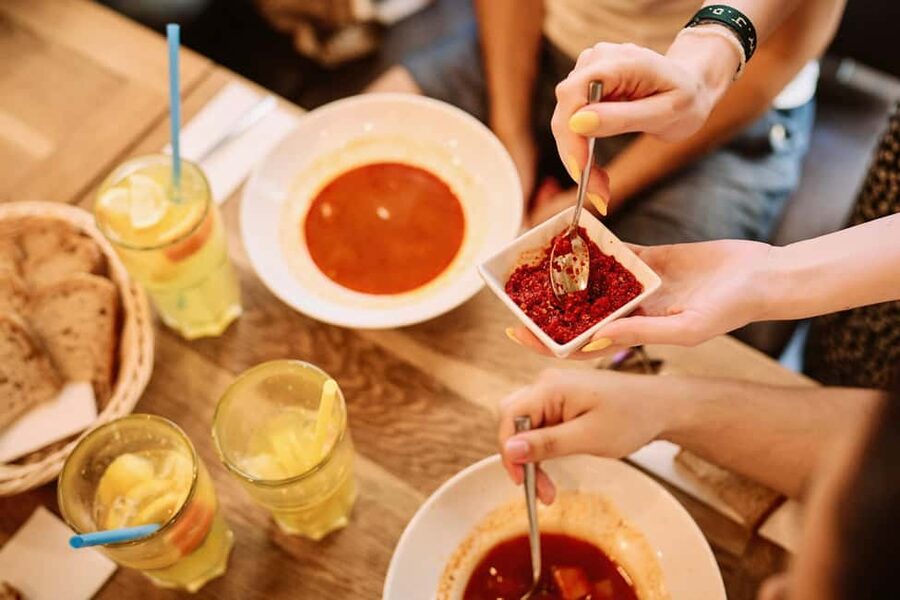
After the short historical start, you’ll head into District 7, the former Jewish neighborhood that’s now famous for nightlife. This is where the tour earns its “street food” name, because you’re actually moving through the kind of area where snacks make sense.
Expect a walk that balances two moods. There’s the everyday street feel: corners, storefront energy, and the sense that locals live here, not just pass through. Then there’s the glamorous side people associate with Budapest at night—lighted streets, drink talk, and the feeling that the city is awake even when you’re hungry.
I also like that the guide keeps things social. In past groups, you can end up anywhere from a small circle of about 6 people to a larger crew around 18. Either way, the guide’s job is to keep the pace steady and make sure you’re not just following silently. That’s when food tours turn from meal events into mini city lessons.
Street food hour: Lángos, soup, and eating like you mean it
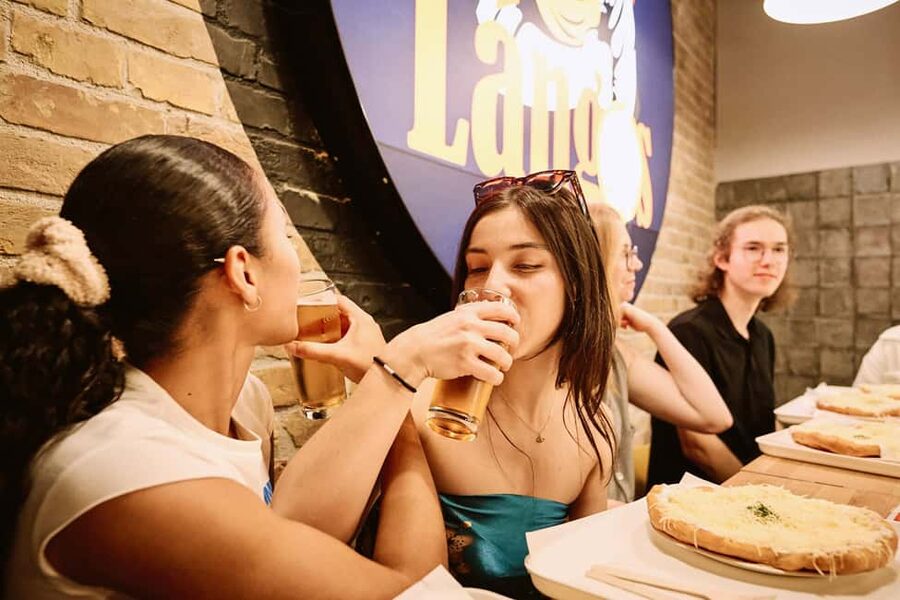
The street portion is built around “grab-and-go” Hungarian classics, but you’re eating them in a guided order so you don’t miss the key flavors. The menu includes items like Lángos, the famous deep-fried flatbread, plus traditional soup.
From the dishes served, you’ll likely see variations such as:
- Potato cream soup (a warm, creamy comfort dish)
- Yellow pea soup (thick, savory, and very Hungarian in spirit)
- Other hearty street-leaning starters that make sense before you hit the sit-down plates
This part is also where you’ll learn what to do with the food. For example, Lángos is filling in a way that surprises people if they’re used to lighter street snacks. Pair that with soup and you’ll understand why guides often say come hungry.
I’d treat the street segment like your “fuel up” moment. Don’t plan a big snack right before the tour. You’ll want the room to enjoy the sit-down stops later.
Sit-down Hungarian classics: nokedli dumplings and Flódni
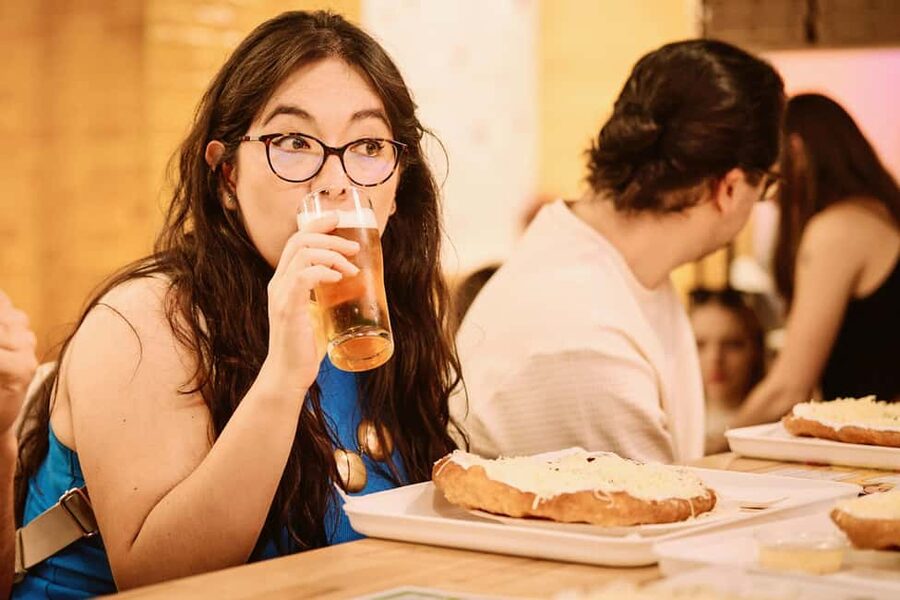
Then the tour shifts gears. You go from the fast street rhythm into a more atmospheric sit-down meal at local eateries with priority service. This is a big deal for value: you don’t just get more food, you also avoid the time sink that can happen when restaurants are busy.
This is where you’ll try key Hungarian comfort dishes, including:
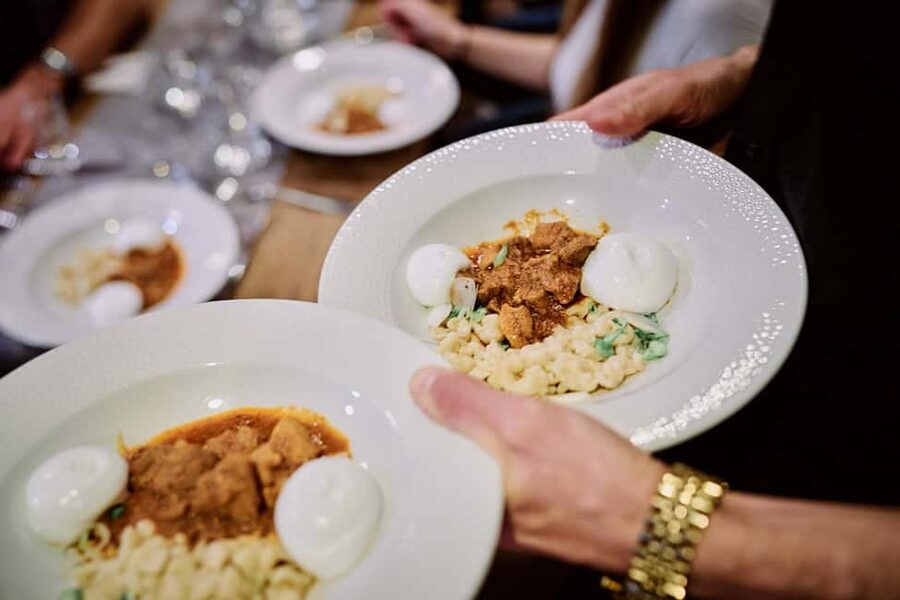
- Nokedli dumplings (soft, satisfying dumpling comfort that pairs well with meat and sauces)
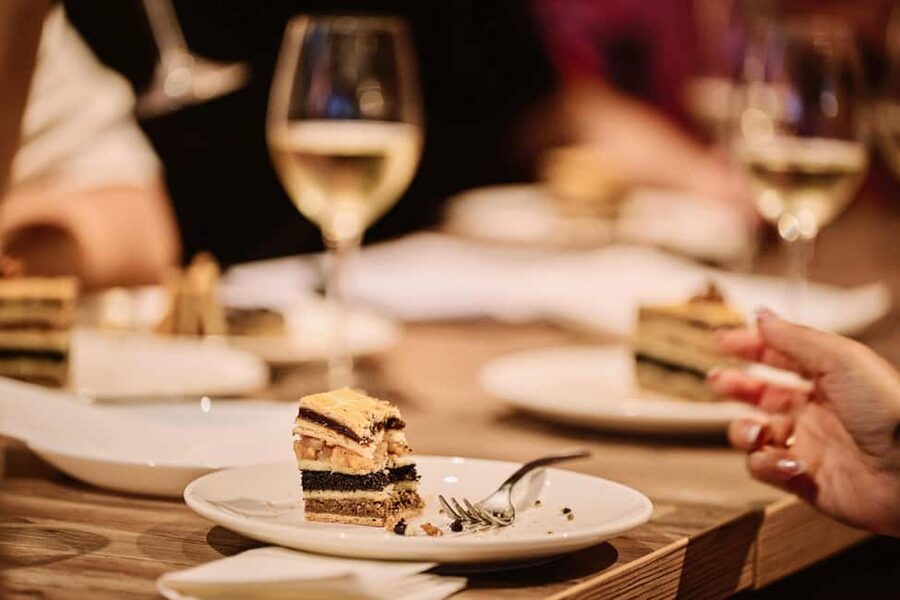
- Flódni, a Jewish-Hungarian pastry that adds a sweet note to the story
Flódni isn’t for everyone, and some people can prefer other desserts. But as a cultural bite, it’s important. It shows how Jewish-Hungarian traditions turned everyday ingredients into something recognizable and special.
One more practical point: sit-down portions can be surprisingly generous. You’re guided through a set menu style experience, and the meals are substantial enough that you shouldn’t need to scramble for dinner afterward. In fact, many people end the tour feeling fully satisfied rather than just “snacked.”
A few more Budapest tours and experiences worth a look
The drinks plan: sweet Tokaji wine, beer, and Pálinka

Food is only half the story on this tour. The other half is Hungarian drinks, and they’re intentionally threaded through the evening.
You’ll get three alcoholic drinks total, including:
- Sweet wine from Tokaji (a highlight for many people)
- Beer
- Shots, with Pálinka mentioned as a traditional spirit you may be served
This drink lineup isn’t random. It reflects how Hungarian meals work in real life: you sip during the meal, you sample spirits, and you get a better sense of local tastes. Tokaji sweet wine is often the crowd-pleaser because it’s expressive and matches well with both savory comfort dishes and the sweet note at the end.
Two practical tips:
- If you’re sensitive to alcohol, pace yourself early. The tour has multiple stops, and the timing matters.
- If you’re excited to drink, this tour is a strong “starter night” option because the guided service keeps things from getting chaotic.
Priority service and four-stop value
At $81 per person for 150 minutes, the value comes from the structure: four local eateries plus priority service and a set menu approach. That combo matters in a city like Budapest, where waiting can eat your time—and hungry time is the worst time.
Instead of you trying to decide which place is worth it, you’re handed a sequence that hits the major Hungarian food markers: street comfort (Lángos and soup), then a more formal classic meal with nokedli and Flódni. On top of that, the guide gives context, which turns food from “stuff I ate” into “stuff I understand.”
I also appreciate the way the tour uses time. You’re not doing a marathon walk across the whole city. You’re concentrating on one neighborhood identity, which gives you better density: more eating per minute and more story per turn.
Who should book (and who should think twice)
This tour fits best if you want three things:
- A practical way to eat Hungarian food without guessing
- A guided neighborhood walk focused on one area instead of hopping all over town
- A social evening where you can meet people and get local recommendations
It’s especially good as an early trip in Budapest. A first-night or first-two-days food tour helps you learn the neighborhood vibe and gives you places to revisit. You’ll likely come away with ideas for ruin bars and other “where locals actually go” spots.
Think twice if:
- You need gluten-free or vegan meals. The tour states it can’t accommodate gluten-free or vegan diets right now.
- You don’t want alcohol as part of the plan. Alcohol is included, with three drinks and shots.
If you’re vegetarian, you’re still in luck. The tour includes vegetarian options, but it notes there might be fewer choices than the regular menu. If you have dietary restrictions, tell the operator in advance so they can try to fit you correctly.
What to bring and what to expect from the guide
The logistics are simple. Bring passport or ID card. You’ll meet in front of the synagogue, and the guide holds a yellow Carpe Diem Tours flag.
The tour runs in English with a live guide, and there’s also a private group option if you want the same structure without the public-group feel.
What makes the guide work well shows up in the results: people repeatedly describe the guides as energetic, organized, and strong at explaining both food and culture. Names you may see leading the tour include Laura, Eszti, Kitti, Agnes, Nika (or Nikaa), Peter, Ray, and Kelly. The common thread is clear: the storytelling is tied directly to what you’re eating, so you’re not sitting through trivia while waiting for food.
Should you book this sweet-wine street food tour?
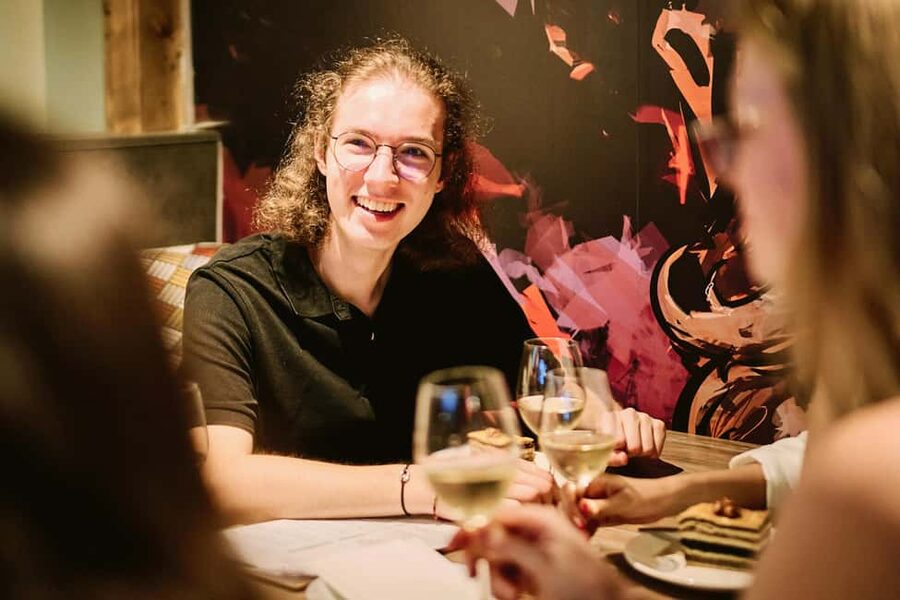
If you’re in Budapest and you want a high-success dinner plan, I’d book it. You get a tight neighborhood route in District 7, priority service at four local eateries, and a food-and-drink mix that covers both street staples and Hungarian classics.
The biggest reason to choose it is value. For one set evening, you’re eating enough to feel satisfied, sampling Hungarian drinks that you might not pick on your own, and getting insider hints for what to do next. It’s the kind of tour that saves you decisions when you’re tired or hungry.
The main reason to skip is also clear: the tour can’t do gluten-free or vegan, and alcohol is baked into the experience. If that fits your needs, it’s a fun, practical way to taste Budapest beyond the postcard.
FAQ
Where does the tour start?
It starts in front of the Kazinczy Street Synagogue.
How long is the experience?
The tour lasts 150 minutes.
What language is the guide?
The tour is guided in English.
What food is included?
You’ll eat at four local eateries with authentic Hungarian food, including both street food items (like Lángos and soup) and classic dishes (like nokedli dumplings and Flódni).
Are vegetarian options available?
Yes. Vegetarian options are available, but there might be fewer choices than on the regular menu, so it’s best to inform the team in advance.
Is the tour gluten-free or vegan?
No. The tour data says gluten-free or vegan diets can’t be accommodated at this time.
What drinks are included?
You’ll receive three alcoholic drinks, including local wine (including Tokaji sweet wine), beer, and shots (with Pálinka mentioned as part of the experience).
What should I bring to the meeting point?
Bring your passport or ID card.
FAQ
Is there a private group option?
Yes, private group options are available.