REVIEW · TBILISI
Tbilisi:Evening Walking & Talking Tour with Wine & Boat Ride
Book on Viator →Operated by Budget Friendly Tours FZE LLC · Bookable on Viator
Night in Tbilisi feels like a storybook. This low-cost walking and talking tour strings together the city’s Bridge of Peace lights and Old Town corners in one smooth 3-hour evening, and you’ll get a guide who keeps it fun and easy to follow as a group. I love the price-to-see ratio and the way the stops show you exactly what to explore next on your own.
The one catch is the walking: you’ll be on foot for the whole evening, with some stairs and darker alleys in the old city. Bring grippy shoes and take it steady.
In This Review
- Key things you’ll notice right away
- Why This $10 Evening Walk Is Such Good Value
- Meeting at Rose Revolution Square: Simple Start, Easy Return
- Rustaveli Avenue and Liberty Square: The City’s Big-Shoulder Opener
- Rezo Gabriadze’s Angel Clock Tower and the Bridge of Peace at Night
- Rike Park to King Vakhtang: Easy Walking, Pretty Stops, Big City Energy
- Metekhi Cathedral, Old Town Bathhouses, and the Sulfur-Bath Atmosphere
- Leghvtakhevi Waterfall and Narikala: The Night View That Feels Like History
- Kartlis Deda and Shardeni Street: The Finish Line for Night Walking
- Wine Tasting and the Boat Ride: When the Tour Gets to Be Relaxing
- Pace, Stairs, and Who This Is Really For
- How to Choose This Tour vs. Exploring on Your Own
- Should You Book This Evening Tbilisi Walk?
- FAQ
- How much does the Tbilisi evening walking and wine-and-boat tour cost?
- How long is the tour?
- Where do I meet the guide?
- What time does the evening tour start?
- Is the tour in English?
- What’s included, and is wine tasting optional?
- Does the tour include a boat ride, and is it weather dependent?
Key things you’ll notice right away
- A big “first night in Tbilisi” route: you hit major landmarks and quieter corners in one evening
- Bridge-of-lights magic: the glass-and-steel Bridge of Peace is lit with thousands of LEDs
- Old-town character: bathhouse district Abanotubani and the sulfur-bath vibe around Chreli Abano
- Photo-friendly viewpoints: river views from places like Rike Park and the climb-up Narikala area
- Optional wine tasting: if you pick the wine option, it’s a built-in local stop—not an afterthought
Why This $10 Evening Walk Is Such Good Value
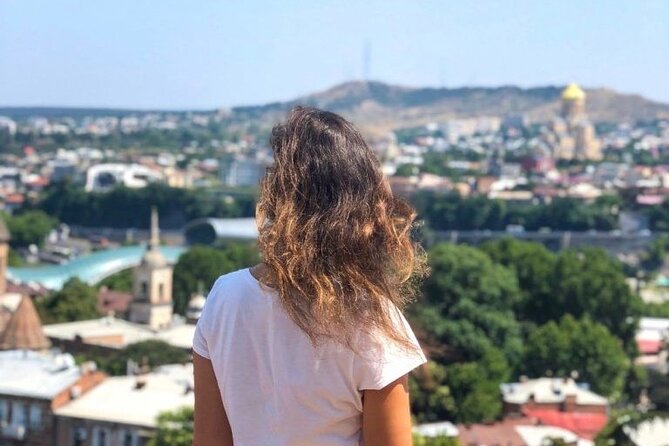
For $10, you’re basically buying two things: a ready-made route and an English-speaking guide to explain what you’re seeing. In three-ish hours, that’s a great deal in a city like Tbilisi, where the layers are thick—Soviet-era streets sit next to medieval churches and quirky modern landmarks.
What I like most is that this isn’t just a checklist. The route is designed so the night lights make sense. You start with the big squares and avenues, then you work your way toward old-town streets, bathhouses, and the river. By the time you’re near the end, you’ve got a mental map of where everything is—and you can plan the rest of your stay with way less guesswork.
You can also read our reviews of more walking tours in Tbilisi



Meeting at Rose Revolution Square: Simple Start, Easy Return
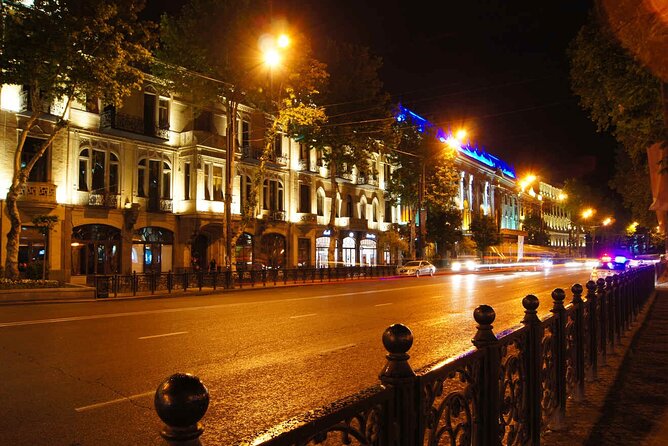
This tour keeps logistics pretty painless. You meet at Rose Revolution Square at 6:00pm for the evening departure. The meeting spot is described as being in front of the Radisson at the square, so you’re not wandering for long trying to find a tiny curbside sign.
There’s no hotel pickup or drop-off, so you’ll want to be able to get yourself to the start point on public transport or on foot. The tour ends back at the meeting point too, which is a nice convenience if you’re trying to keep your night plan flexible.
The group size max is 50, which usually means you’ll move efficiently without it feeling like a packed school bus. You’ll also have a solid chance to chat with people—one of the small joys of a walking tour.
Rustaveli Avenue and Liberty Square: The City’s Big-Shoulder Opener
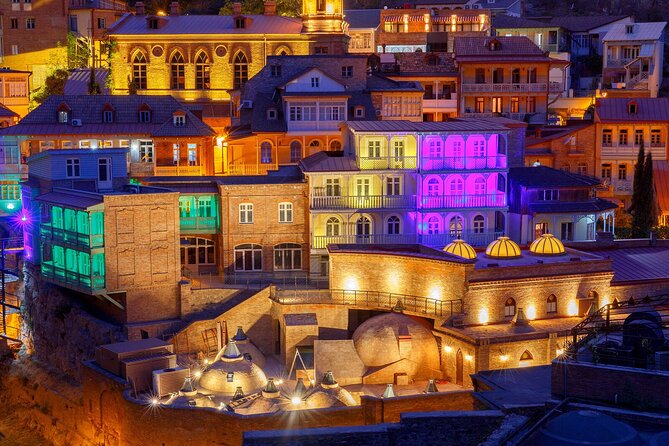
After you meet at Rose Revolution Square, the evening moves toward the core “public spaces” of Tbilisi.
You’ll spend time on Rustaveli Avenue, the main parade-street vibe of the city. This is where you’ll notice hotels, restaurants, cafes, and souvenir shops—plus some of Tbilisi’s more important buildings. If you’ve ever visited other European cities and liked that wide boulevards feel, this is Tbilisi’s version of that. It also works well early in the tour because you’re getting oriented without immediately going into the tight old alleys.
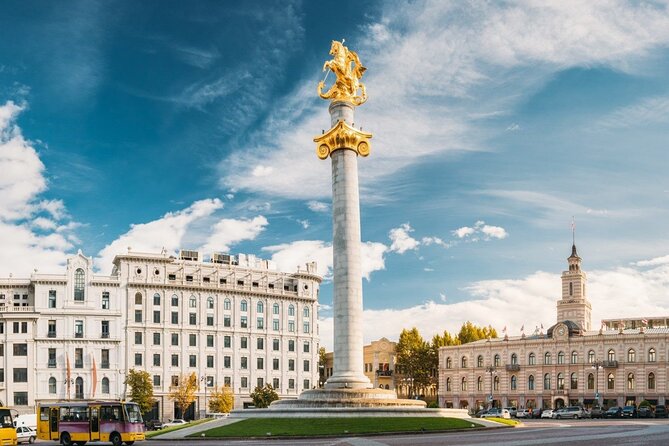
Then you hit Liberty Square (Georgia-Liberty). This area is centered on the Freedom Monument, so expect a quick stop that gives you a feel for national identity and the scale of Tbilisi’s public monuments. It’s not the most “hands-on” stop, but it matters because it frames how Tbilisi likes to show itself—big, proud, and visible.
Rezo Gabriadze’s Angel Clock Tower and the Bridge of Peace at Night
Now comes the part that makes this evening tour feel special.
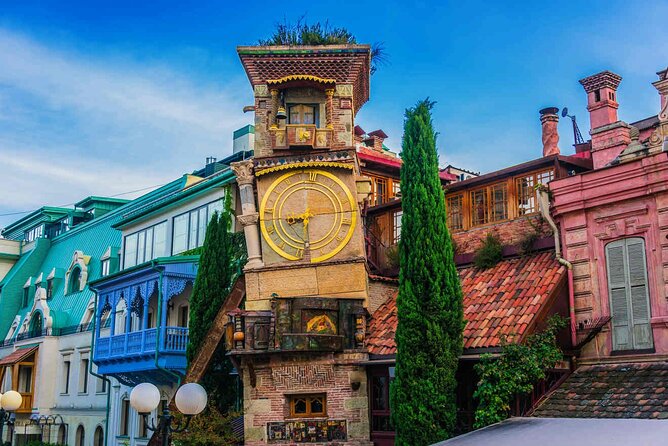
First up is the Rezo Gabriadze Marionette Theater area. The clock tower here is famous for its hourly show: an angel appears with a small hammer to ring the bell. There’s also a small puppet theater inside the tower, with shows twice a day at 12:00 and 19:00 for The Circle of Life. Even if you don’t catch a performance window, the design alone makes this a stop worth slowing down for.
Then you reach the Bridge of Peace, the landmark most people don’t want to miss in Tbilisi. It’s a pedestrian bridge with a glass-and-steel bow shape over the Mtkvari (Kura) River. A few details help you appreciate why it became such a night star: it opened in May 2010, it was brought from Italy in 200 unassembled components, it’s 156 meters long, and it has more than 10,000 LED bulbs. The LEDs switch on 90 minutes before sunset—so if your tour runs close to that timing, the bridge can look almost unreal.
Even the short time here pays off. You’re positioned for that classic night view and you can get some clean photos before the route continues.
Rike Park to King Vakhtang: Easy Walking, Pretty Stops, Big City Energy
From the bridge, you roll into Rike Park, which sits right along the riverbank. It’s newer, designed as a family-friendly hangout, and it shows—there are fountains that sing and dance, climbing walls, kids’ areas, even mega-chess boards. At night, it feels like a more relaxed version of the city’s glow: lights, promenades, and space to breathe between landmarks.
From there, the route includes the Monument of King Vakhtang Gorgasali (Vakhtang I). This statue connects to stories about Kartli/Iberia and the early legend of Tbilisi itself. The tour’s quick framing helps you understand why this figure is so tied to the city’s origin myths and Georgian Orthodox Church tradition.
The value of these stops is that they act like context glue. The more you learn the reason behind a monument, the more you notice the details around it—like how Tbilisi uses public art to tell its story.



Metekhi Cathedral, Old Town Bathhouses, and the Sulfur-Bath Atmosphere
Once you start moving toward the old city side, the tour becomes more sensory.
You’ll pass by Metekhi Cathedral, perched on a cliff plateau above the river. The area has deep legend attached to it. For example, it’s tied to traditions about early church beginnings and the transfer of saints to this place. Even if you don’t get lost in the theology, the location itself is the point: you’re looking over the river and feeling the old-city elevation.
Then comes Abanotubani, the bathhouse district in Tbilisi’s Old Town. The name refers to an area packed with public bathhouses using sulfurous hot spring waters. This is one of those districts you can’t fully understand from a guidebook photo. You walk through the atmosphere: historic buildings, steam-like energy, and that special old-town texture.
A nearby stop highlights Chreli Abano Spa, a sulfur bath site that looks mosque-like from the outside. If you’re curious about the ritual side of Tbilisi, this is the moment to notice how locals use baths socially, not just as a novelty. You don’t have to do anything ticketed here to appreciate it—you mainly get the vibe and the chance to see why the bath district is such a signature part of the city.
Leghvtakhevi Waterfall and Narikala: The Night View That Feels Like History
After the old-town sensory stops, the route adds a natural touch: Leghvtakhevi Waterfall. It’s a popular chill spot on warmer days, and even in the evening light it gives you a break from stone and streets.
Then you climb into Narikala Fortress territory. Narikala is one of Tbilisi’s most recognizable landmarks, and the views are the payoff. From up here you can look back across the Mtkvari River, and you get a sense of how the city spreads out around the river bends.
One practical note: Narikala can involve stairs and uneven ground, so this is where your shoe choice matters again. The walls aren’t in perfect shape, but that’s part of the charm—you still feel the age and the position of the fortress as a real vantage point.
Kartlis Deda and Shardeni Street: The Finish Line for Night Walking
Two final stops help close the loop between city identity and street-level nightlife.
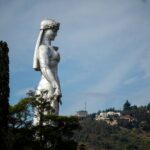
First is Kartlis Deda (Mother of a Georgian). This monument on Sololaki Hill is Tbilisi’s symbol, erected in 1958 for the city’s 1500th anniversary. It’s designed by sculptor Elguja Amashukeli and shows Georgian character in a pretty literal way: she holds a bowl of wine to greet friends and a sword for enemies. If you like monuments with clear symbolism, you’ll get a lot out of this stop in just a few minutes.
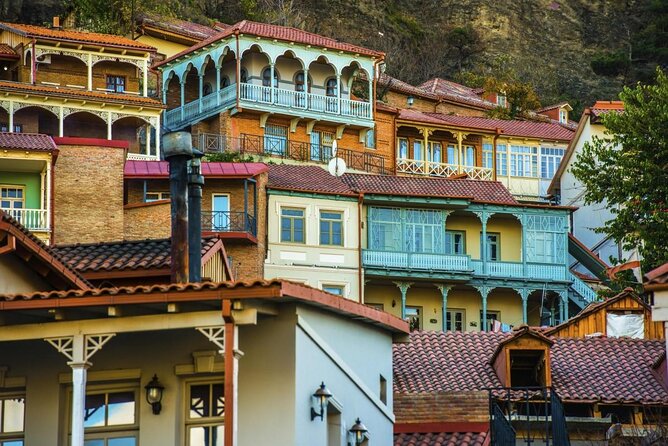
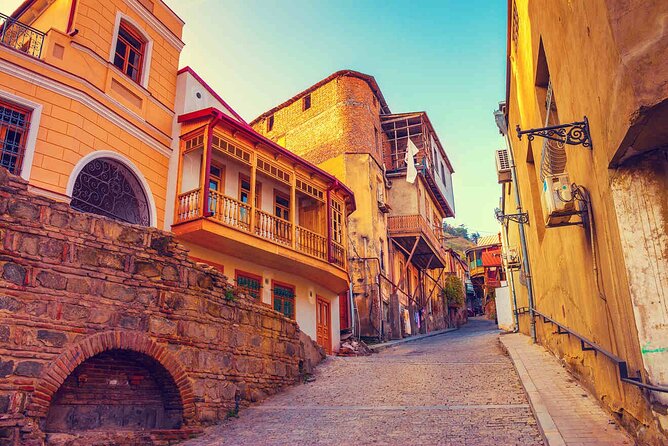
Then you end in the Old Town streetscape with Shardeni Street, a pedestrian lane known for its lively, attractive vibe. It’s a place you’d expect to see recommended again and again, because it’s easy to wander around at night after your guided route ends. The narrow streets and wooden balconies are exactly the sort of setting that makes Tbilisi feel like Tbilisi—not just like a place you passed through.
The tour winds down back at Rose Revolution Square, so you can continue your night plan from a clear starting point.
Wine Tasting and the Boat Ride: When the Tour Gets to Be Relaxing
This experience includes wine tasting if you choose the wine option. That matters for two reasons. One, it turns your last stretch from pure sightseeing into a slower social moment. Two, wine is one of the easiest ways to connect to Georgian culture because it’s tied to daily life, not just ceremonies.
The route also includes a boat ride on the river as part of the experience. In practice, it’s the kind of stop that gives your legs a rest while you see Tbilisi from a new angle. The river views are especially good around the illuminated bridge and waterfront areas.
Weather can affect timing. The experience is described as requiring good weather. If conditions are bad, you may be offered a different date. On at least one rainy-night scenario described for this tour, the schedule got adjusted and the boat element was handled with an alternative arrangement so the boat could happen on a different day.
Pace, Stairs, and Who This Is Really For
This is an evening walking tour, and that sounds simple until you’re doing it in the dark.
Expect a steady walking pace through multiple districts. Some stops are brief, so the guide is usually moving the group along efficiently. That’s great for first-timers, but it can feel like a lot if you’re hoping for a slow meander.
It’s also a stair-and-stretch tour. Narikala area, older lanes, and certain viewpoints can mean stairs and uneven steps. You can still do it if you’re reasonably mobile, but plan on grippy footwear and a calm pace.
If you’re traveling solo, this works because the group keeps you company and the guide helps you connect dots quickly. If you’re with family, Rike Park is the kind of break that helps. If you’re older or you’re carrying heavy bags, you’ll want to manage expectations and take breaks when offered.
How to Choose This Tour vs. Exploring on Your Own
This tour shines on your first day in town, or your first full evening. You get an overview of what Tbilisi looks like across neighborhoods, and you leave with a map in your head.
You might prefer to go solo instead if:
- you want long time inside churches or museums
- you hate stairs and uneven sidewalks
- you’d rather build your night around a single neighborhood
But if your priority is efficient orientation, this is the kind of ticket that pays off fast.
Should You Book This Evening Tbilisi Walk?
Yes, if you want a low-cost introduction to Tbilisi that combines landmarks, Old Town texture, and a relaxing boat moment. It’s especially smart when you’re short on time, because it helps you understand where things are and what’s worth a return visit later.
Skip it or choose a lighter day if walking at night makes you nervous, you’re sensitive to dark alleys, or you know you’ll struggle with stairs. Otherwise, book it. This is one of the best ways to see Tbilisi after sunset without spending a fortune—or wasting time figuring out your first routes.
FAQ
How much does the Tbilisi evening walking and wine-and-boat tour cost?
It costs $10.00 per person.
How long is the tour?
The tour is about 3 hours.
Where do I meet the guide?
You meet at Rose Revolution Square in Tbilisi, in front of the hotel Radisson. The activity ends back at the meeting point.
What time does the evening tour start?
The start time for the evening departure is 6:00pm.
Is the tour in English?
Yes, the guide service is offered in English.
What’s included, and is wine tasting optional?
The tour includes an English guide service. Wine tasting is included if you select the wine option.
Does the tour include a boat ride, and is it weather dependent?
The experience includes a boat ride, and it requires good weather. If it’s canceled due to poor weather, you’ll be offered a different date or a full refund.