REVIEW · TBILISI
Old Tbilisi Tour: Private Walking Tour With Wine Tasting
Book on Viator →Operated by We Are Georgia Tours · Bookable on Viator
Old Tbilisi turns your camera into a history quiz. This private walking tour strings together major sights in the center of Tbilisi, a cable car ticket up toward Narikala Fortress, and a Georgian wine tasting finish. It’s led in English and paced for your group, not a giant crowd.
What I like most is how the route connects places with meaning: the Kartlis Deda statue explains the friend-versus-enemy idea in one glance, and Abanotubani’s sulfur waters bring the city’s founding legend to life. Another big plus is the flexibility many guides bring—people have singled out guides like Luka, Lela, Mirian, and Mariam for pacing at your comfort level and adding helpful local food direction after the walk.
The one thing to keep in mind: this is still a moderate walking outing with hills and lots of stair-and-street moments. If you’re not a fan of steep old-town climbs or you’re traveling in extreme summer heat, plan your timing and wear real walking shoes.
In This Review
- Key highlights you’ll actually care about
- Price and What $39 Covers on This Old Tbilisi Walk
- Starting at Metekhi: Getting Oriented Before the Climb
- Narikala Fortress via Cable Car: Two Views and a Long Backstory
- Kartlis Deda and Abanotubani: The Wine Bowl Meets the 47°C Steam
- Leghvtakhevi Gorge and Chardin Street: Inner-City Nature and Nightlife Energy
- Sioni Cathedral to Peace Bridge: Sacred Relics and 10,000 Lamps
- Metekhi Cathedral and the Wine Tasting Finish: Turning Sights Into a Food Day Plan
- Tips to Make This Walk Feel Easy: Timing, Shoes, and Picking Your Guide
- Should You Book This Old Tbilisi Private Wine Tour?
- FAQ
- How long is the Old Tbilisi private walking tour with wine tasting?
- What’s included in the $39 price?
- Is this a private tour?
- Where does the tour start?
- What language is the tour offered in?
- Can I cancel for free?
Key highlights you’ll actually care about
- Cable car ticket included to reach Narikala’s viewpoints without hassle
- Private guide, English speaking, with real story-telling and room to set your pace
- Old Town route that hits icons like Sioni Cathedral and the Bridge of Peace
- Abanotubani sulfur-bath zone with a standout legend and real-world numbers (47°C)
- Wine tasting included plus some guides may extend the local-food mood afterward
Price and What $39 Covers on This Old Tbilisi Walk

At $39 per person, this feels like good value because you’re not just paying for a stroll. You’re also getting a guide, a wine tasting, and the cable car ticket needed for the Narikala portion. Add that up and the tour becomes less about paying for transportation and more about paying for someone to point out what you’d otherwise miss.
The private setup matters here. Since it’s only your group, you’re not stuck behind fast walkers or pulled into the loud “everyone together” rhythm that can ruin the best photos. It’s also listed as having group discounts and a mobile ticket, which helps if you like moving light and keeping things simple.
Two “not included” items to know up front: there’s no hotel pickup/drop-off, and you should plan for guide gratuities. In Tbilisi, that’s normal, but it changes how you plan your day—your meetup is in the Metekhi area.
You can also read our reviews of more walking tours in Tbilisi



Starting at Metekhi: Getting Oriented Before the Climb
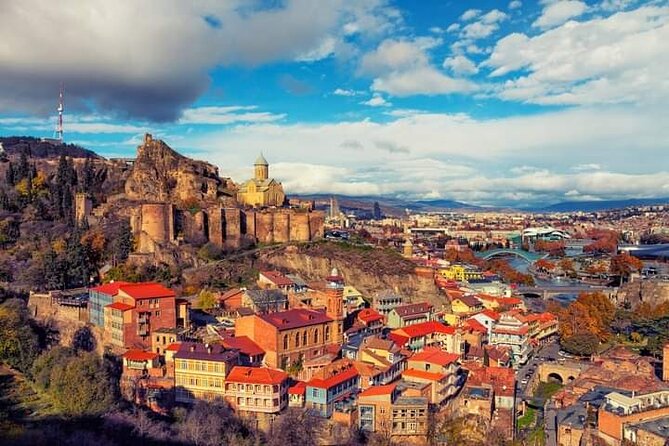
The tour starts at the Metekhi church of the Nativity of the Mother of God (Metekhi St). That location is smart because it puts you near the river and the main central area, so the rest of the old-town walk feels like a gradual reveal instead of a random stampede.
From the start, you’ll get context for what you’re about to see—this tour is built around understanding why these buildings, statues, and bridges exist, not just grabbing a quick snapshot. You’ll also be walking in a fairly tight urban network, which is great if you only have a few hours and want the highlights without committing to a full-day plan.
One practical note: the route is listed as requiring moderate physical fitness. That doesn’t mean it’s extreme hiking, but you should expect uneven old streets, some uphill sections, and time spent standing around viewpoints.
Narikala Fortress via Cable Car: Two Views and a Long Backstory
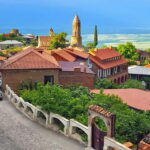
Narikala Fortress is where the tour earns its first wow moment. You’ll take the cable car and then move up to the fortress, where the architecture and historical layers are the main attraction.
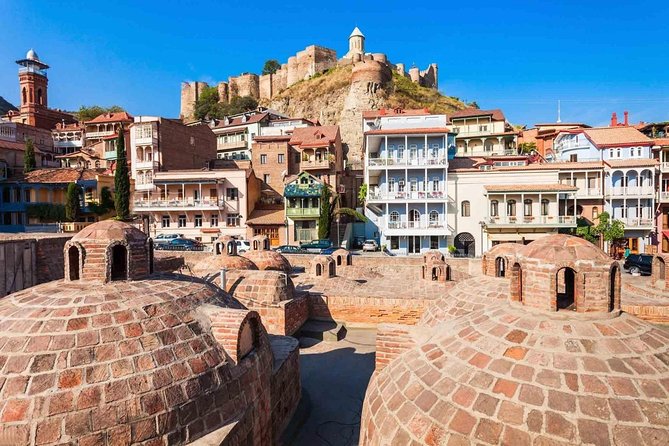
Here’s the cool part: Narikala isn’t one neat “ancient ruin” story. The structure was established in the 4th century as a Sasanian citadel called Shuris-tsikhe. It was expanded by the Umayyads in the 7th century, and later associated with King David the Builder (1089–1125). Over time, the Mongols renamed it Narin Qala, meaning Little Fortress, and many of the extant fortifications date from the 16th and 17th centuries. An earthquake in 1827 damaged parts of the fortress, and those sections were demolished.
Once you’re there, you get a “choose your mood” viewpoint. From the walls, you can see one side that looks like a working, busy city—and another side that opens into a quieter, greener space tied to the Botanical Garden. It’s a rare old-town contrast: modern movement on one side, calmer nature on the other.
The biggest drawback of Narikala is also the simplest: if you dislike steps or steep viewpoints, this is where you’ll feel it most. The good news is that you can explore at a comfortable pace since it’s a private tour and your guide can tailor the timing.
Kartlis Deda and Abanotubani: The Wine Bowl Meets the 47°C Steam

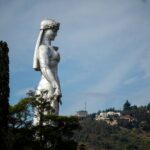
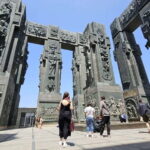
Next you’ll head toward Kartlis Deda, the tall statue on Sololaki hill. It was erected in 1958 for Tbilisi’s 1500th anniversary, designed by sculptor Elguja Amashukeli. The statue is 20 meters tall and shows a woman in Georgian national dress with a clear message: in one hand she holds a bowl of wine to greet friends, and in the other she holds a sword for enemies.
Why this stop is worth it: it turns a big photo spot into a cultural shortcut. You’ll understand the symbolism you’re seeing all over Georgia—hospitality is a big deal, but so is strength when needed.
Then you walk down to Abanotubani, the famous district associated with sulfur baths. The legend says this is where Tbilisi began in the 5th century AD. What makes it real is the water: sulfur water flows naturally from the soil and supplies about 3,000,000 liters per day at an average temperature of 47°C.
Even if you don’t go into the bathhouses, just standing in the area helps you understand why people describe this part of Tbilisi as uniquely Georgian. It’s not just architecture; it’s a living element of the city.
A small consideration: Abanotubani is atmospheric, but it can be warm and steam-heavy. If you’re sensitive to heat, plan your breaks and keep water handy.
Leghvtakhevi Gorge and Chardin Street: Inner-City Nature and Nightlife Energy
In the middle of the city, you’ll reach Leghvtakhevi Gorge and see the Leghvtakhevi Waterfall area. The idea is simple: step into a cooler pocket and enjoy a small but satisfying waterfall tucked in the old-town environment.
This is a practical stop in summer. When Tbilisi gets hot, it’s a relief to find shade and damp air, plus it gives your legs a mental break between the longer sight stops.
After that, the tour heads toward Jan Shardeni Street, also known as Chardin Street. It’s named after French traveler Jean Chardin, who visited Georgia in the 18th century and later returned with strong impressions. The street is loved for its color and for nightlife that can go late—up to 5 a.m.
The benefit for you: the tour doesn’t treat nightlife as an afterthought. It places you in the part of Old Tbilisi where the city feels alive after dark, even if you’re doing the walk earlier. That helps you decide where to return later for dinner.
If you’re traveling with people who prefer quiet, this can feel lively depending on the hour. The tour timing matters, so if you want calmer streets, aim for earlier time slots in the day.
You can also read our reviews of more food & drink experiences in Tbilisi

Sioni Cathedral to Peace Bridge: Sacred Relics and 10,000 Lamps

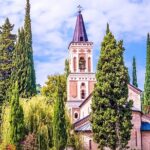
One of the religious anchor points on the walk is Sioni Cathedral Church. It’s described as one of the holiest places in Georgia. The first church on the site was built in the 5th century by order of Vakhtang Gorgasali. The current temple is a 17th-century building that preserves a major relic: St. Nino’s original cross, dating to the 4th century.
This matters because it’s not just a pretty church. It’s a continuity story: layers of faith, rebuilt structures, and the survival of an object that carries deep meaning.
Then you’ll continue toward the Bridge of Peace, the glass walking bridge that opened in 2010. It’s 156 meters long and includes 10,000 lamps, which is why it’s so associated with night lighting and river views.
Why I think this bridge is worth including on a short tour: it’s a modern counterpoint to the older stone and sacred interiors. You get both the old and the new in the same half-hour range, and the Mtkvari river setting helps you connect Tbilisi’s geography to its buildings.
Practical note: if it’s windy or wet, glass bridges can feel colder. Bring layers if you’re in shoulder season.
Metekhi Cathedral and the Wine Tasting Finish: Turning Sights Into a Food Day Plan
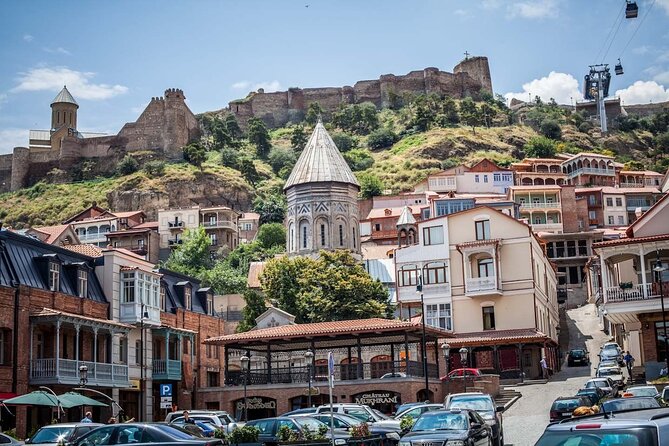
As the tour works back toward the end, you’ll reach Metekhi Cathedral, officially the St. Mary’s Cathedral of Metekhi, on the left bank of the river Mtkvari. There’s a legend tied to the site: the remains of St. Shushanik are said to be found here. In the yard, you’ll see a statue of Vakhtang Gorgasali, adding another layer of Georgian leadership and myth history.
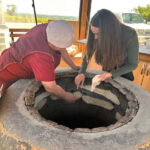
The pacing then leads naturally into the wine tasting included with your tour. The tasting isn’t just a checkpoint—it’s one of the most efficient ways to understand Georgian culture in a couple of hours. The country’s wine identity shows up everywhere, and this gives you a taste before you start asking locals what you should order next.
A nice bonus from the real-world experience of the tour: some guides have been noted for pairing the tasting with more local atmosphere, and a couple of people mentioned chacha after wine and even a chimney cake afterward. Don’t assume that’s guaranteed at every tasting stop, but it’s a good sign that the guide may keep the local-food vibe going after the main tasting.
If you drink less or not at all, your best move is to tell your guide your preferences early. Since it’s private, you should be able to coordinate what you’re comfortable with as the route unfolds.
Tips to Make This Walk Feel Easy: Timing, Shoes, and Picking Your Guide

This is the kind of tour where small choices make the difference between a fun walk and a tiring one.
- Wear shoes with grip. Old Tbilisi streets can be uneven, and you’ll be on foot for most of the time.
- Plan for hills. The fortress segment and the streets between viewpoints add up, even without long distances.
- Consider timing for the cable car view. One guide suggestion that comes up: in summer, the best cable car time is around 7:30 p.m. for better light and views.
- Use your guide’s flexibility. People have praised guides who adjust the schedule if the cable car has issues, keeping the walk logical instead of stressful.
- Ask for a specific guide if you have a preference. If you want a relaxed, storytelling style, names like Luka, Lela, Mirian, and Mariam were repeatedly associated with smooth pacing and friendly service.
Also remember: no hotel pickup means your start time depends on how you get yourself to the Metekhi church area. Build a little buffer so you’re not arriving out of breath.
Should You Book This Old Tbilisi Private Wine Tour?
Book it if you want a high-value Old Tbilisi orientation in about 2–3 hours. This tour is especially good for first-timers because it hits the “why” behind the major sights: fortress views explained, statues turned into symbols, bathhouses made understandable, and bridges placed in the city’s story.
Skip it or rethink the timing if walking uphill and standing for viewpoints is hard for you. The tour is listed as moderate fitness level, and the best parts sit at heights and viewpoints. Also, if you dislike alcohol entirely, double-check how the wine tasting portion will work for your comfort—private guides can often adjust, but the tour includes wine tasting by design.
If you’re arriving in Tbilisi with limited time and you’d rather have an informed, guided route than wander blindly, this is a smart first-night (or first-day) move.
FAQ
How long is the Old Tbilisi private walking tour with wine tasting?
It lasts about 2 to 3 hours.
What’s included in the $39 price?
You get a guide service, wine tasting, and a cable car ticket.
Is this a private tour?
Yes. It’s a private tour/activity, and only your group participates.
Where does the tour start?
The start point is the Metekhi church of the Nativity of the Mother of God on Metekhi St, Tbilisi.
What language is the tour offered in?
The tour is offered in English.
Can I cancel for free?
Yes. Free cancellation is available up to 24 hours before the experience start time for a full refund. If you cancel less than 24 hours before, the amount paid isn’t refunded.