REVIEW · TBILISI
Tbilisi Old Town Walking Tour with a Local Guide
Book on Viator →Operated by Views Georgia Tours · Bookable on Viator
The Old Town tells stories everywhere.
This Tbilisi Old Town walking tour mixes centuries-old faith, modern bridges, and street scenes into one easy, efficient loop that really helps you get your bearings fast. I especially like how it’s paced for real chatting with your guide, and how the stops connect to Georgian culture beyond the postcard view. One thing to keep in mind: churches have a dress code and inside photos are not allowed.
What I like most is the way each stop is explained with clear context, not just names on a map. I also appreciate the smart mix of icons—like the Bridge of Peace and the Sioni Cathedral complex—plus smaller artistic moments you might miss on your own. The route is short enough to feel doable, but you do still walk for a few hours.
The main drawback is practical, not dramatic: it depends on good weather, and the no photos inside churches rule plus dress code can slow you down if you’re not prepared.
In This Review
- Key highlights to plan for
- Why this Old Town walk works (and where it ends)
- Stop 1 by Dry Bridge: Berikaoba’s motion-filled sculpture group
- Anchiskhati Basilica: a 6th-century church that anchors the city
- The Bridge of Peace: glass and steel over the Kura River
- Shardeni Street: the Old Town lane between big names
- Rezo Gabriadze Marionette Theater: the clock tower and the play
- Sioni Cathedral complex: Assumption church plus the meaning of Sioni
- Tamada statue: wine-toast tradition made into bronze
- Near Metekhi Church: an Elguja Amashukeli monument overlooking the river
- Europe Square: EU flags and Georgia’s long conversation with Europe
- The Great Synagogue: history from 1895 to 1903
- Tree of Life (2016): David Monavardishvili’s modern memory
- Rike–Narikala cable car: the fast route to big views
- Kartlis Deda: Mother of Georgia above the city
- Price and value: what you’re paying for at $38
- Who this tour is best for
- Should you book this Tbilisi Old Town tour?
- FAQ
- FAQ
- How long is the Tbilisi Old Town Walking Tour?
- What language is the tour offered in?
- How much does the tour cost?
- What’s included in the price?
- Is lunch included?
- Are tickets for the stops included?
- Can I take photos inside churches?
- Is there a wine tasting on the tour, and is there an age limit?
- What’s the group size?
- What happens if the tour is canceled due to weather?
Key highlights to plan for
- Free-admission stops across churches, monuments, and key squares during the walking portion
- Small group size (max 15) that makes Q&A actually possible
- Bridge of Peace over the Kura River: glass-and-steel modern design
- Sioni Cathedral and Tamada statue: faith and Georgian wine-toast tradition in one corridor
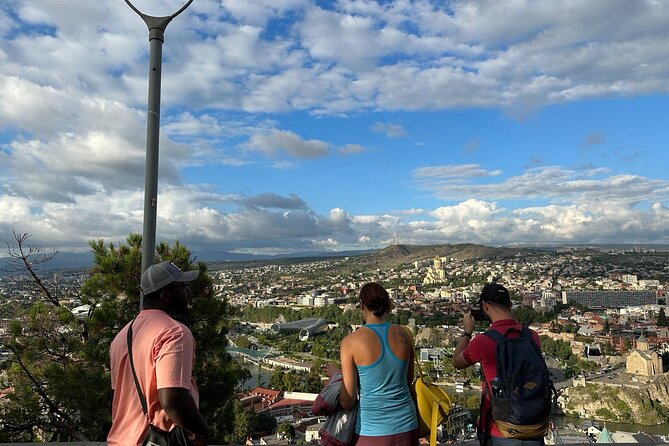
- Rike–Narikala cable car ride for quick, high-reward views
- A flexible culture break with a bakery stop where wine tasting follows the 18+ rule
Why this Old Town walk works (and where it ends)
This tour is built for people who want to understand Tbilisi in a few hours without sprinting. Expect about 3 hours 15 minutes total, in English, with a maximum of 15 travelers—small enough that your guide can answer questions instead of rushing everyone along.
You start at 17 Ioane Shavteli St and end at Freedom Square. That ending matters. Freedom Square sits in a useful central spot, so you can keep exploring afterward by taxi, bus, or on foot.
You can also read our reviews of more walking tours in Tbilisi



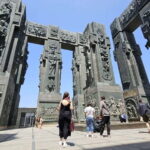
Stop 1 by Dry Bridge: Berikaoba’s motion-filled sculpture group
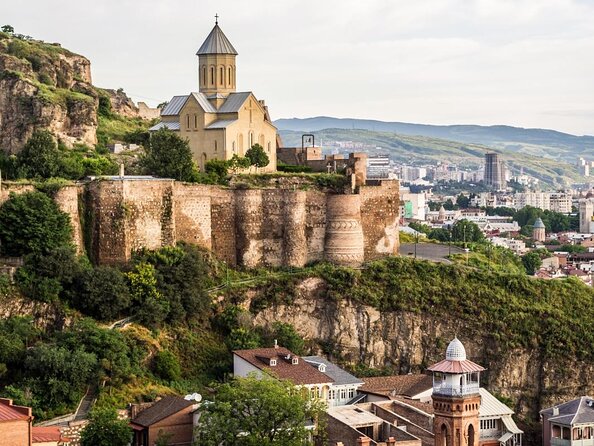
Your first photo moment comes near Dry Bridge, where you’ll see the Sculpture Group Berikaoba. The monument shows expressive figures in motion, and the guide’s explanation focuses on what it represents: the spirit of freedom and rebellion tied to Georgian cultural tradition.
Why it’s a great opening: it sets a tone. Before you even reach the big churches and squares, you’re already seeing how Tbilisi uses art to talk about identity, not just beauty.
Quick practical note: it’s only a 10-minute stop, so keep your camera ready, but don’t expect time to linger long.
Anchiskhati Basilica: a 6th-century church that anchors the city
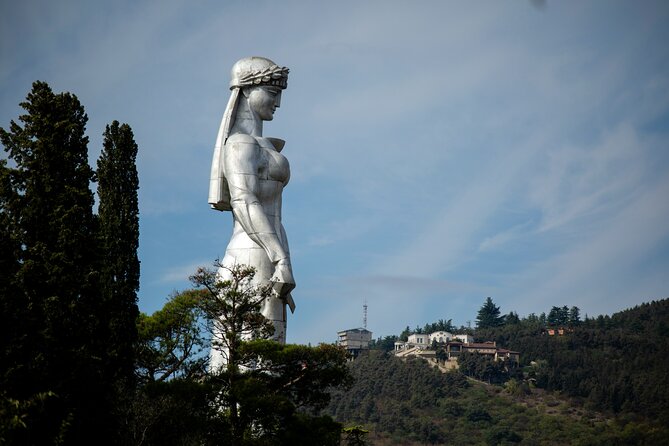
Next up is Anchiskhati Basilica, described as Tbilisi’s oldest church building—dating back to the 6th century. The building is a three-nave basilica, which gives it a distinctive layout and feel compared with smaller church structures you’ll see later in your walk.
What you’ll get from the guide here is the “why it matters” part. This isn’t a random stop; it’s a reminder that Tbilisi’s religious architecture isn’t new—it’s been shaping the city’s self-image for centuries.
One more practical thing: churches come with rules. You’ll want to follow the dress code and remember that photos inside churches aren’t allowed.
The Bridge of Peace: glass and steel over the Kura River
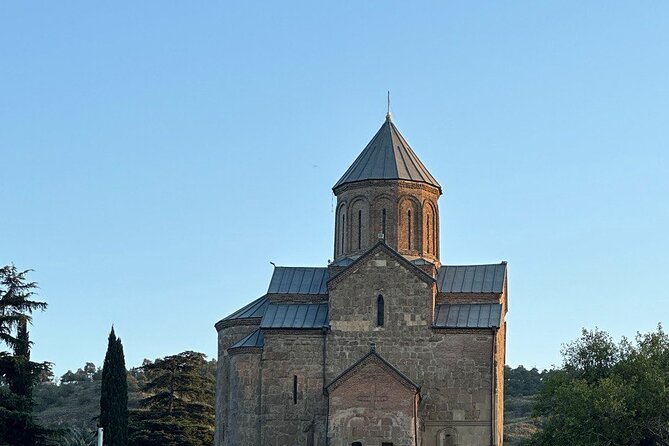
Then comes one of the most recognizable modern landmarks in central Tbilisi: the Bridge of Peace. It’s a relatively new bridge, built with a glass-and-steel bow-shaped design crossing the Mtkvari (Kura) River.
This stop is short—about 10 minutes—but it’s a strong contrast point. You’ll go from ancient faith (Anchiskhati) to contemporary engineering (Bridge of Peace) without feeling like you’ve switched tours.
Bring a bit of patience for wind. The river area can feel breezy, and if you’re trying to frame photos of the bow shape and the water below, a few seconds of light and angle matter.
Shardeni Street: the Old Town lane between big names
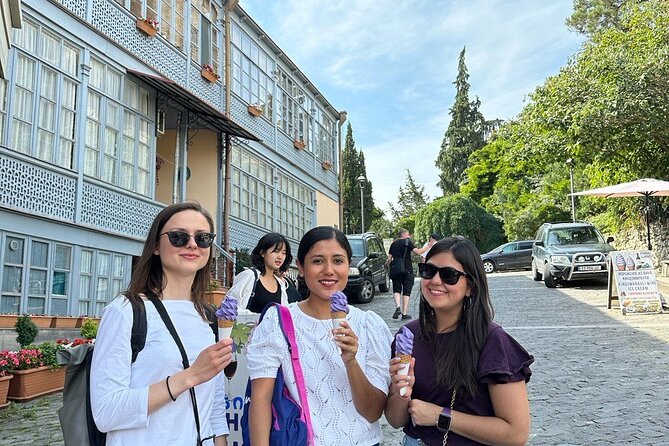
You’ll also spend time at Shardeni Street, a small walking street in the Upper Kala district, between Vakhtang Gorgasali Square and Sioni Street. This is the kind of street that helps you understand how people actually move through the Old Town—more like a social corridor than a museum hall.
I like Shardeni Street during guided tours because the “why” makes it easier to enjoy. The guide’s context helps you notice details you’d otherwise skip: the way the street fits into the larger urban plan and how it connects major religious sites to everyday life.
Expect it to feel lively. Still, keep it respectful—this is a street, not a staged viewpoint.


Rezo Gabriadze Marionette Theater: the clock tower and the play
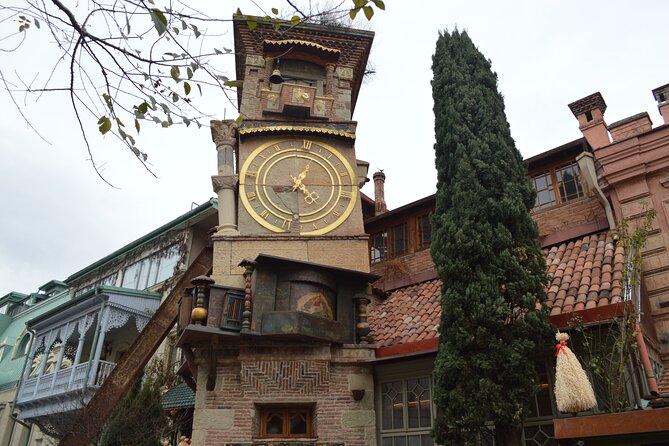
Next is Rezo Gabriadze Marionette Theater, a stop where the guide helps you read the architecture and the symbolism around the place. You’ll be looking for the clock tower in front of the theater, plus the unique character of the building itself.
Why it’s a smart stop: puppetry fits Georgian culture as a mix of craft, humor, and storytelling. Even if you don’t plan to see a show, the theater’s presence tells you something about local creativity and how art stays embedded in the city center.
It’s another 10-minute moment—just enough to orient yourself and absorb the “street landmark” feeling.
Sioni Cathedral complex: Assumption church plus the meaning of Sioni

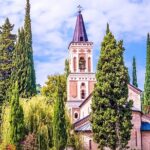
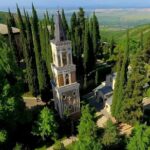
Now for one of the big spiritual anchors: the Sioni Cathedral Church complex. You’ll learn that the complex includes a fence, the Cathedral of the Assumption, and two bell towers.
The name “Sioni” is explained through a Hebrew reference to a sacred mountain in Jerusalem. It’s also tied to the meaning of sunny, which is a fun detail that makes the name feel less abstract.
This is also where planning matters for comfort. Dress code applies, and no photos inside means you’ll want to focus on the exterior views and respectful observation from wherever the group is standing.
Tamada statue: wine-toast tradition made into bronze
Near Sioni, you’ll find the Tamada (Toastmaster) Statue—a bronze sculpture of a traditional Georgian toastmaster holding a wine horn (kantsi) in a classic toasting gesture.
The guide’s story connects the statue to the broader Georgian ritual of supra, the Georgian feast where the toastmaster role is central. You’ll also hear that the statue draws inspiration from an ancient tamada figurine found in Vani, dating back over 2,000 years.
If you like understanding culture through objects, this is one of the strongest stops. A statue becomes a shortcut to how social life works in Georgia—how people gather, how speech and wine move together, and how tradition persists.
Near Metekhi Church: an Elguja Amashukeli monument overlooking the river
Another moment in the walk takes you toward the area in front of Metekhi Church, where you’ll see a monument by Georgian artist Elguja Amashukeli. The description emphasizes the figure facing down toward the Mtkvari (Kura) River.
Even with a short stop (about 10 minutes), this point helps you connect Tbilisi’s “top-down” views. Metekhi’s area gives you a sense of how the city layers itself—church, river corridor, and surrounding Old Town streets.
If you’re a person who likes to learn the layout of a city, this is a useful mental checkpoint.
Europe Square: EU flags and Georgia’s long conversation with Europe
You’ll reach Europe Square, where the guide points out EU flags moving in the wind. Georgia’s approach toward the EU is described as something that’s been a long-term aim, and this square makes that visible quickly.
This stop is only 10 minutes, but it adds context that’s easy to miss when you only focus on temples and old streets. It’s a reminder that modern politics and international identity are part of how people experience daily life in Tbilisi.
The Great Synagogue: history from 1895 to 1903
Not far from there, you’ll see the Great Synagogue of Tbilisi in the Old Historical District. The building was built from 1895 to 1903 by Georgian Jews from Akhaltsihe.
This isn’t just architecture trivia. The guide’s explanation helps you understand how multi-faith communities shaped the Old Town. In a city where churches dominate your first impressions, this synagogue gives you a more balanced read.
Short stop—about 10 minutes—but it’s strong for perspective.
Tree of Life (2016): David Monavardishvili’s modern memory
Next is Tree of Life, a monument created in 2016 by artist David Monavardishvili. The idea is to encourage you to look closely and consider what might have inspired the design—possibly linking to older Tbilisi life and how people lived.
This stop is brief—around 5 minutes—but it can be oddly satisfying. It breaks up the heavier landmarks and gives you something you can interpret with your own eyes, guided by the artist’s intention.
Rike–Narikala cable car: the fast route to big views
The tour keeps a smart rhythm by ending the walking portion with a Rike–Narikala cable car ride. You’ll take it from the lower area in Rike Park, described as the center of Tbilisi.
The ride goes up for about 15 minutes, where you’ll get views from the top of the mountain area. This is one of those costs-and-benefits moments: you trade a little time for a lot of perspective.
One practical thing: the cable car stop can be the most weather-sensitive part of the tour. If it’s windy or rainy, the ride may feel less comfortable, and the operator may adjust depending on conditions—so wear layers you can handle.
Kartlis Deda: Mother of Georgia above the city
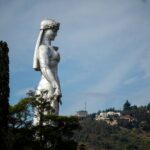
Finally, you’ll reach Kartlis Deda—the Mother of Georgia monument. The description says it gazes down at the city and represents Georgian women.
This is a fitting final viewpoint. After seeing river crossings, churches, and streets, you finish with a big, symbolic figure that ties identity to place. It’s another 10-minute stop that leaves you with a “now I understand the city’s shape” feeling.
Price and value: what you’re paying for at $38
At $38 per person, this tour is priced like a practical culture experience, not a luxury excursion. You get a professional guide, plus the cable car included as part of the experience.
Many stops on the walking route are free admission, including major churches and monuments. That matters because it keeps your total out-of-pocket costs predictable.
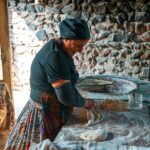
What costs extra? The tour doesn’t include lunch, and you may be encouraged to stop at a traditional bakery where lunch can cost around 3–5 GEL (roughly 2–3 euros). There’s also a note that wine tasting has a minimum age of 18.
If you’re on a tight budget: skip adding extras and focus on what you get built into the price—guided storytelling, the major central landmarks, and the cable car views.
Who this tour is best for
This tour is ideal if you:
- Want an organized Old Town overview without building an itinerary yourself
- Like understanding culture through specific objects and places (toastmaster statue, cemetery-adjacent monuments, synagogue history)
- Prefer small groups and real guide interaction
- Enjoy a mix of old and new: 6th-century basilica, modern bridge, and 2016 artwork
It may be less ideal if you:
- Hate walking for a few hours, even at a relaxed pace
- Get frustrated by church dress code rules and no-photo expectations
- Want strictly one type of attraction (if you only care about cathedrals, the EU square and cable car may feel like detours)
Should you book this Tbilisi Old Town tour?
I think it’s a solid booking if you want a first-pass understanding of Tbilisi. The route hits many key areas in a compact time window, and the guide’s explanations are built around meaning—what each monument represents and how it connects to Georgian life.
Book it if you want:
- A small-group guide-led walk
- A quick, high-reward viewpoint via the Rike–Narikala cable car
- A fair mix of faith, art, and modern identity
Skip it if you already know Tbilisi well and only want time in one narrow theme, or if the church rules and walking time would stress you out.
FAQ
FAQ
How long is the Tbilisi Old Town Walking Tour?
It’s approximately 3 hours 15 minutes, and travel time is included in that duration.
What language is the tour offered in?
The tour is offered in English.
How much does the tour cost?
The price is $38.00 per person.
What’s included in the price?
The tour includes professional guide service and the cable car.
Is lunch included?
No. Lunch is not included, and the tour may involve a bakery stop where lunch could cost around 3–5 GEL.
Are tickets for the stops included?
The stops list free admission for most sites. The cable car is part of the experience, but the tour details advise confirming ticket handling at booking since pricing can be presented differently depending on the segment.
Can I take photos inside churches?
No. Taking pictures inside the church is not allowed, and churches have a dress code.
Is there a wine tasting on the tour, and is there an age limit?
Wine tasting is noted with a minimum age of 18.
What’s the group size?
The tour has a maximum of 15 travelers.
What happens if the tour is canceled due to weather?
If it’s canceled due to poor weather, you’ll be offered a different date or a full refund.