REVIEW · MADRID
Madrid Countryside Wineries Guided Tour with Wine Tasting
Book on Viator →Operated by Gourmet Madrid · Bookable on Viator
Madrid’s wine scene feels secret until you drive 30 minutes out. This Vinos de Madrid countryside day brings you to three wineries for real tastings, with the kind of guide talk that turns grapes into a story. I love the hands-on access to winemakers and the way you sample a mix of modern and traditional styles. One heads-up: a lot of what you pour will be Tempranillo, so if you don’t like that grape profile, plan your expectations.
You also get the practical bonus: this is close enough to Madrid that it still feels like a day trip, not a logistics project. The minivan ride is air-conditioned, the tastings are structured, and the snacks are heavy enough to treat it like lunch. My only real drawback is timing—don’t be late, because the tour departs on schedule.
If you enjoy learning while you taste, you’ll have a great time. Guides such as Ismael, Antonio, Muna, and Enrique show up in English-language experiences, and their focus tends to land on how wines are made and why the region tastes the way it does.
In This Review
- Key things worth knowing before you go
- Entering Vinos de Madrid: a wine DO practically next door
- Price and value: is $175.35 worth it?
- Meeting point and timing: don’t let 9:30 a.m. ruin your day
- Getting you into the rhythm: what the 6-hour day feels like
- Stop 1: Señorio de Val Azul and organic vineyard precision
- Stop 2: Bodega del Nero, 900 years of river-valley winemaking
- Stop 3: Bodegas Jesús Díaz e Hijos, convent roots and clay jars
- Tastings, snacks, and how to pace more than 10 pours
- Guide style in real life: process talk that stays human
- Group size, comfort, and the minivan factor
- When plans go sideways: what happens with transport issues?
- Who should book this Madrid countryside wine tour?
- Should you book? My practical take
- FAQ
- How long is the Madrid countryside wineries tour?
- What time does it start, and where do I meet?
- How many wineries do you visit?
- How many wines will I taste?
- Is lunch included?
- Is the tour in English?
- What are the age limits?
- Do I need warm clothes?
- What’s the cancellation policy?
Key things worth knowing before you go
- Three wineries, not one “photo stop”: each stop includes time with the owners/winemakers and guided tastings
- More than 10 wines tasted: whites and reds, with local signatures like Malvar and Tempranillo
- Snacks that act like lunch: cheeses, Iberian products, and regional hot dishes served at the wineries
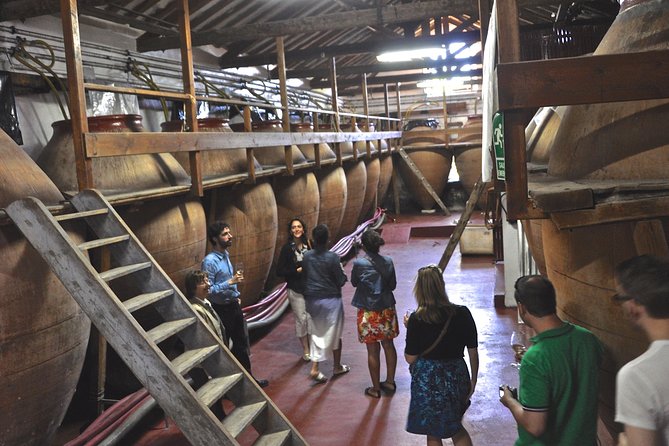
- Caves and clay techniques: expect to hear about fermentation methods like clay jars and see cellar spaces
- Small group feel: maximum group size is 20, often closer to about 8
Entering Vinos de Madrid: a wine DO practically next door
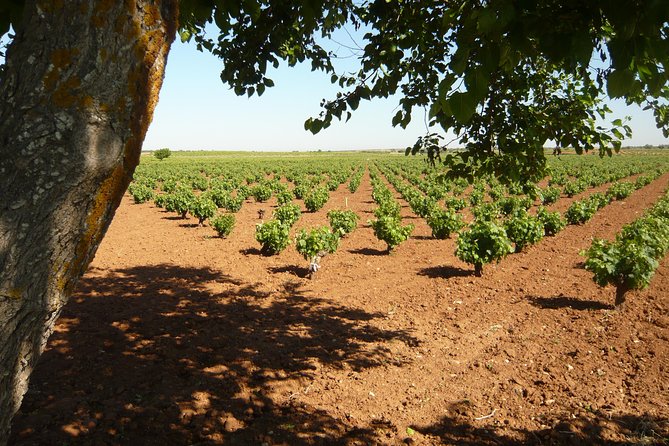
The big idea here is that you’re not heading to some far-flung wine region. You’re exploring Vinos de Madrid, the official Denominación de Origen zone right outside the city. That matters because the day stays fun and relaxed: you trade long highway time for shorter drives and more time tasting.
Vinos de Madrid is the kind of place where wine belongs to the landscape. You move through countryside dotted with vineyards and historic towns, and the contrast from central Madrid is quick and obvious. It’s not a theme park version of wine country—more like the real thing, with wineries that still operate as working estates.
And because this region is protected by strict DO rules, you’re sampling wines made within a defined production framework. For your palate, that’s a big deal: you can taste local character rather than random imports that just happen to be on a menu.
You can also read our reviews of more food & drink experiences in Madrid

Price and value: is $175.35 worth it?
At $175.35 per person for about 6 hours, this tour sits in the mid-to-higher end for day trips. The key question is what you actually get for that money, and you get a lot of “included” value.
Here’s how the price stacks up:
- Transport included by air-conditioned minivan/van
- Three guided winery visits with the owners/winemakers
- Wine tastings: more than 10 glasses across whites and reds
- Snacks that cover you like lunch: cheeses, Iberian products, and regional hot dishes served at the wineries
When a tour includes transport plus multiple winery stops plus a real tasting menu, the price starts to make sense fast. You’re not paying extra for every transfer or paying full restaurant prices for the midday meal. Also, the group size stays small enough that you’re not just herded through. That owner interaction is where the day gets more interesting than a generic tasting.
If you’re a total beginner, the structured explanations help you learn quickly. If you already know wine, you’ll likely like the practical, process-focused way guides talk about varietals and production methods.
Meeting point and timing: don’t let 9:30 a.m. ruin your day
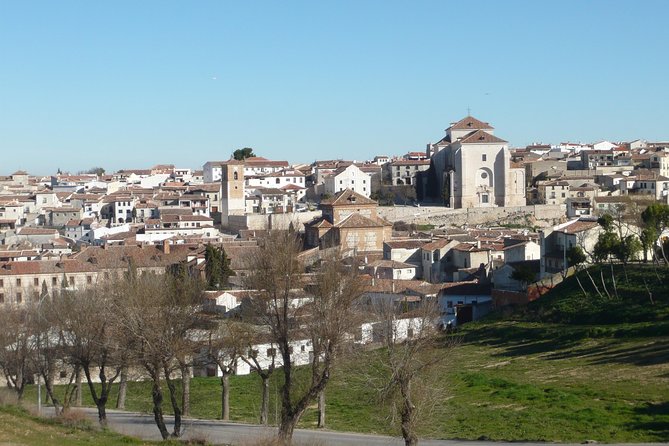
The tour starts at 9:30 am at Plaza del Conde de Casal, 6 (Retiro), in front of the cafetería of Hotel Claridge, next to the main hotel door. The closest metro is Conde de Casal (Line 6).
This is the one logistics detail I’d treat seriously: the tour departs on time. There’s an explicit warning that if you miss the departure, joining later costs extra. So give yourself slack. I strongly suggest you map a route the night before and budget 10–20 minutes more than your phone estimates.
Also note: the cafetería facilities are only allowed for their customers. Plan to meet outside, then head into the day.
Finally, I’d avoid Uber here. A regular taxi tends to be the easier call when you’re aiming to arrive calm and on time.
Getting you into the rhythm: what the 6-hour day feels like
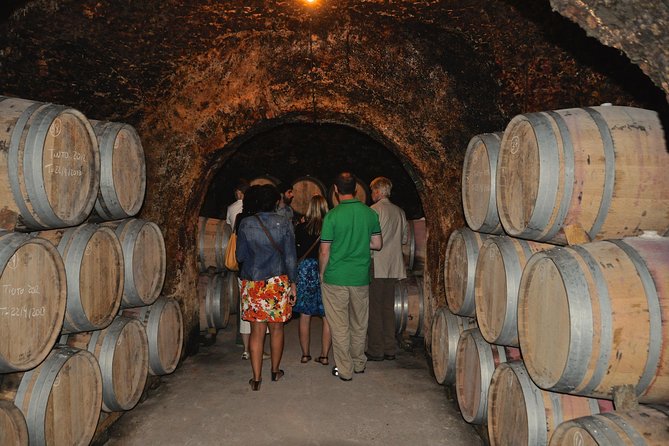
A typical day flows in a very clear pattern: meet, drive into the DO area, visit wineries in sequence, taste, eat, then return to Madrid by minivan.
After you board the vehicle, expect scenery changes quickly—from city edges to vineyards and historical towns. The guide talks as you travel, setting context so the first sip feels meaningful instead of random. That framing matters because Vinos de Madrid has its own identity: you’ll hear about local wine-making traditions, then you’ll meet them in the cellar and the vineyard.
The pace works for most people because each stop runs long enough for real conversation and tasting, not just a quick standing-in-a-room moment. You’ll return with a clearer sense of what defines Madrid wines and how production choices show up in taste.
Stop 1: Señorio de Val Azul and organic vineyard precision
The first winery stop is a boutique operation: Señorio de Val Azul. What stands out here is the organic vineyard approach—this is wine made from grapes grown around the winery itself. When you taste early in the day, that’s a helpful starting point because it gives you something concrete to connect to later: terroir, growing choices, and how those choices can shift the final glass.
You also get time to learn about the winery’s practices and then taste multiple wines in a guided format. The driving distances in this region are relatively short—about 30 km from Madrid—so you get that transported feeling without losing half the day to travel.
If you like intimate winery access, this is a good first stop. It’s the kind of place where questions feel welcome because the whole visit is built around the winemaking story, not just the tasting counter.
You can also read our reviews of more guided tours in Madrid



Stop 2: Bodega del Nero, 900 years of river-valley winemaking
Next up is Bodega del Nero, located in another Madrid town. Here the focus turns more toward the deep continuity of wine in the region—think 900 years of winemaking tradition tied to the river vegas (riverbanks).
The guide frames the region’s history around fertile valley land shaped by rivers like the Manzanares, Tajuña, Jarama, Henares, and Tajo. You don’t need to memorize the rivers, but the point is clear: the vineyards benefit from geography that’s been linked to wine production for centuries. It’s one of those times where history is less about dates and more about explaining why grapes can thrive in a specific place.
Tasting at this stop continues your “compare and learn” method. You’ll likely notice shifts between whites and reds, and you’ll hear more about production and local grape styles. If you want a day where wine becomes understandable instead of just enjoyable, this kind of stop does the job.
One more practical note: this is a long enough segment (about 1.5 hours) that you can actually reset between tastings without feeling rushed.
Stop 3: Bodegas Jesús Díaz e Hijos, convent roots and clay jars
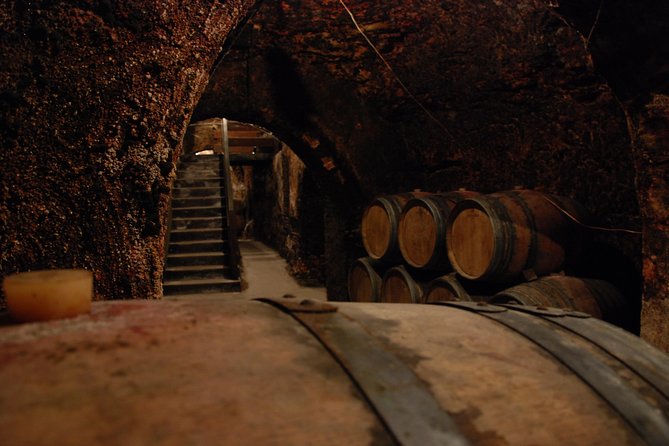
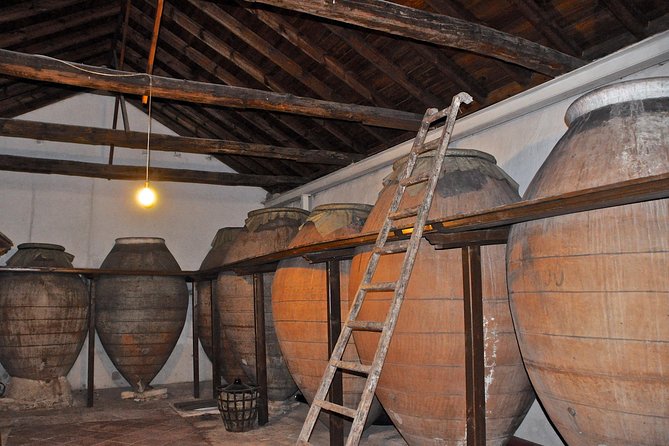
The third winery stop is Bodegas Jesús Díaz e Hijos, one of the oldest in Colmenar de Oreja. This winery is located on an old Franciscan convent, which means you’re not just visiting a modern tasting room—you’re walking through a wine site with layered time.
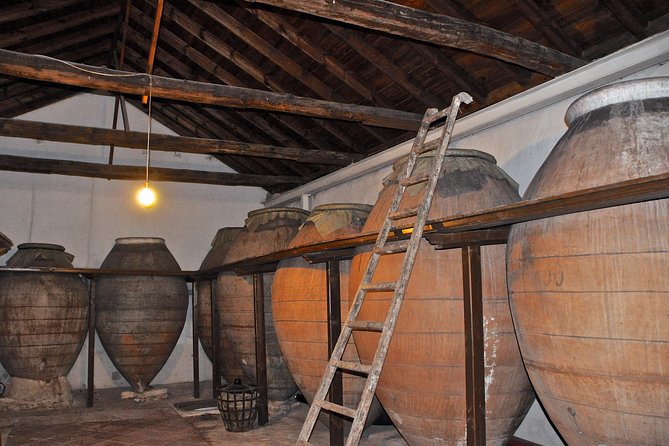
They’ve been making wine for over 100 years, and the production includes traditional techniques you can taste when you pay attention. You’ll hear about wines stored and handled in large clay jars (clay amphora-style storage/fermentation tradition), plus you’ll visit centuries-old caves where the wines rest.
Cellar time is also where packing advice starts to matter. The caves and cellars run cold, so bring warm clothes even if the Madrid sun is doing its best impression of summer.
This is often the stop that makes the day feel extra memorable. You’re connecting the modern act of winemaking to older methods, and the architecture adds weight to the experience. When you taste a wine after seeing clay and caves, it’s easier to understand why it tastes the way it does.
Tastings, snacks, and how to pace more than 10 pours
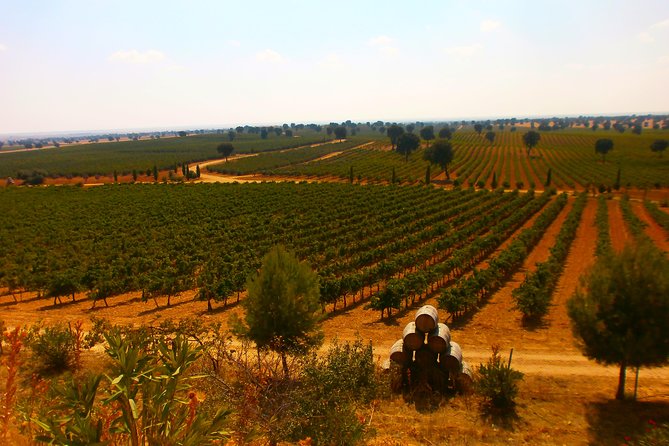
You should expect to sample more than 10 wines across the day, with a mix of whites and reds. Local styles you may taste include full-bodied Tempranillo reds and Malvar whites—two grapes strongly associated with the area.
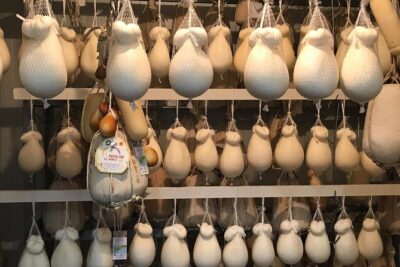
But what I really like is that the tasting isn’t supposed to be a sprint. You also get signature nibbles like Ibérico ham and local cheeses, plus regional hot dishes. The food is served at the wineries and is enough to act like lunch.
That matters for two reasons:
- It keeps you comfortable during the longer segments.
- It helps you taste more clearly without the heavy burn that comes from wine on an empty stomach.
So yes: eat a hearty breakfast before you go. The tour itself explicitly recommends it, and you’ll feel the difference by stop two. If you want to enjoy the whole menu instead of just enduring it, don’t skip breakfast.
Guide style in real life: process talk that stays human
This is not a lecture-only tour. The guide is there with you through the day, bilingual English/Spanish as needed, and the goal is learning tied to what you’re seeing and tasting.
I’ve found the best winery days are the ones where the guide can explain:
- why certain varietals show up repeatedly in the region
- how production choices affect aroma and taste
- what to look for while you’re tasting (not just what to drink)
The experience is built for that. And the names that pop up in many strong write-ups—Ismael, Antonio, Muna, and Enrique—suggest that the guides tend to be interactive, funny when it fits, and very comfortable talking about winemaking details.
If you’re traveling solo, a strong guide also helps you feel included in a small group. If you’re traveling with friends who don’t care about wine much, the food and the story elements usually keep everyone interested.
Group size, comfort, and the minivan factor
The max group size is 20, and the average group is about 8. That’s a sweet spot. Big groups can make tastings feel rushed. Small groups let you hear the guide and ask questions without screaming over noise.
Transport is an air-conditioned minivan or bus, depending on the day’s group size. You’ll spend time on the road, but it’s part of the experience because you’re heading into vineyard country. The day is designed so you don’t feel stuck.
One more practical comfort point: inside cellars it gets cold. Outside it can be warm. Dress in layers so you can handle both.
When plans go sideways: what happens with transport issues?
I don’t love thinking about this, but it’s worth knowing the tour isn’t helpless. On at least one occasion, a vehicle malfunction caused a quick adjustment: another bus arrived promptly to pick everyone up at the next stop, and the guide handled the logistics so the group lost minimal time.
So if you’re the type who worries about schedules, you can take some comfort: the team has shown they can adapt fast rather than just shrug and wait.
Who should book this Madrid countryside wine tour?
This tour is especially good for:
- Wine lovers who want to learn local grapes and production styles
- Beginners who want a guided tasting structure instead of a confusing free-for-all
- People who want an easy day trip without long-distance driving
- Solo travelers who like small-group conversations with winemakers
It’s also a decent fit for people who know a little wine already, because the stops include traditional techniques like clay jar methods and cave cellars. That gives you something to talk about after the day ends.
The main mismatch is simple: if you strongly dislike Tempranillo, you may not love every pour. This region leans toward local signatures, and Tempranillo is a recurring one.
Should you book? My practical take
If you want a full-day experience that’s both fun and instructional, I’d book it. The combination of three winery visits, 10+ tastings, and food that works like lunch is strong value for the money. The timing is also friendly: start in the morning, return to Madrid afterward, and you still get a full day in one package.
I’d especially recommend it if you care about what makes Madrid wines distinct, not just if you want to drink. You’ll walk away with a clearer sense of Malvar vs Tempranillo, what the region’s DO framework means, and how traditions like clay fermentation show up in the glass.
One last nudge: plan your breakfast like a pro and dress for cold cellars. Do that, and this becomes one of the easiest ways to turn Madrid into a real wine-country story.
FAQ
How long is the Madrid countryside wineries tour?
It runs about 6 hours.
What time does it start, and where do I meet?
It starts at 9:30 am at Plaza del Conde de Casal, 6, in front of the cafetería of Hotel Claridge (next to the main hotel door). The tour returns to the same meeting point.
How many wineries do you visit?
You visit three wineries.
How many wines will I taste?
You should expect to taste more than 10 wines across the day, including both whites and reds.
Is lunch included?
Lunch is not listed as a separate included item. But snacks served at the wineries are enough for lunch (cheese appetizers, Iberian products, and regional hot dishes).
Is the tour in English?
Yes. It’s offered in English, and the guide is bilingual (English and Spanish).
What are the age limits?
Children under 12 can’t take part. The minimum age for wine tasting is 18.
Do I need warm clothes?
Yes, the cellars are a bit cold. Plan to bring warm layers for cellar visits.
What’s the cancellation policy?
You can cancel for free up to 24 hours in advance for a full refund. If the minimum number of participants isn’t met, the tour may be canceled, and you’ll be offered an alternative date/experience or a full refund.