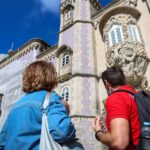
A ferry, a beer, and local Lisbon. This small-group walk turns the Mouraria neighborhood into a living classroom, then rolls you toward the Tagus for sweeping views and a proper meal. You start in Martim Moniz, learn how Moorish life shaped the streets, and pick up just enough Lisbon context to explore the rest of the city with confidence.
I especially like the hidden bakery stop for pastel de nata and hot coffee, plus the way the guide ties pastries to Lisbon’s stories. I also love the lunch setup: a Tagus-side meal of seafood rice with green wine, followed by more river views before you head back.
One consideration: this is built around traditional eateries, so dietary limits are a real constraint. Vegetarian and gluten-free options may be available, but they’re not guaranteed on all stops, and celiac, vegan, Kosher, and Halal diets aren’t accommodated.
In This Review
- Key highlights and what they mean for you
- First Steps in Mouraria: Martim Moniz to the Moorish Quarter
- Fado, Church Stops, and a Pastel de Nata You’ll Remember
- Rossio Square Area: Cobbles, Landmarks, and the Real Center of Town
- Carmo Convent Views: Beer in Hand, Big Lisbon in Sight
- Tagus Ferry to Cacilhas: The Ride That Changes Your Perspective
- Lunch by the Water: Seafood Rice and Green Wine
- Group Size, Pace, and the Human Touch (That Makes It Worth It)
- Price and Value: What You Get for $48.39
- Who Should Book This Tour (and Who Might Not)
- How to Use It as Your First-Day Plan
- Should You Book This Lisbon Mouraria–Tagus Walk?
- FAQ
- What’s included in the tour?
- How long is the tour?
- Where does the tour start and end?
- What time does the tour run?
- Is the tour suitable for all diets?
- Does the tour include Santa Justa Lift?
- Is it a walking tour, and is it hard?
- How large is the group?
- What language is the tour offered in?
- Do I get a ticket on my phone?
Key highlights and what they mean for you
- Mouraria’s Moorish roots on foot: You walk narrow streets where cars can’t go and you get the neighborhood backstory you’d miss on big sightseeing loops.
- Fado stories built into the day: The guide explains Fado’s UNESCO listing and the legend of Maria Severa, not just facts on a sign.
- Food stops that actually change the pace: Coffee and pastries early, then a beer later, then seafood rice by the water—so the walk stays lively but not exhausting.
- Rossio-area landmarks without the tourist stampede: You pass key sights like the Rossio train station’s neo-Manueline detail and learn what makes Rossio Square special.
- Ferry ride across the Tagus to Cacilhas: This is the practical payoff—views, fresh air, and a break from uphill Lisbon sidewalks.
- Beer plus big viewpoints from Carmo Convent: You get postcard views over São Jorge Castle and down toward Santa Justa Lift, without needing to ride it.
First Steps in Mouraria: Martim Moniz to the Moorish Quarter
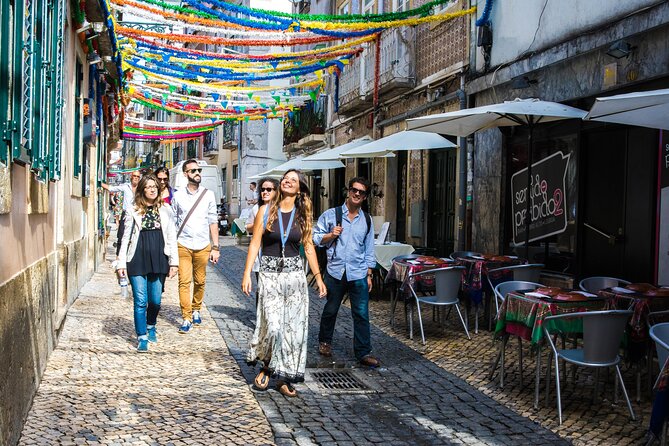
You meet at Praça Martim Moniz in Lisbon’s Mouraria district, a neighborhood known for its multicultural mix. Even before the walking starts, you get the feel of a place where different cuisines and cultures show up in daily life—not just on tour maps. On weekends, there’s a market with biological products and local music and shows, which adds energy if your day lines up with it.
From here, the tour moves at an easy, human pace. You’re not doing a sprint around “must-sees.” Instead, your guide sets the stage: Mouraria was the traditional residential district tied to the Moors, and the streets still carry that historical layering. You’ll hear why this area developed the way it did, and you’ll see the kind of narrow lanes where walking is the only sensible way to travel.
What makes this start useful for you: Mouraria is one of those parts of Lisbon where everything feels close together, but the meaning isn’t obvious. Having a guide in front of you turns it from random alleyways into a map you can understand later—when you come back on your own.
A small practical note: the tour has a “near public transportation” feel, which is good. If you need to pause or re-aim yourself later, you’re not stuck in the middle of nowhere.
You can also read our reviews of more walking tours in Lisbon



Fado, Church Stops, and a Pastel de Nata You’ll Remember

This tour doesn’t treat history like trivia. It treats it like a story with landmarks and food tied to it.
As you move through the neighborhood, you’re introduced to Fado, the Portuguese musical genre that’s listed as UNESCO Intangible Cultural Heritage. The guide also brings in the story of Maria Severa, an important figure in Fado history. The goal isn’t to turn you into an expert by the end of four hours. It’s to give you enough context that when you later hear Fado in a venue at night, you’ll understand what you’re listening to.
Then comes one of the best stops: a bakery hidden away from the busiest tourist flow. You’ll get a traditional pastel de nata with a hot coffee, and you’ll do it in a calmer space where you can actually take in the moment. The food matters here because it slows the day down just enough. It’s also a smart way to learn: you’re not balancing a history lecture while sprinting between sights.
The church portion adds another layer. You’ll pass a historic church in Lisbon described as a national monument, dedicated in 1241, and once the largest church in Lisbon. You might not be going inside as part of the plan, but the exterior and the surrounding streets still give you a sense of scale and old-world Lisbon ambition.
My advice: do not treat this as just a “snack break.” Use it to reset your brain. You’ll walk more after, but the day works better if you let coffee and pastry give you a mid-morning lift.
Rossio Square Area: Cobbles, Landmarks, and the Real Center of Town

After the Mouraria section, the tour shifts toward Lisbon’s central energy. You’ll pass through the Rossio area, including a moment around the Rossio train station with its neo-Manueline façade. Even if you’re not going inside, seeing that detail from street level helps you recognize why Lisbon looks the way it does—different architectural styles sitting next to older urban patterns.
You’ll also reach Praca Dom Pedro IV, better known as Rossio Square. This is the popular name for King Pedro IV’s Square, and it’s been one of Lisbon’s main squares since the Middle Ages. It has seen revolts and celebrations over the centuries. Today it’s a meeting place—locals and visitors both use it as a natural anchor.
Here’s the practical lesson for you: Rossio is a reference point. If you’re trying to orient yourself in Lisbon, knowing how Rossio fits into the city’s history helps you build mental routes. You learn about the famous Portuguese cobblestones too, including where they came from and why they’re such a defining feature.
One more subtle stop: Chiado gets mentioned as the nearby cultural and commercial district, known for theaters, museums, and luxury shopping. You’re not turning it into a shopping day, but the tour helps you connect the dots between neighborhoods.
What could feel like a drawback: Rossio and surrounding areas can be busier than Mouraria. The tour still keeps things under control with its small-group pacing, but if you hate crowds at all, plan for some “center-city” movement.
Carmo Convent Views: Beer in Hand, Big Lisbon in Sight
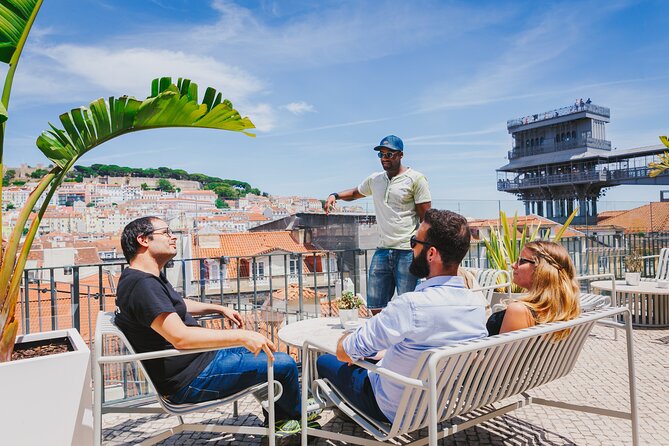
Carmo Convent is a viewpoint stop, and it’s one of the best “reward moments” on this route. You’ll head there for stunning city views that include sights like São Jorge Castle and Santa Justa Lift. The plan includes a refreshing Portuguese beer here, which is a nice break after walking and before the river portion starts.
Even if you’ve never been to Lisbon before, this is the kind of view that makes the city click. You see how neighborhoods stack against the hills, how the river cuts through the city’s layout, and where the classic landmarks sit in relation to each other.
Important detail: the tour does not include a trip on the Santa Justa Lift. So you’re getting the best part—seeing it from above and understanding it visually—without adding the extra time and queue stress that a lift ride can bring.
This is also where I’d tell you to check your shoes. You’ll want good footing for Lisbon sidewalks and viewpoints, and you’ll likely do more steps than you expect even on a “leisurely” walking tour.
Tagus Ferry to Cacilhas: The Ride That Changes Your Perspective
Now comes the part you’ll probably remember even more than the landmarks: the ferry ride on the Tagus River.
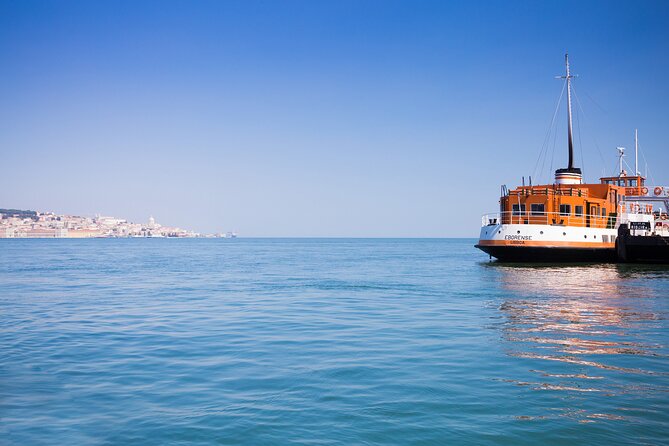
You board a ferry and cross the water to Cacilhas, a side of Lisbon that feels more local and less like the usual postcard route. On this tour, the ferry isn’t just transport. It’s the visual transition from hilltop walking to riverside Lisbon life.
From the water, you get a different Lisbon angle—straight lines, reflections, and a city view that walking alone can’t deliver. If you’re the type who likes photos, this is your moment. If you’re not, it’s still your reset button. The river air and the simple act of crossing makes the rest of the day feel easier.
Then you reach Pontal de Cacilhas, a smaller riverside area full of restaurants, especially known for seafood.
What’s great here for your planning: the tour keeps you from having to figure out ferry timing on your own. By the time you finish, you’ll understand how the river fits into Lisbon’s daily rhythm—so you can use the same idea later when you explore independently.
A few more Lisbon tours and experiences worth a look


Lunch by the Water: Seafood Rice and Green Wine
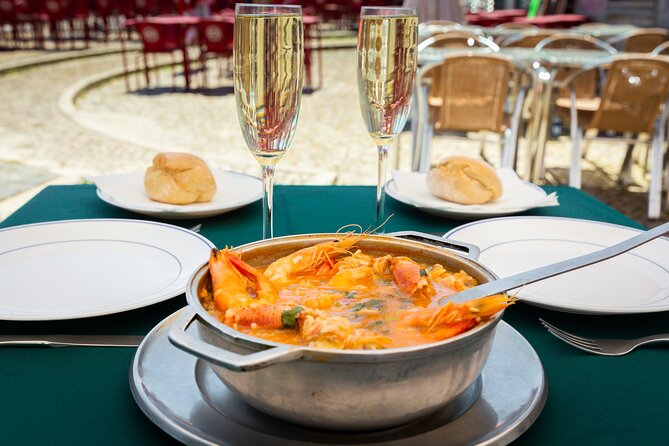
Lunch is served at a riverside restaurant after the ferry ride. You’ll eat the famous seafood rice, along with green wine and bread. It’s included, and it’s placed at the end of the most scenic stretch of the walk, so it feels like a payoff rather than another obligation.
This is also where you should consider dietary needs carefully. The tour notes that it visits traditional venues where dietary restrictions can be difficult to accommodate. Vegetarian and gluten-free options are available but not guaranteed on all stops, and the tour is explicitly not suitable for celiacs, vegans, Kosher, and Halal. So if any of those apply, don’t assume alternatives will work out.
For everyone else, this lunch is a solid value move. You’re not just paying for food—you’re paying for:
- a guided day that leads you to the right places,
- the ferry connection,
- and a sit-down meal with drinks included.
After lunch, you’ll have panoramic views as you finish eating and then return toward central Lisbon, where the tour ends.
Group Size, Pace, and the Human Touch (That Makes It Worth It)

This tour caps at 14 travelers, which is a key reason so many people rate it highly. A smaller group means the guide can keep track of your questions, your pace, and your attention span. It also makes the food stops less chaotic, since you’re not waiting in an enormous line with strangers.
The walking is described as moderate fitness level. Lisbon hills and steps add up, but the itinerary includes breaks and food stops designed to keep the day comfortable.
One more thing: the guide interaction is part of the value. You’ll hear from different guides over different days, and names like Maria, Franco, Carlos, Filipe, Guilherme, Daniel, Chon, Martin, Alex, Natália, Leslie, Johnny, and Philla have been associated with this experience. The common thread is that the tour turns history into something you can talk about while you eat and drink.
Practical tip: wear shoes you trust. The itinerary includes viewpoints and walking through stone-paved areas. Your feet will thank you later.
Price and Value: What You Get for $48.39

At $48.39 per person for about four hours, this tour earns its keep in a few specific ways.
First, it bundles real costs that add up quickly if you try to do them on your own: coffee and pastries, a full lunch (seafood rice plus green wine and bread), a beer, plus a ferry ride.
Second, you’re not just buying transportation. You’re buying context. The guide connects Mouraria’s Moorish roots to today’s streets, explains Fado and Maria Severa, and adds practical meaning to Rossio Square and Lisbon cobblestones. That’s exactly the stuff that makes your later self-guided exploring faster and less confusing.
Third, the pacing is built around breaks. If you only have a day or two in Lisbon, a four-hour plan like this can be the difference between seeing Lisbon and understanding it.
If you’re trying to optimize value, this is a good match because it’s not a “big bus, quick stops” style. It’s walking with meals that land in the right places.
Who Should Book This Tour (and Who Might Not)
This is a strong fit if you want:
- a small-group introduction to Lisbon’s neighborhoods,
- food and drink included (coffee pastry, beer, and seafood rice lunch),
- and a mix of history, viewpoints, and river scenery.
You should also like the idea of learning stories you can carry into the rest of your trip. The Fado context alone can change how you experience Lisbon evenings later.
You might want to skip it (or research alternatives) if:
- you need strict dietary support, since celiac, vegan, Kosher, and Halal diets are not accommodated and gluten-free/vegetarian is not guaranteed,
- you dislike walking and steps, even if the day is paced and the fitness level is moderate.
Also, if you’re expecting Santa Justa Lift as a ride, know that it’s not included. You’ll see it from viewpoints, but you won’t ride it as part of the tour.
How to Use It as Your First-Day Plan
If you’re arriving in Lisbon for the first time, I’d strongly consider doing this earlier in your trip. Here’s why it works as a first-day anchor.
You start in Mouraria and learn its story, then you connect the dots to Rossio Square and central Lisbon landmarks. Later you cross the Tagus by ferry and eat lunch on the riverside, which gives you a “Lisbon layout” lesson you can feel in your legs and memory.
After the tour ends at Cais do Sodré, you’ll likely find it easier to choose where to go next—because you’ll understand the river boundary, the center anchor, and which neighborhoods feel like they belong together.
If you want one simple tip: after lunch, take a few extra minutes to look back at the views. You’ll get the city picture in your head once, and then Lisbon will feel easier for the rest of your stay.
Should You Book This Lisbon Mouraria–Tagus Walk?
I’d book it if you want a high-value Lisbon introduction with real meals and a ferry ride, plus a guide who tells the story behind the streets. The small-group size, the mix of neighborhoods (Mouraria, Rossio area, Carmo viewpoints, Cacilhas), and the included food and drinks make it an easy decision for many first-timers.
I’d think twice if you have strict dietary needs or if you’re hoping for a ride on Santa Justa Lift, since neither is part of the plan.
If you’re flexible with food and you want to leave with a stronger sense of Lisbon than you arrived with, this is one of those four-hour days that pays off for the rest of your trip.
FAQ
What’s included in the tour?
Coffee and pastries are included, along with lunch (seafood rice, green wine, and bread). You also get a ferry-boat ride, beer, and a local guide.
How long is the tour?
It runs for about 4 hours.
Where does the tour start and end?
It starts at Praça Martim Moniz 2, 1100-341 Lisboa, and ends at Cais do Sodre, Lisboa.
What time does the tour run?
The start time is 10:00 am.
Is the tour suitable for all diets?
The tour notes that vegetarian and gluten-free options are available but not guaranteed on all stops. It is not suitable for celiacs, vegans, Kosher, or Halal. If you have allergies or dietary requirements, the tour warns alternatives may not be found.
Does the tour include Santa Justa Lift?
No. The tour does not include a trip on the Santa Justa Lift.
Is it a walking tour, and is it hard?
It’s a walking tour with a moderate physical fitness level required. It’s designed to be leisurely, but you should still wear comfortable shoes.
How large is the group?
The tour has a maximum of 14 travelers.
What language is the tour offered in?
The tour is offered in English.
Do I get a ticket on my phone?
Yes, it includes a mobile ticket.