REVIEW · TRIER
Trier: Guided City Walk with Wine Tasting
Book on GetYourGuide →Operated by Trier.Guide · Bookable on GetYourGuide
Roman Trier tastes like wine? It should. This 2-hour guided walk in Trier links Roman ruins and major church sights with a stop-by-stop tasting of local Moselle-style wines. The route starts at Porta Nigra, then winds through the old-town center toward the Forum Baths.
I especially like how the guide, often Simon, connects what you see to what you drink. You’re not just carrying a cup around town—you get snackable tastings (water and breadsticks are included) plus short explanations that make the city feel like one story, not eight random monuments. I also like the practical format: it’s a mostly flat, barrier-free walk with no steps required, and it runs rain or shine.
One possible drawback to plan for: the pace is built for covering several photo stops in about 2 hours. If you want to linger in interiors or slow down for long cathedral views, you may feel a little time-pressured in the busiest spots.
In This Review
- Key things to know before you go
- Roman Trier With a Cup in Hand: What This Walk Actually Feels Like
- Getting to the Meeting Point and Where the Tour Ends (So You Don’t Waste Time)
- Porta Nigra: The Roman Gate That Sets Up Everything Else
- Market Cross and Main Market: Where Stories Hit the Street
- Trier Cathedral and Liebfrauenkirche: Gothic Power, Plus Why It Matters
- Aula Palatina and the Electoral Palace: When Power Changes Hands
- Kaiserthermen and the Forum Baths: The Roman Water Theme Comes Full Circle
- The Wine Tastings: Summer Wines vs Winter Mulled Wine (and How to Use the Options)
- Price and Value: Why $43 Can Make Sense for This Route
- Who This Tour Fits Best (and Who Might Want a Different Plan)
- Small Logistics That Make a Big Difference
- Should You Book the Trier Guided City Walk with Wine Tasting?
- FAQ
- Where is the meeting point for the tour?
- How long is the walking tour?
- What languages is the guide available in?
- What drinks are included during summer?
- What happens in winter?
- Is there a non-alcoholic option?
- Does the tour run in bad weather?
- Does the tour involve steps, and is it wheelchair accessible?
Key things to know before you go
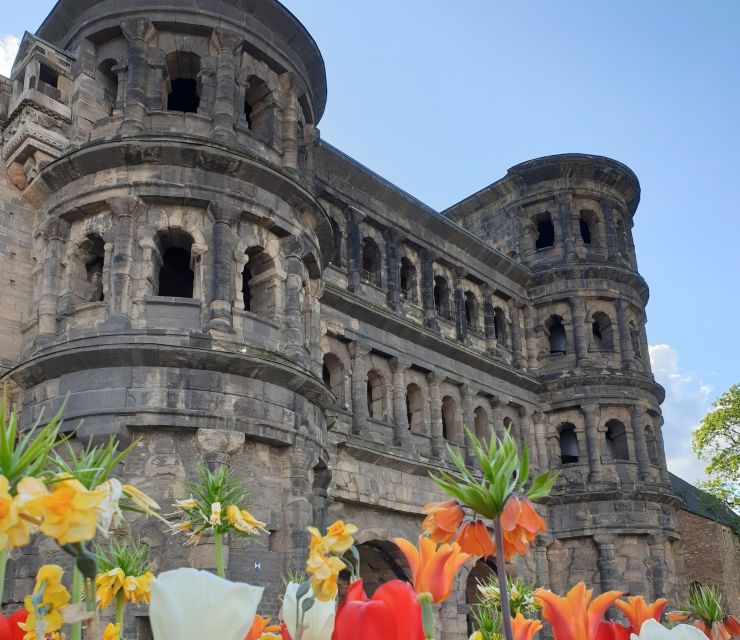
- Porta Nigra starts the story: a Roman city gate that sets the tone for the whole walk
- Wine tasting is tied to each stop: your guide connects the glass to the surrounding buildings and places
- Seasonal drinks: 5 regional wines in warmer months, or 4 mulled wines in winter (when at least 6 register)
- Plan for the end at Forum Baths: the tour finishes outside the ruins of a Roman bath complex
- Snacks and water included: breadsticks and water keep you comfortable between sips
- Optional non-alcoholic swap: grape juices are available if you book in advance by email
Roman Trier With a Cup in Hand: What This Walk Actually Feels Like
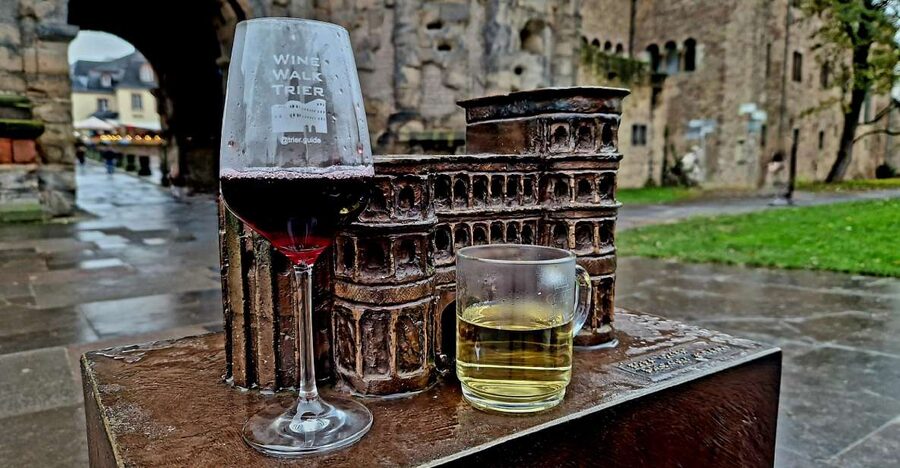
Trier is one of Germany’s oldest cities, and this tour is a smart way to see why. You’re walking the core of the city center—where Roman stone, medieval religion, and later civic power all sit relatively close together—while your guide threads it all together with wine that has a local connection.
The format is simple: you meet near the Porta Nigra area, then move stop to stop with short photo breaks and a guided explanation at each location. Along the way, you’ll get multiple tastings rather than one big pour at the end. That matters because it keeps you paying attention to each site instead of zoning out after the first highlight.
Also, don’t underestimate how much the “wine walk” concept changes Trier. On a normal self-guided stroll, it’s easy to see the big monuments and still miss the connections. Here, the drink gives you a rhythm, and the stories give you anchors.
You can also read our reviews of more tours and experiences in Trier.
Getting to the Meeting Point and Where the Tour Ends (So You Don’t Waste Time)
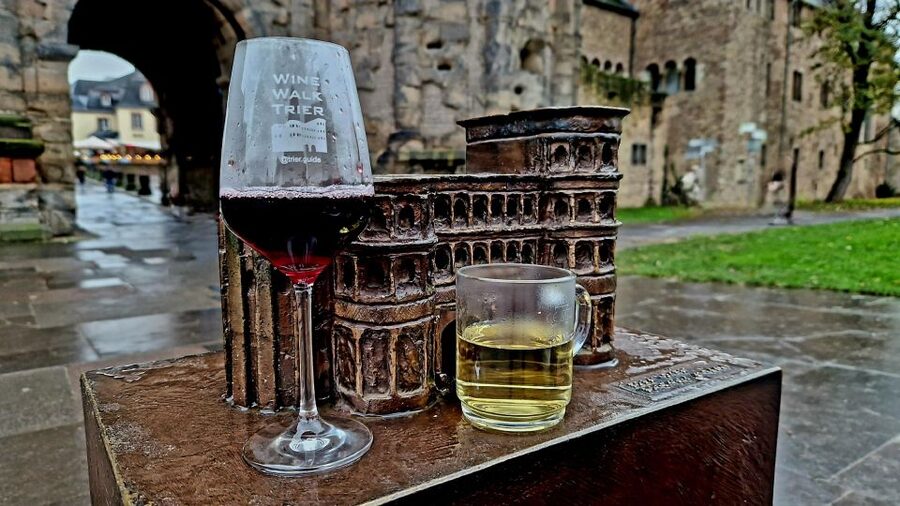
You’ll meet on the left side of the Trier Tourism and Marketing office building, in front of the city model near the flags. One detail worth noting: this tour isn’t provided by that tourist office, even though you meet nearby.
The itinerary is built to go forward through the old city rather than doubling back. You start at Porta Nigra and work through the center, finishing outside the Forum Baths. That finish point is useful: if you want to keep exploring after the tour, you’re already standing at a major Roman ruin site rather than back at the start.
Practical timing tip: because it’s a 2-hour experience with several stops, you’ll want to arrive a few minutes early. In the wider group reviews, guests describe how smoothly the tour runs when everyone is on time, and how the guide stays patient even if someone is late—but you shouldn’t count on a delay.
Porta Nigra: The Roman Gate That Sets Up Everything Else
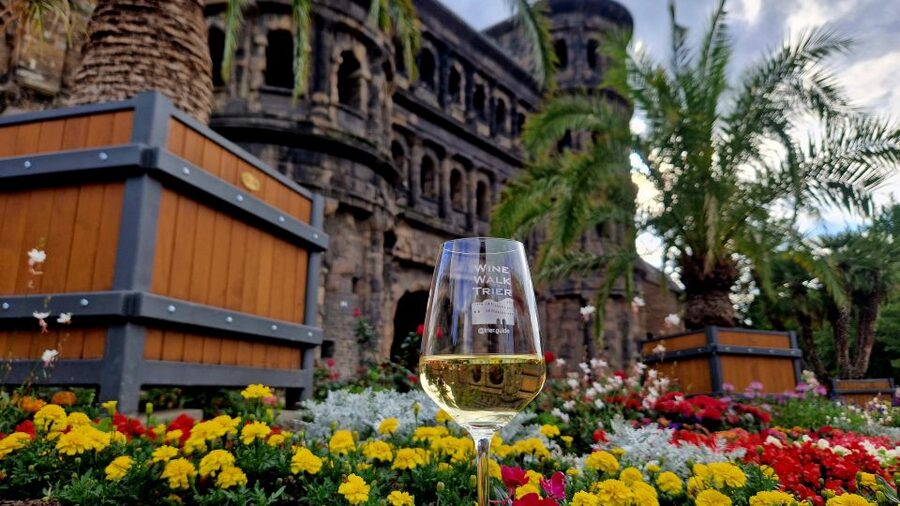
Porta Nigra is your first big moment. This Roman-built city gate is part of Trier’s fortifications system, and starting here does two things well.
First, it gives you a “before and after” feeling for the rest of the walk. Once you’ve seen Roman engineering in its original scale, the later buildings don’t feel random. Second, it’s an easy orientation anchor. After Porta Nigra, you can start spotting how Trier’s center evolved.
Expect this stop to be a photo moment plus guided context. If you’re the type who likes to understand why a place matters—not just what it looks like—that initial briefing pays off later at each subsequent stop.
Market Cross and Main Market: Where Stories Hit the Street
From Porta Nigra, the walk moves toward the Market Cross on the main market. This kind of stop is where the tour becomes more “walkable history” and less “museum sightseeing.”
It’s also a good moment to reset your expectations. The tour isn’t trying to cram in every detail of Trier. It’s designed to show you key anchor points and then use the wine tastings as reminders. So at the Market Cross, you’ll likely hear how the city’s social and civic life connected to what’s happening around you today.
One small consideration: main market areas can be louder and busier than church courtyards. If you want to hear every sentence, position yourself well within the group and face the guide.
Trier Cathedral and Liebfrauenkirche: Gothic Power, Plus Why It Matters
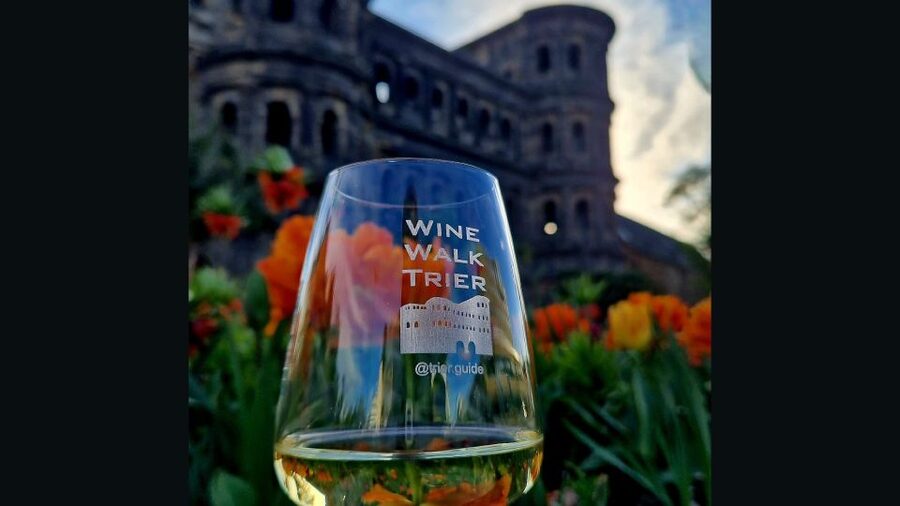
Next come the big church stops—Trier Cathedral and then Liebfrauenkirche, Trier.
These stops work because you’re not just staring upward. The tour uses them to show how Trier’s identity shifted over time. Roman foundations gave the city physical importance; later, religious architecture gave it spiritual and cultural weight.
Why the walk format helps: seeing cathedral spaces with a guide in sequence makes it easier to notice themes. You’ll connect what you’re seeing with what you just learned earlier—especially when the wine tasting ties back to the region and the historic places in the city center.
If you’re visiting in a season with longer daylight, great—take advantage. If not, focus on the guided interpretation rather than trying to photograph everything. These are strong visual stops, but the stories are what make them memorable in a wine-focused tour.
Aula Palatina and the Electoral Palace: When Power Changes Hands
After the churches, you’ll move to Aula Palatina, Trier, and then the Electoral Palace.
These stops shift the mood from purely religious symbolism to political and institutional history. In a city like Trier, that contrast is part of the point. The wine tasting doesn’t exist “in addition to” the history—it helps you keep track of it.
A helpful mindset: treat these places as markers along Trier’s timeline. You’re walking forward through eras, and the guide’s job is to keep those eras clear. If you like guided tours that have structure, this is one of the stronger parts.
Photo stop and sightseeing time are included, so you won’t feel like you’re sprinting nonstop. Still, keep your phone ready for quick snaps—this tour is a steady route, not a long sit-down at each monument.
Kaiserthermen and the Forum Baths: The Roman Water Theme Comes Full Circle
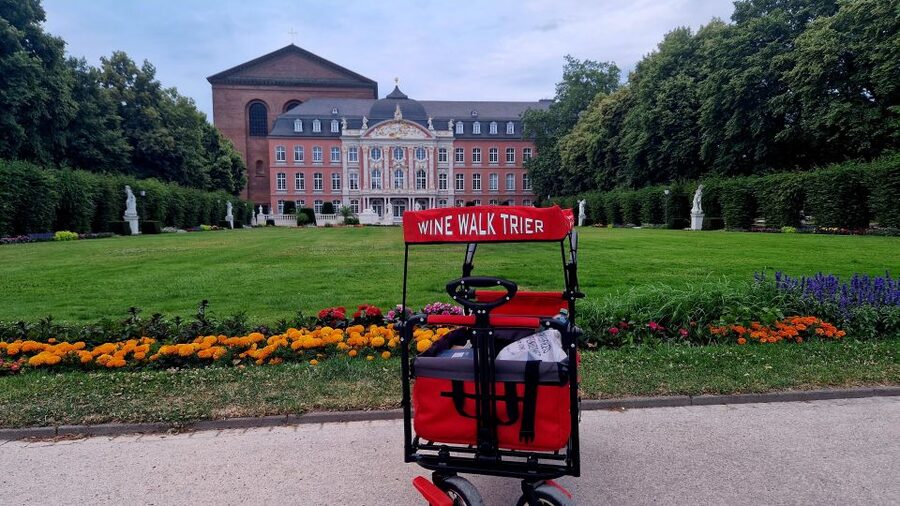
Then you reach Kaiserthermen and finally the Forum Baths, where the tour ends outside the Roman bath complex ruins.
This is a satisfying arc. Roman Trier starts with a gate, then you see the city center’s major landmarks, and you end where Romans once planned daily public life around bathing and water culture. Even if you only remember one thing, the “Rome built a whole system” feeling tends to stick.
One practical benefit of finishing at a ruin site: it’s a logical place to extend your evening. You’re near a major landmark, so you won’t feel stranded with nowhere to go next.
The Wine Tastings: Summer Wines vs Winter Mulled Wine (and How to Use the Options)
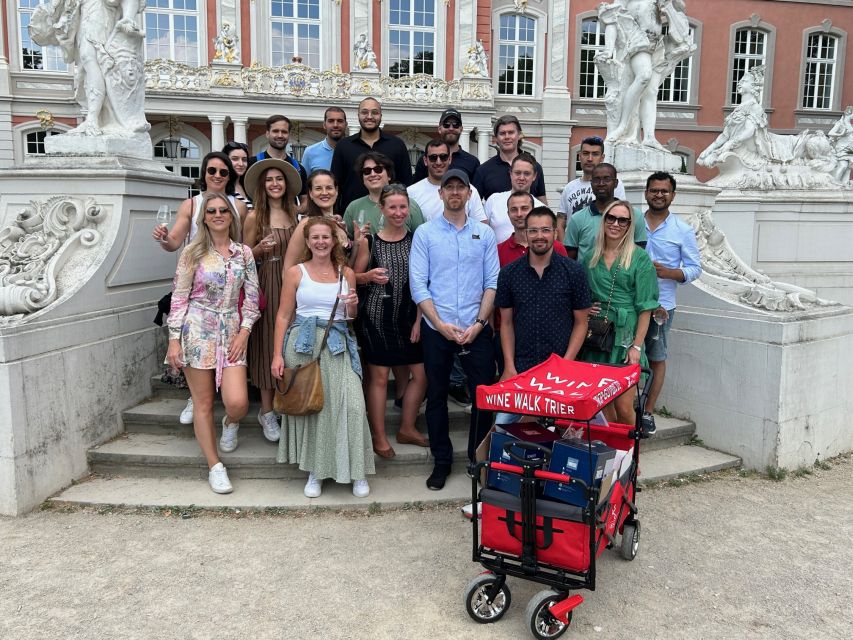
The headline here is how the tastings are built into the walk. You’re given five different regional wines in summer, or four different mulled wines during the winter period from mid-November until the end of January.
Here’s the key detail you should plan around: the winter mulled option runs only if at least 6 people register. If fewer people book, you’ll still get the summer-style plan with 5 different wines instead.
What’s included matters for value: you’ll get water and breadsticks with your drinks. That’s not a luxury add-on; it makes a multi-stop tasting more comfortable, especially if you’re walking in cool weather.
If you don’t drink alcohol, there’s a real workaround: you can request 4 different grape juices instead. The info says this is bookable over email, so if that matters to you, do it early rather than hoping it happens automatically.
Price and Value: Why $43 Can Make Sense for This Route
At $43 per person for a 2-hour guided walking tour with wine tastings, you’re paying for three things at once:
- a guide who connects history to what you’re drinking
- multiple tastings (5 wines in warmer months, 4 mulled wines in winter under the minimum-registration condition)
- included water and breadsticks, plus a post-tour voucher
The bonus voucher is a thoughtful touch. You get a voucher for 1 glass of wine to a main course at Weinwirtschaft Friedrich-Wilhelm, located in Trier next to the Basilika. That can stretch your tasting budget after the tour if you plan to eat nearby.
Extra items aren’t included:
- you can purchase a glass for 6€ after the tour
- wine glass holders can be purchased for 3€ after the tour
So the best value is for people who (1) like guided structure, (2) want several samples rather than a single tasting, and (3) are comfortable paying for wine as part of an experience rather than treating it like an optional add-on.
If you’re a hardline “I only drink occasionally” type, the included tastings may still be worth it for the history—but the value depends on your comfort with multiple small pours.
Who This Tour Fits Best (and Who Might Want a Different Plan)
This tour is ideal for you if you want to combine two of Trier’s best attractions: Roman and religious landmarks, plus Moselle wine culture. The walk covers major sights without feeling like you need to plan museum tickets or long transit between far-apart attractions.
It’s also a good pick for couples and friends because tastings turn the route into shared conversation. Solo travelers often enjoy it too, because the guide’s structure gives you a simple rhythm—and the tasting breaks make it easier to talk with others.
You might choose a different option if you’re the type who wants long, quiet time in one place. This is a route tour with photo stops. You’ll learn a lot, but you won’t have the luxury of staying 45 minutes inside every landmark.
Small Logistics That Make a Big Difference
This tour runs rain or shine. That’s great because Trier weather can shift quickly, and you won’t lose your day to cloudy skies.
The good news: it requires no climbing steps and is wheelchair accessible, which means the route is designed for barrier-free walking.
One more detail: the tastings are tied to specific city-center places. That makes it part of the fun, but it also means you should dress for walking and standing. Comfortable shoes matter more than you think when you’re moving through multiple photo stops.
And if you’re sensitive to noise, keep yourself positioned toward the guide in busier zones like the main market.
Should You Book the Trier Guided City Walk with Wine Tasting?
Yes, I think you should book it if you want a guided route that connects Trier’s big landmarks to the Moselle wine story. For $43, you get real structure: multiple tastings, water and breadsticks, and a guided explanation at major sites from Porta Nigra to the Forum Baths.
Skip it (or switch plans) if you’re mainly after slow, independent sightseeing. This walk is designed to cover highlights efficiently in about 2 hours.
Most of all, book it if you enjoy learning while you taste. When the guide links each pour to a place, the city clicks into focus fast—and Trier becomes more than postcards.
FAQ
Where is the meeting point for the tour?
Meet on the left side of the Trier Tourism and Marketing office in front of the city model near the flags.
How long is the walking tour?
The tour lasts about 2 hours.
What languages is the guide available in?
The live guide offers German and English.
What drinks are included during summer?
In summer, you’ll receive 5 different regional wines as part of the guided walk.
What happens in winter?
From mid-November to the end of January, the tour features 4 different mulled wines from local wineries instead of the normal wine, if at least 6 people register.
Is there a non-alcoholic option?
Yes. You can choose 4 different grape juices instead of wine by booking in advance over email.
Does the tour run in bad weather?
Yes. The tour takes place rain or shine.
Does the tour involve steps, and is it wheelchair accessible?
No steps are required, and the tour is wheelchair accessible.