REVIEW · SORRENTO
Pompeii, Herculaneum and Winery on Vesuvius with an Archaeologist
Book on Viator →Operated by Fabrizio Belleni - Leisure Italy Private Guide · Bookable on Viator
Pompeii and Herculaneum, paced like a pro. This private day trip from Sorrento (or Naples) mixes archaeology-focused touring with a winery lunch inside Vesuvius National Park, guided in English by Fabrizio Bellini, an archaeologist and long-time Pompeii guide. It’s built for real understanding, not just photo stops, with a flexible route that helps you slow down at the good parts and skip the worst congestion.
I especially like two things. First, you get a guided path through Pompeii’s key areas, from the Forum and the Temple of Apollo area to standout houses like the Casa dei Vettii and the rebuilt-up look at Insula dei Casti Amanti. Second, Herculaneum is handled with care, including the Antiquarium di Ercolano and the Boat Pavilion, where the preservation of organic finds makes the eruption feel uncomfortably real.
One thing to plan around: admission fees and the winery lunch aren’t included, and the day is long (about 8 to 9 hours). Also, the tour does not go to the top of Mount Vesuvius, so if you’re hoping for summit views, this is not that kind of outing.
In This Review
- Key Things I Think You’ll Appreciate
- Pompeii and Herculaneum With Fabrizio Bellini: The Real Value
- How the 8–9 Hour Schedule Actually Works (and How to Make It Comfortable)
- Starting Pompeii at Porta Marina: Getting Your Bearings Fast
- Pompeii’s Temple of Apollo and the Forum: Where the City’s Power Shows
- Casa dei Vettii and Insula dei Casti Amanti: When Pompeii Gets Personal
- Teatro Grande: The Roman Stage and the Weird Comfort of Acoustics
- Pompeii’s Antiquarium di Pompei: The Emotional Anchor Before You Move On
- Herculaneum’s Antiquarium and Boat Pavilion: Why This Town Feels Different
- The Ancient Beach and Houses of Sea-Side Luxury
- Herculaneum’s Baths and Gymnasium: Social Life, but Under a Roof
- Finishing Touch: A Roman Wine Advertisement and a Full-Day Reality Check
- Cantina del Vesuvio Winery Lunch: Where the Day Breathes
- Price and Value for a Private Day Trip From Sorrento or Naples
- Who This Tour Fits Best (and Who Might Prefer Something Different)
- Should You Book This Pompeii, Herculaneum and Vesuvius Winery Tour?
- FAQ
- Is pickup included, and where does it start?
- What’s included in the tour price?
- Are admission tickets included?
- Is the winery lunch included?
- Does the tour include going to the top of Mount Vesuvius?
- How long is the tour?
- Is it only for my group?
- What if I need to cancel?
Key Things I Think You’ll Appreciate

- Private archaeologist guide: English-led, with on-the-fly adjustments for your group’s pace
- Pompeii highlights in a smart order: from Porta Marina into the Forum zone, then houses and theater
- Herculaneum’s preserved details: organic materials and the shoreline context that explains what you’re seeing
- Winery lunch in Vesuvius National Park: vineyards, guided stroll, and wine paired with a set menu
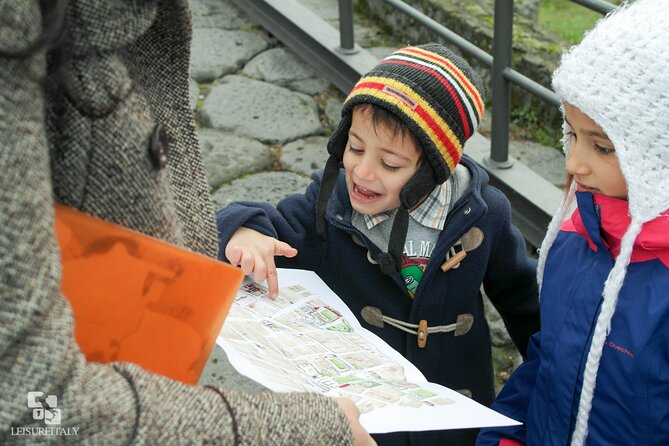
- Family-friendly handling: kids stay engaged with questions and active pacing (when you choose the family upgrade)
Pompeii and Herculaneum With Fabrizio Bellini: The Real Value
This is the kind of day trip that feels worth your time because it doesn’t treat Pompeii and Herculaneum like two checkboxes. You’re getting an archaeologist-led interpretation, which matters because these ruins are more confusing without the right explanations. Fabrizio’s approach is also practical: he adapts the route to your group’s needs, and he tries to keep you away from crowds when he can.
The other big value is pacing. Pompeii and Herculaneum are huge, and walking the sites without a plan can turn into a blur of walls. Here, you’ll hit the major visual anchors (Forum, theaters, villas) and also get guided context for what you’re looking at—why a place mattered, what the architecture says about daily life, and what the eruption preserved.
And yes, you also get a break that isn’t just a drive-by lunch. The Vesuvius winery stop is part of the day’s rhythm, not a random add-on.
You can also read our reviews of more wine tours in Sorrento
- Sorrento Farm and Food Experience including Olive Oil, Limoncello, Wine tasting
★ 5.0 · 2,524 reviews


How the 8–9 Hour Schedule Actually Works (and How to Make It Comfortable)
The tour runs about 8 to 9 hours, moving between Pompeii, Herculaneum, and Cantina del Vesuvio. You start with pickup in the Naples or Sorrento area, and then the rest is handled by private transportation in an air-conditioned vehicle with water and Wi-Fi on board.
That matters because the “time cost” of these sites is often bigger than people expect. You’re not just touring—you’re also dealing with roads, entry lines, heat, and the fact that stone streets can be uneven. Fabrizio tends to keep comfort in mind, including helping when walking is tricky and adjusting speed when the group needs it.
A smart move: if timing allows, Fabrizio may switch the order so you hit Herculaneum earlier, when it can feel calmer. That can make a difference in how well you absorb what you’re seeing, especially at Herculaneum, where the details are the point.
Starting Pompeii at Porta Marina: Getting Your Bearings Fast
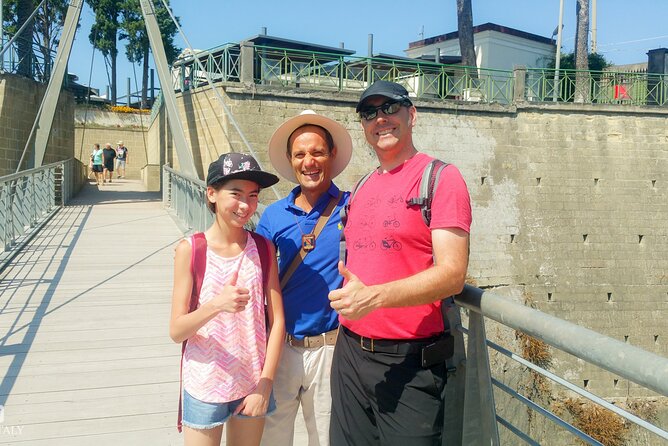
Pompeii can feel like a maze because the city grew and changed over time. That’s why starting at Piazza Porta Marina is a strong choice: it’s a modern-to-ancient bridge. You pass through the Porta Marina gate built into the city walls and transition from the current street level into the archaeological park.
This opening also sets you up for the main walk. From there, you move toward the Forum area—so by the time you’re standing in Pompeii’s civic center, you’re not guessing what you’re seeing. The stop also connects you quickly to key nearby structures, including the Antiquarium museum area and the Suburban Baths area with their famous erotic frescoes.
If you want a day that doesn’t feel chaotic, this “start with context” approach helps a lot.
Pompeii’s Temple of Apollo and the Forum: Where the City’s Power Shows
In Pompeii, the Temple of Apollo area is one of those spots that gives you instant scale. You’re walking through an open-air space where you can trace the religious meaning of the site while also taking in its dramatic setting next to the Forum. The explanation here matters: this is an older sacred area with elements that show the shift from Greek influence into Roman practice.
You’ll also get attention drawn to details like bronze replicas of gods such as Apollo and Diana, and even an original sundial column. That kind of pointing turns the ruins into a story rather than rubble.
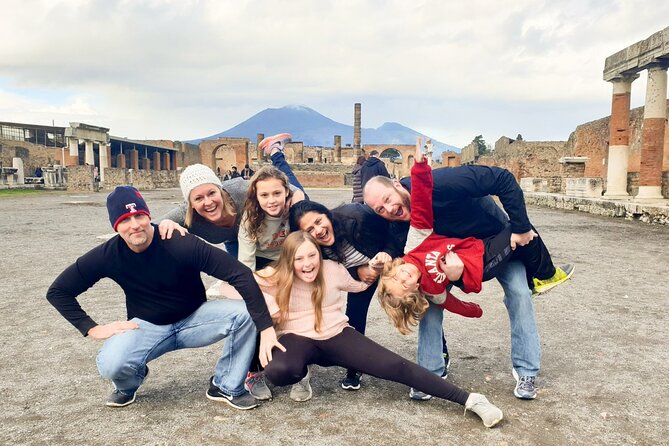
Then you step into the Forum of Pompeii—the city’s political, religious, and commercial heart. Here you’re standing in the epicenter of Roman public life. You’ll walk across original travertine paving stones and see major structures such as the Temple of Jupiter and the Basilica, with Mount Vesuvius framing the distance.
This is also where you’ll appreciate how daily life worked: markets and official weighing setups help you picture trade happening in real time. For me, that’s one of the strongest parts of a guided day—your brain starts filling in the blanks, but with facts, not guesses.
Casa dei Vettii and Insula dei Casti Amanti: When Pompeii Gets Personal
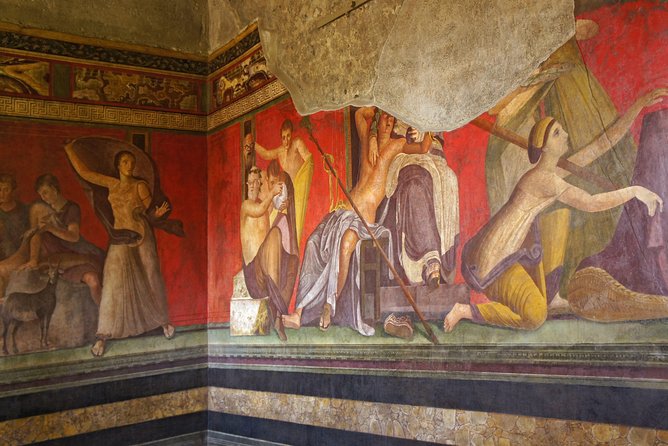
Pompeii is full of impressive architecture, but the houses are where it turns human. Casa dei Vettii is a top highlight. It’s famous for its extremely vivid Fourth Style frescoes and for the protective painting of Priapus at the entrance. The interiors are where you really sense taste and status—this was an elite residence, owned by two wealthy former slaves.
The frescos and the preserved peristyle garden make it feel like luxury frozen mid-breath. If you’ve visited other ruins, this is the difference between seeing a wall and seeing a lifestyle.
Then there’s Insula dei Casti Amanti (Insula of the Chaste Lovers). This stop is special because it’s tied to modern exhibition methods: recently reopened with elevated walkways that let you look down into an entire city block. That “bird’s-eye” view can be the easiest way to understand how a whole block functioned—homes plus the bustle of places like a bakery.
You’ll also get a close look at the couple’s kiss fresco that gives the site its name. And there’s a moving detail about charcoal sketches of gladiators drawn by children close to 2,000 years ago. That’s not just history—it’s proof of everyday human attention.






Teatro Grande: The Roman Stage and the Weird Comfort of Acoustics
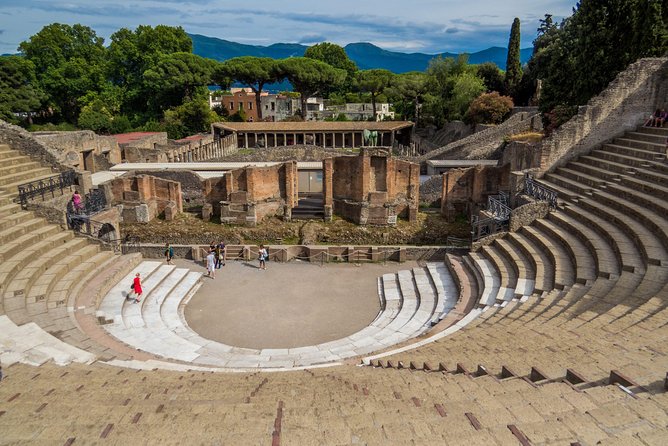
The Teatro Grande brings Pompeii’s social life into focus. It’s one of the early stone theaters, dating back to the 2nd century BC, and it shows how Roman civic culture used performance and hierarchy.
You can see the horseshoe layout and how seating separated social groups. The guide’s interpretation helps you understand that this wasn’t just entertainment—it was a system with clear lines between elites and common people.
And yes, the acoustics are famous. The design is such that you can hear from far across the seating area. If you’ve ever been in a modern theater with mediocre sound, this is a satisfying contrast.
Pompeii’s Antiquarium di Pompei: The Emotional Anchor Before You Move On
Before leaving Pompeii, you stop at the Antiquarium di Pompei at the Porta Marina entrance. This museum is crucial because it gives context and emotional weight to what you’re about to feel when you move to Herculaneum.
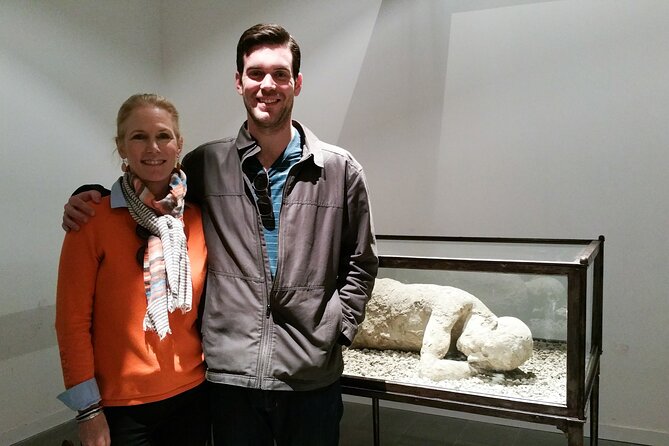
A standout feature is the gallery of plaster casts showing the final moments of victims, including even a faithful guard dog. That kind of display doesn’t turn the day into horror for the sake of it—it helps you understand the tragedy as lived, not abstract.
There are also digital exhibits and the most recent archaeological finds, which helps connect the ruins to ongoing work. It makes Pompeii feel less like a closed chapter and more like a place still being understood.
Herculaneum’s Antiquarium and Boat Pavilion: Why This Town Feels Different
Then you head to Herculaneum. Many people expect the ruins to look similar to Pompeii, but Herculaneum hits differently because of preservation. The Antiquarium di Ercolano focuses on delicate materials—things like carbonized wooden furniture and textiles that don’t usually survive.
You’ll also learn the narrative around the Herculaneum Treasure found with victims at the shoreline, plus rescued statues and vivid frescoes. This museum doesn’t just show objects; it helps you picture what kind of town Herculaneum was: a wealthy seaside retreat.
Next is the Boat Pavilion. This is a powerful stop because it shows the carbonized keel of a boat—about 9 meters long—found upturned by the eruption’s forces near the shoreline. Seeing how maritime life was preserved so literally makes the disaster feel close. Smaller artifacts like fishing weights, nets, and a carbonized rope add daily-life detail.
The Ancient Beach and Houses of Sea-Side Luxury
The ancient shoreline stop is one of the most moving parts of the day. The ancient beach reopened to the public in 2024 after restoration, and you walk along the original coast where the eruption’s climax reached victims. You can stand on volcanic sand and look up toward the boat sheds (fornici).
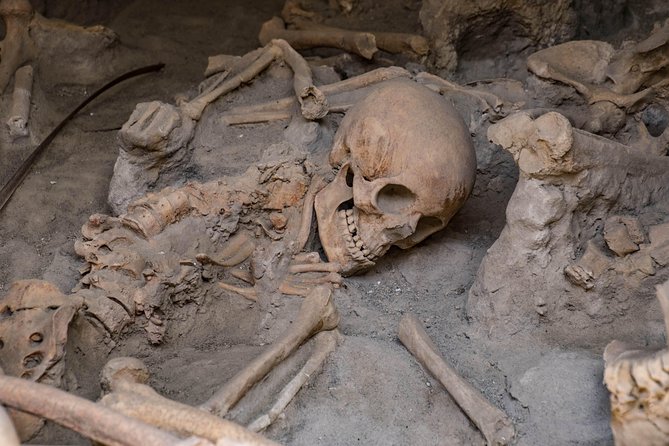
This area is also where you get a strong sense of the final attempts to escape—skeletal remains of more than 300 residents were discovered in that zone. The beach is also several meters below modern ground level, which helps your body understand what the eruption changed.
Then it’s on to the houses that show the high-end side of Herculaneum. Casa dei Cervi (House of the Stags) is named after two famous marble stag statues found in the garden. The layout is interesting because of an inverted feel: terrace and garden are oriented to capture the sea views and breezes.
Casa di Nettuno e Anfitrite is another headline stop. It’s known for a vibrant mosaic depicting gods in gold and blue tones, plus an outdoor summer triclinium decorated with shells and lava stone. Right beside it is an attached shop that’s often considered one of the best-preserved grocery stores from antiquity—so you see wooden shelves and carbonized storage areas that connect you straight to daily commerce.
Herculaneum’s Baths and Gymnasium: Social Life, but Under a Roof
Terme Femminili (Women’s Baths) is a standout because it survives in a more complete way than similar structures in Pompeii. You enter through an original vaulted doorway and see mosaics, including a black-and-white floor image in the changing room featuring Triton and dolphins.
You’ll learn what the spaces were for, moving from warm rooms into hot rooms with heating systems. Details like original wooden storage shelves and intact barrel-vaulted ceilings help you understand that comfort and privacy mattered in a wealthy seaside setting.
Then comes the Palestra, Herculaneum’s gymnasium complex. It’s huge and sunlit, anchored by a cross-shaped swimming pool area (natatio) and a fountain shaped like a five-headed hydra. It’s the kind of place where Roman civic pride shows up in how much public space was built for physical culture.
Finishing Touch: A Roman Wine Advertisement and a Full-Day Reality Check
A short final stop adds texture to the day: an ancient wine advertisement known as Ad Cucumas. It’s brief, but it’s a reminder that even in these quiet streets, commerce and persuasion were part of everyday life.
By the time you’re wrapping up, you’ve had a full arc: Pompeii’s civic power and elite homes, then Herculaneum’s preservation and seaside tragedy, and finally wine and food that tie the day back into modern Campania.
Cantina del Vesuvio Winery Lunch: Where the Day Breathes
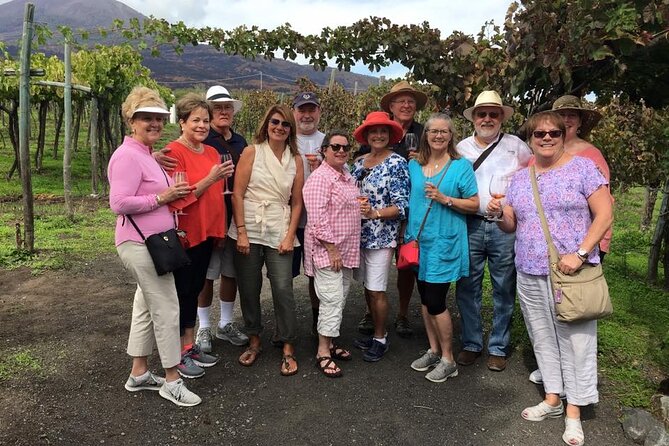
The winery stop is inside Vesuvius National Park, with views over the Bay and the volcano’s crater. You begin with a guided 15-minute stroll through vineyards, learning about the famous Lacryma Christi wines.
Then you settle in for lunch paired with wines. The experience uses a set menu paired with 5 local wines. The menu includes appetizers like bruschetta, cheeses, and cured meats; spaghetti with Vesuvius cherry tomatoes; and Pastiera for dessert. There are vegetarian and gluten-free options listed, which is helpful.
This is also where you learn what makes the wine culture here specific to the volcano environment. If you want local food and a relaxed break between the two archaeology sites, this stop does the job.
One practical note: you pay on-site (card or cash) for the lunch-and-wine experience, and the tour does not reach the top of Mount Vesuvius.
Price and Value for a Private Day Trip From Sorrento or Naples
The base price is $861.07 per group (up to 7), for an 8–9 hour private day with an English-speaking archaeologist guide and private transportation. For many visitors, that’s good value because you’re not sharing a guide with strangers, and you’re paying for fewer wasted hours.
But you should budget extra:
- Admission fees for Pompeii and Herculaneum are about €40 per adult (under 18 is free with valid ID).
- The winery lunch and wine tasting are an added cost of about €50 per person, with a superior wine upgrade option at about €60.
- Admission isn’t included in the base tour price, and neither is the winery lunch.
When it’s worth it: if you care about understanding what you’re seeing, you’ll get your money’s worth. A private archaeologist guide is the difference between wandering and learning how the city functioned—especially at Herculaneum, where preservation of organic materials makes the interpretation more complex.
If your group is small and you want comfort (AC car, water, flexible pacing), the per-group pricing can also feel more reasonable than you’d expect.
Who This Tour Fits Best (and Who Might Prefer Something Different)
This tour is a strong fit for:
- Families who want a guided day that can adjust for kids’ attention spans (there’s a family-friendly upgrade option, plus the guide tends to keep kids engaged with questions)
- First-timers to Naples/Campania who want two major archaeological sites in one day without the logistics stress
- History lovers who get more satisfaction from “how this worked” than from a pile of photos
- People who also want local wine and a sit-down meal in Vesuvius National Park
It may be less ideal if:
- You only have time for a shorter outing or you hate long days
- You want a Mount Vesuvius summit view (this tour does not go to the top)
- Your group struggles with uneven stone walking, since the ruins involve steps and rough surfaces (the tour does offer practical help, but you’ll still be walking)
Should You Book This Pompeii, Herculaneum and Vesuvius Winery Tour?
If you want Pompeii and Herculaneum with explanations that make the ruins click, I’d book this. The private setup, guided highlights, and the emotional pacing from Pompeii’s Antiquarium to Herculaneum’s shoreline material are the kind of details that separate a good day from a memorable one.
I’d also book it if you’re happy to add the on-site costs for admissions and the winery lunch. That extra spend is part of what makes the day complete: a real meal, local wine, and a break from the heat between two huge sites.
FAQ
Is pickup included, and where does it start?
Pickup is offered anywhere in the Naples or Sorrento area. If you’re staying on the Amalfi Coast, you should contact the provider.
What’s included in the tour price?
The tour includes an air-conditioned vehicle, water and Wi-Fi on board, and private guided tours in both Pompeii and Herculaneum, plus private transportation.
Are admission tickets included?
No. Admission fees are not included (about €40 per adult for both sites). Under 18 is free with valid ID.
Is the winery lunch included?
No. The winery lunch and wine tasting is an added experience, about €50 per person all inclusive (about €60 with a superior wine upgrade).
Does the tour include going to the top of Mount Vesuvius?
No. The tour does not reach the top of Mount Vesuvius.
How long is the tour?
It’s about 8 to 9 hours.
Is it only for my group?
Yes. This is a private tour/activity, so only your group participates.
What if I need to cancel?
Free cancellation is available up to 24 hours in advance for a full refund. If you cancel less than 24 hours before the start time, the amount you paid is not refunded.
You Might Also Enjoy




More Wine Tours in Sorrento
- Sorrento Farm and Food Experience including Olive Oil, Limoncello, Wine tasting
★ 5.0 · 2,524 reviews
More Tour Reviews in Sorrento
- Sorrento Farm and Food Experience including Olive Oil, Limoncello, Wine tasting
★ 5.0 · 2,524 reviews