REVIEW · LECCE
Lecce: Pasta Making Class in 1400s-Era Courtyard with Wine
Book on GetYourGuide →Operated by LecceGo · Bookable on GetYourGuide
You start with flour, not photos. In a 1400s courtyard setting at the Faggiano Archaeological Museum, you hand-make orecchiette and sagne, guided by local cooks, then you eat what you make with a glass of wine. The one thing to consider: it’s a popular group class, so on busy nights the hands-on vibe can feel a little crowded.
I especially like the plain, practical instruction and the friendly language support (Italian, English, French). You’re working for 2.5 hours with the cooking setup provided, so by the time you sit down to eat, you’re not just watching—you’re confident you know how those Apulian shapes get made.
In This Review
- Quick hits before you book
- Meeting at via Ascanio Grandi: the Faggiano Museum start
- A 1400s courtyard that changes the mood of the class
- What you make in your 2.5 hours: orecchiette and sagne by hand
- Orecchiette: the signature shape
- Sagne: the Southern partner
- How instruction actually helps: technique, not just vibes
- The courtyard-to-table meal: wine with the results
- Group size: fun social mix, with one real tradeoff
- Language support (Italian, English, French) and how to use it
- Price and value: what $68 buys you in Lecce
- Who this pasta class suits best
- My bottom line: should you book this LecceGo pasta class?
- FAQ
- Where is the meeting point for this pasta making class?
- How long is the class?
- What pasta do you learn to make?
- What languages are offered during the class?
- Do I need to bring an ID?
- Does the class run if it rains?
Quick hits before you book
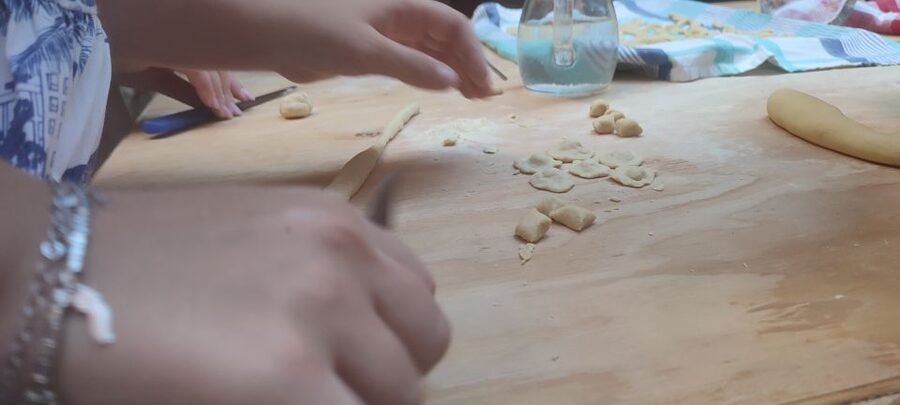
- A 1400s courtyard kitchen in the center of Lecce at the Faggiano Archaeological Museum
- Hands-on shaping of orecchiette and sagne, the way Apulia does it
- Local cooks running the show with clear guidance and a lot of patience
- Your pasta becomes your dinner, finished with a glass of wine
- Languages supported: Italian, English, French, so you won’t feel lost
Meeting at via Ascanio Grandi: the Faggiano Museum start
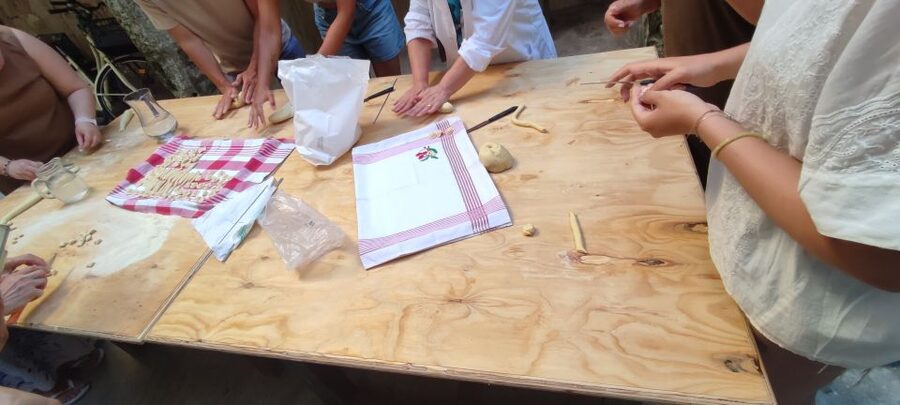
The experience meets right in the heart of Lecce: via Ascanio Grandi n 58, at the Faggiano Archaeological Museum. That matters because you’re not trekking across town or doing a bus-and-wait routine. You’ll be able to fold this into an evening walk through the old center without losing time.
Show up with a passport or ID card. It’s a small thing, but it’s the kind of detail that saves you stress when you’re already hungry and ready to cook. Also plan for the class to run rain or shine, since the activity is designed to keep going regardless of weather.
If you’re wondering about transport: it’s not included. In practice, that means you’ll want to use local walking time, taxis, or your own plans to get yourself to the museum area.
You can also read our reviews of more cooking classes in Lecce
A 1400s courtyard that changes the mood of the class
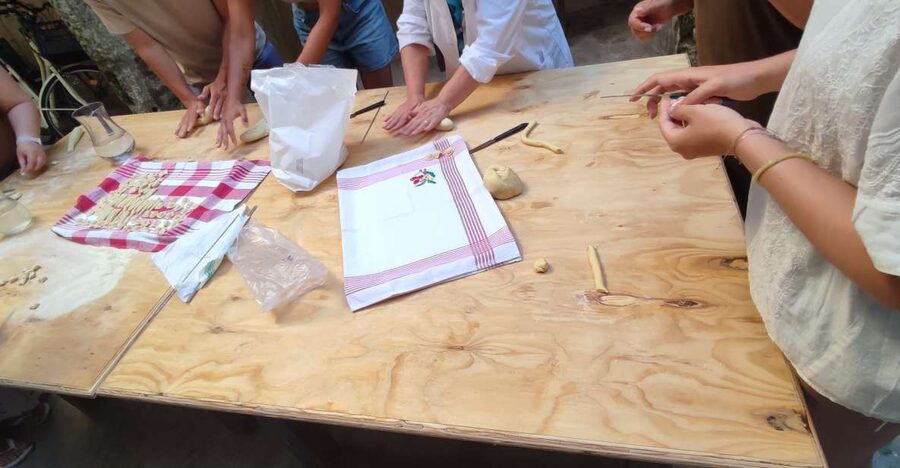
The setting is part of the point. You’re not in a generic studio with plastic trays—this is a historic courtyard space that dates back to the 1400s, located right in central Lecce. The result is that the whole session feels like a real domestic food moment, not a staged show.
I like that the experience doesn’t try to distract you from the work. The environment frames it: you’re learning a craft—how dough behaves, how your hands shape it, and what “right” looks like for Apulia. Even if you’ve made pasta before, that courtyard setting tends to make you slow down and pay attention.
One caution: because it’s popular and designed as a group evening, some nights can feel busy. If you hate shared space, you might want to aim for a less peak time when available, or be mentally ready for a lively room.
What you make in your 2.5 hours: orecchiette and sagne by hand
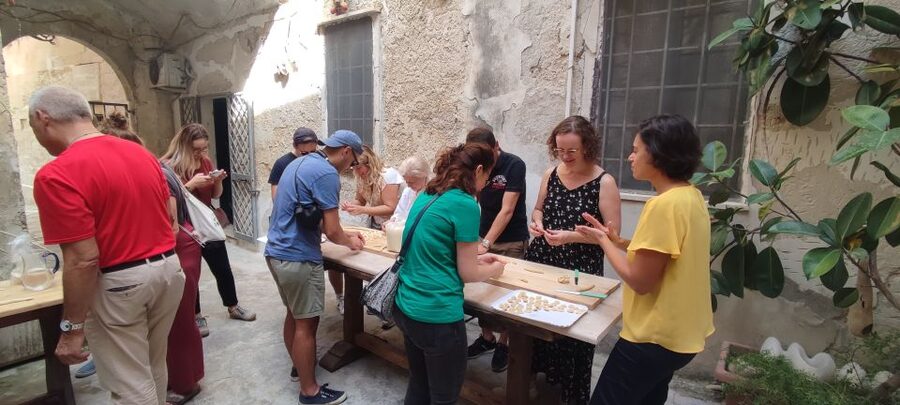
This class is built around typical Apulian pasta techniques. You’ll learn to mix water and flour and work with the tools of the trade, using instruction that’s meant for beginners but still respects tradition.
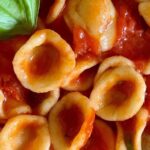
Orecchiette: the signature shape
Orecchiette is one of the best “training wheels” pasta shapes because it’s both simple in ingredients and tricky in technique. The key challenge is consistency: your dough needs the right texture, and your shaping needs a steady rhythm.
In a good class, you don’t just learn how to pinch a piece. You learn how to create that small, “cap-like” look that makes orecchiette so satisfying with sauce. Even if your first few pieces aren’t perfect, you’ll understand what to adjust—thickness, pressure, and how the pasta releases from the tool.
Sagne: the Southern partner
You also learn sagne, another pasta type associated with Puglia. Like orecchiette, the value here is learning the method behind the name. You’ll get a sense of how regional pasta isn’t about fancy ingredients—it’s about form, texture, and local habits.
And the big practical point: you’re not just practicing for practice’s sake. Your shaped pasta is what you’ll later eat as part of your meal.
You can also read our reviews of more wine tours in Lecce
How instruction actually helps: technique, not just vibes
The best part of this class is how the teaching focuses on what your hands are doing. You’ll get professional cooking equipment provided, and you’ll follow step-by-step guidance from a local cook with a direct, no-drama approach.
Instructors you may meet can include people named Luciana and cooks often referred to as Nonna Teresa / Therese (names seen in real class experiences). That’s a sign you’re likely to get both language support and “this is how we do it” technique.
Here’s what to watch for as you work:
- Dough feel matters: if it’s too dry or too wet, your shaping will fight you. You’ll learn what to change without turning it into a science project.
- Consistency beats speed: it’s tempting to rush. Slower is better because it improves your texture and your final shape.
- Use the tools correctly: many beginners struggle because the tool is moving when it shouldn’t. You’ll get corrections while you’re still at the mixing stage, which helps a lot.
Yes, this is a hands-on class. And yes, that means you might feel a little clumsy at first. But the teaching style is meant to guide you through that learning curve until your pasta looks like pasta you’d serve at home.
The courtyard-to-table meal: wine with the results
After you finish shaping, you’ll sit down to eat your pasta. You’ll have a glass of wine with the meal, and the whole evening has a relaxed “we made this together” feel.
I like that you get closure: you don’t spend two hours making dough and then leave without tasting the outcome. The meal turns your effort into something real, and it’s a great way to remember what worked.
Also, the wine doesn’t replace the food. It supports the experience—one more nudge toward slowing down and enjoying the conversation. Expect chatty, social group energy, especially when everyone is comparing how their first pieces went.
Group size: fun social mix, with one real tradeoff
A group class is part of the package. In real experience, you may be in a group around 20 people. That’s usually enough to feel lively and meet people, while still giving room for instruction.
But the tradeoff is attention. When the group is large, your teacher may not hover over your exact hands every minute. The workaround is simple: ask questions early, watch closely when the instructor corrects someone nearby, and don’t be shy about requesting a recap if you missed a step.
If you’re traveling solo, this is often a plus because you get built-in conversation. If you’re sensitive to crowding, go in expecting a social room and plan your mindset accordingly.
Language support (Italian, English, French) and how to use it
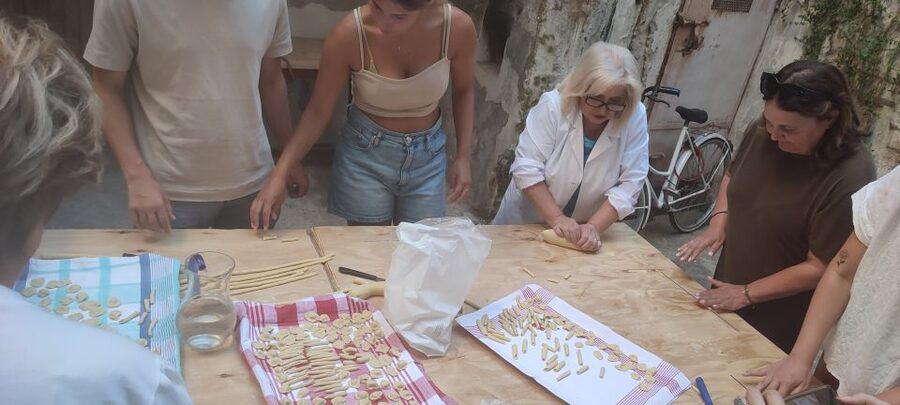
The class offers instruction in Italian, English, and French. That’s a real advantage in a hands-on activity, because pasta-making is visual and tactile—sometimes the difference between success and frustration is a single instruction clarified in your language.
From the way the class runs, you’ll likely hear the same guidance repeated in different ways so you can connect the explanation to what you’re doing with your hands. If you want to get the most out of the course, ask one question in your strongest language early on. Once you understand the “why” behind a step, the rest clicks faster.
One practical tip: if you’re working away from the front, keep turning your head. Don’t just look at your dough—glance at the instructor’s hands. Pasta-making is mostly learned through tiny corrections.
Price and value: what $68 buys you in Lecce
At $68 per person for about 2.5 hours, this isn’t a cheap “try it once” snack. But it’s also not overpriced for what you get.
Here’s the value math:
- You’re paying for a hands-on class with a professional cook and included equipment.
- You’re paying for the historic location inside a museum setting in central Lecce (that’s not free space).
- You’re paying for the full arc: learn → shape → eat, plus a glass of wine.
- Transport isn’t included, which is typical for city-based activities, but it’s something to factor into your total cost.
For many people, the best value comes from the skill transfer. If you can recreate even a portion of the technique at home, that $68 becomes less about the dinner and more about learning a regional craft you can use again.
Who this pasta class suits best
This is a strong fit if you:
- Want an authentic, local-food evening in Lecce that isn’t just sitting at a table
- Like interactive activities where you leave with a skill, not just a memory
- Enjoy meeting people while doing something practical
It’s also good for couples and friends because the shaping stage creates natural teamwork and laughs. Families can work too, but the data doesn’t specify age limits—so if you’re traveling with kids, check the class details at booking.
If you hate hands-on work, or you want a quiet, minimal-effort experience, then this might feel too active. But if you’re happy to get flour on your fingers and learn by doing, you’ll likely enjoy it.
My bottom line: should you book this LecceGo pasta class?
Book it if you want a genuinely practical Lecce pasta-making night with a historic setting and a real meal at the end. The combination of the 1400s courtyard vibe, the local cook instruction, and the fact you eat what you make with wine makes it a strong use of an evening in Apulia.
Skip it only if you’re strongly sensitive to group crowding or you want something more passive. Otherwise, this is the kind of experience that turns a tourist stop into a skill you can carry home.
FAQ
Where is the meeting point for this pasta making class?
You meet directly in via Ascanio Grandi n 58, at the Faggiano Archaeological Museum.
How long is the class?
The duration is 2.5 hours.
What pasta do you learn to make?
The class focuses on making orecchiette and sagne, typical of Apulia.
What languages are offered during the class?
Instruction is available in Italian, English, and French.
Do I need to bring an ID?
Yes, bring your passport or ID card.
Does the class run if it rains?
Yes, the tour takes place rain or shine. If the minimum number of people isn’t reached, the course may be canceled and you’ll be notified and refunded.