REVIEW · KRAKOW
Krakow: Piano Trio Chopin & Friends Concert VIP with Wine
Book on GetYourGuide →Operated by Opera da Camera di Roma · Bookable on GetYourGuide
Short concert, big feelings. This VIP piano trio performance brings Chopin & friends into a candlelit baroque space near Wawel Castle, with a glass of wine as your soundtrack. I like the fact that the program doesn’t stay in one lane. You get familiar classics plus style-hopping surprises like klezmer and movie themes, all in arrangements built for piano, violin, and cello.
I also love the practical side: 50 minutes is long enough to enjoy the music fully, yet short enough to fit into a busy Krakow day. One consideration, though: the venue is small and the audience can be light, so the energy may feel more like an intimate salon than a grand concert hall.
In This Review
- Key Things I’d Bookmark About This VIP Concert
- Where This Concert Lives: Bernardine Monastery Meets Wawel Castle
- Price and Value: How $22 Feels Like More Than a Ticket
- The VIP Wine Moment: What to Expect While the Music Plays
- Inside the Baroque Space: Acoustics, Intimacy, and Why It Works
- The 50-Minute Program: Chopin, Mozart, Klezmer, and Movie Themes
- Classic openings that feel instantly recognizable
- Tango, opera, and film music that keep your brain awake
- The music mash-up section: Chopin gravity meets popular melodies
- Klezmer and Polish folk: the soul of the evening
- The Performers: The Chopin Chamber Trio Up Close
- Timing and Finding the Door: A Small Venue, Easy to Miss
- Who This Concert Fits Best (and Who Might Prefer Something Else)
- My Practical Take: Should You Add This to Your Krakow Day?
- Should You Book This VIP Concert?
- FAQ
- How long is the concert?
- Where does the concert take place?
- Is wine included?
- What time should I arrive?
- What languages are spoken by the host or greeter?
- Can the repertoire or artists change?
Key Things I’d Bookmark About This VIP Concert
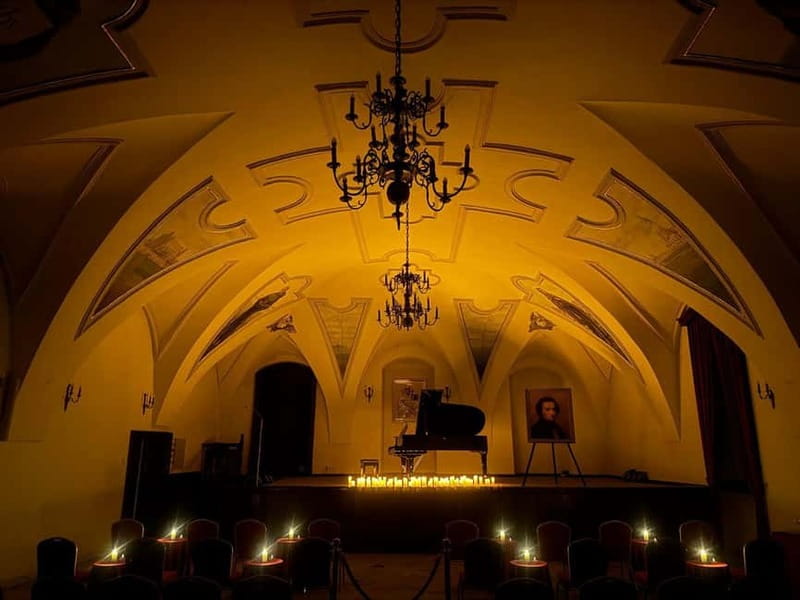
- A monastery setting by Wawel Castle: historic walls, serious atmosphere, and acoustics that work for a trio
- Wine with your listening: a glass in hand makes the whole evening feel less formal
- Chopin plus genre jumps: you’ll hear opera, Gershwin, film music, klezmer, and Polish folk in one sitting
- A young Polish trio with big-hall experience: the performers have played across Europe and beyond
- Short and focused (50 minutes): perfect if you want culture without eating your whole night
- Repertoire may shift: the organizer can swap pieces or artists, but the style stays similar
Where This Concert Lives: Bernardine Monastery Meets Wawel Castle
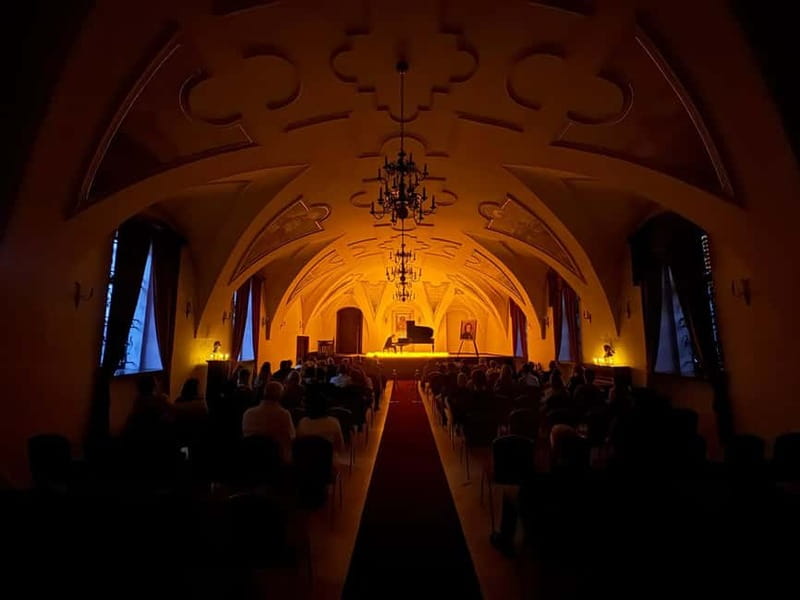
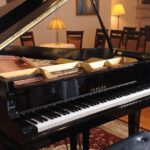
This experience is held at the Monastery of the Bernardine Fathers, right by the Old Town action. The meeting point is on Bernardyńska Street, and the concert itself happens in a section of the monastery that’s known for its character and sound. If you’re already spending time around Wawel Castle, this is an easy add-on because you’re basically in the neighborhood.
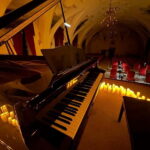
The setting matters more than you might think. A trio of piano, violin, and cello can sound thin in a wide, echo-prone space. Here, the room is set up so you can actually hear the details: the attack of strings, the way the piano carries melody, and the balance between instruments. Several people highlight the sound quality, and that tracks. When you’re close to the performers in a stone venue, you feel the music rather than just hearing it.
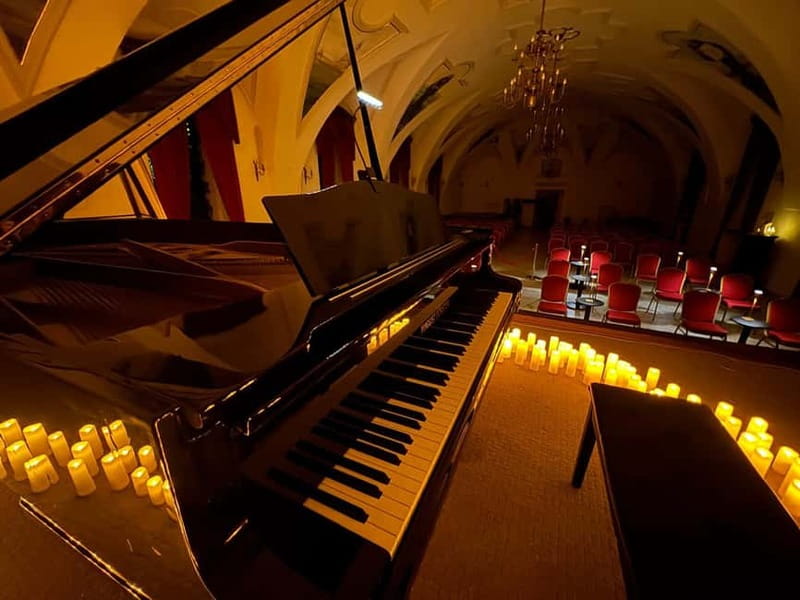
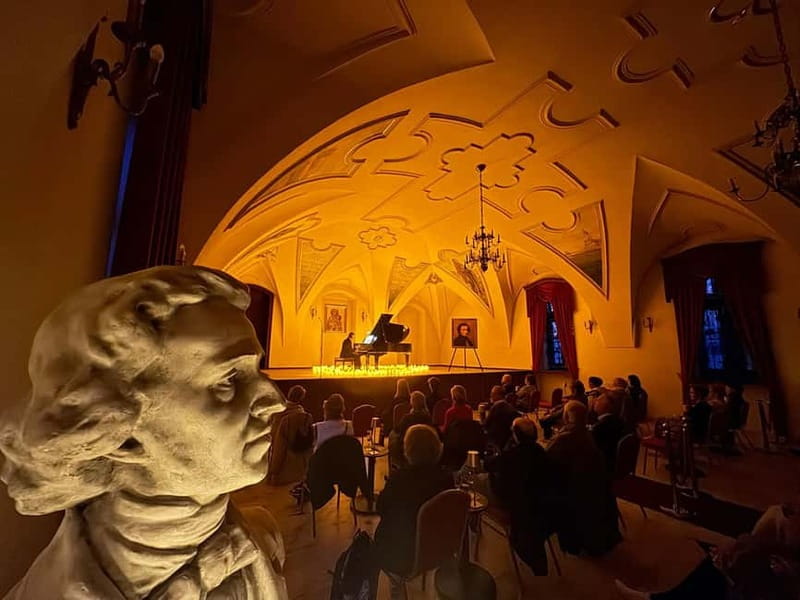
Also, the monastery atmosphere changes the vibe from typical ticketed entertainment. You’re not sitting in a modern theater with stadium lighting and snack counters. You’re sitting in a real religious building—quiet, candlelit, and a little bit otherworldly. That’s a huge part of the value, especially at a price point that’s hard to beat for this kind of location.
You can also read our reviews of more tours and experiences in Krakow.

Price and Value: How $22 Feels Like More Than a Ticket
At about $22 per person, you’re paying for four things at once:
- live performance by a professional-level chamber trio
- a prime historic venue near one of Krakow’s biggest sights
- a program that includes famous composer names you recognize
- a glass of wine during the concert
For many concerts in Europe, you’ll pay that kind of money for just the music, and sometimes you’ll still be in a generic hall far from anything memorable. Here, the monastery location is part of the experience. And because the concert is only 50 minutes, it’s a smart “time-cost” choice too. You’re not surrendering your whole evening.
One more value point: you get accessibility to classical music without needing a deep background. The program mixes serious works with pieces that many people know by title or melody. Even if you don’t call yourself a classical fan, the music is chosen to keep you listening.
The VIP Wine Moment: What to Expect While the Music Plays
This is a VIP concert, and wine is part of the package—you sip a glass of wine as you listen. In practice, that small detail changes the feel. You arrive, you settle in, you get a drink, and suddenly it’s not just a performance. It’s an evening ritual.
A few bookings describe wine-like extras, such as champagne, and at least one note mentions more than the single glass when people were placed in VIP seating. I wouldn’t treat that as a guaranteed upgrade for every ticket, but it signals that the organizers understand how to make VIP feel special.
Bottom line: plan for at least one glass. And if your ticket category comes with more, consider it a bonus rather than something you must rely on.
Inside the Baroque Space: Acoustics, Intimacy, and Why It Works
The concert is described as taking place in a unique baroque hall, and the acoustics are a selling point. That’s not just marketing fluff. Baroque architecture often means strong natural resonance—if the room size and seating are right. In an intimate venue, that can sound magical. In a large hall, the same resonance can blur fast passages.
In this monastery setting, the music stays clear. The piano doesn’t drown the strings. The violin doesn’t get lost against stone. The cello anchors the harmony, so even when styles change quickly—like from a romantic Chopin moment into something like Libertango—the transitions don’t feel messy.
Intimacy is also part of the experience value. If the audience is small (which can happen in an intimate venue), the whole show feels closer and more personal. Some people love that. It’s almost like being invited into a private concert. If you want a big, bustling crowd, you may find the atmosphere quieter than a large city hall. The good news: with a small room, the performers can communicate easily through music, and you still get the full emotional punch.
The 50-Minute Program: Chopin, Mozart, Klezmer, and Movie Themes
The show is short, but the program is packed. It moves from Baroque to Romantic to 20th-century pop-classical energy, then back into Polish flavors and Eastern-European traditions. Expect variety, not a single composer marathon.
Here are the pieces included in the program you can expect (the organizer can change repertoire, but the mix of styles is the point):
You can also read our reviews of more wine tours in Krakow
Classic openings that feel instantly recognizable
- Pachelbel: Canon in D Major
This is the kind of piece people hear and immediately go quiet. In a trio arrangement, it can feel both elegant and slightly hypnotic.
- Chopin: Prelude op. 28 n.4
A short piece, but it carries atmosphere and tension. Great for settling into listening mode.
- Vivaldi: Summer from The Four Seasons
Bright, energetic, and made for string-led phrasing. In a chamber setting, the rhythm and articulation stand out.
Tango, opera, and film music that keep your brain awake
- Piazzolla: Libertango
If you like motion, this is your wake-up call. The trio format makes the groove feel tight.
- Chopin Concert in E minor (fragment) and Chopin Concert in F minor (fragment)
Fragments work well here because you’re getting the recognizable emotional arcs without sitting through a long orchestral structure.
- Puccini: Nessun Dorma
Even if you’ve never studied opera, you likely recognize the melody’s dramatic pull. In an instrumental trio, it can sound sharp and heroic.
- G. Gershwin: Summertime
A reminder that “classical” listening doesn’t have to feel stiff. This is song-like, warm, and easy to follow.
The music mash-up section: Chopin gravity meets popular melodies
- Chopin: Funeral March in C minor, Op. 72 no. 2
This one is heavy. In a small room, the emotional weight hits faster.
- J. Williams: Schindler’s List theme song
Film music can be surprisingly moving when performed live. It’s familiar, but it lands differently when it’s not coming from a screen.
- J. Bock: Fiddler on the Roof theme
This adds a cultural and rhythmic lift. It’s the kind of selection that helps non-classical listeners feel included.
Klezmer and Polish folk: the soul of the evening
- Traditional klezmer: Hava Nagila
Klezmer brings celebration, swing, and expressive bends that a piano trio can handle beautifully.
- Folk polish music: Krakowiak jeden
A folk touch ties the program back to Poland. You get a sense of place, not just a global greatest-hits tour.
- Monti: Csárdás
This is all about dynamics and showmanship—perfect in a venue where you can see body language.
- Chopin: Polonaise in A-flat major, Op. 53 and Brahms: Hungarian Dances no. 5
These are ideal for finishing strong: national-dance energy, big melodies, and satisfying closure.
If you’re listening like a tourist (in the best way), you’ll probably hear a pattern: the program uses well-known themes to pull you in, then uses arrangements to make everything fresh again. That’s the trick.
The Performers: The Chopin Chamber Trio Up Close
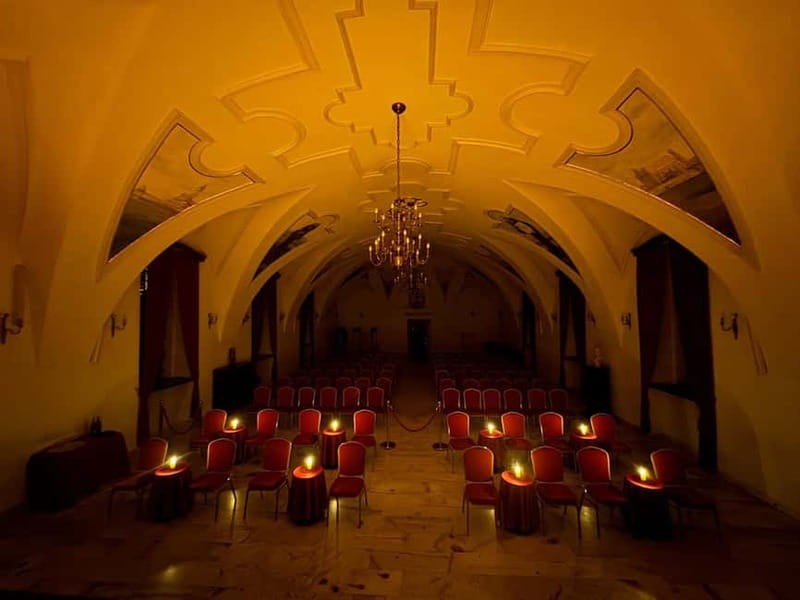
The ensemble is the Chopin Chamber Trio from Krakow, described as composed of outstanding Polish artists of the young generation. The important part for you: they’ve performed all over the world in major concert venues, which usually means they know how to shape sound in different rooms.
In a small monastery hall, musicianship shows up fast. You hear how they control tempo, how they balance dynamics, and how smoothly they shift roles. A trio has to communicate without a conductor. When it’s done well, it feels effortless—even when the music changes styles quickly.
This is also where the shortlist of instruments matters. Piano can provide harmony and percussive drive. Violin can carry lyrical lines and bright passages. Cello can ground the music so transitions don’t float away. In other words: the format is practical for variety, which is exactly what the program aims to deliver.
Timing and Finding the Door: A Small Venue, Easy to Miss
You’ll want to arrive at least 15 minutes early. That advice isn’t about bureaucracy—it’s about finding your way inside. This is a monastery, so directions can feel different than a standard ticket office with a big street entrance.
The meeting point is the monastery address on Bernardyńska Street. Once you’re there, take a minute to check where the host greeter is positioned and where people are going. If you’re coming from Wawel Castle area on foot, give yourself extra time. The older streets are easy to navigate wrong once you’re focused on the show start time.
A bit of humor helps here: treat it like you’re entering someone’s home—slow down, follow the signposts or staff directions, and you’ll be fine.
Who This Concert Fits Best (and Who Might Prefer Something Else)
I think this works best for:
- people who want a cultural stop that’s fast and not exhausting
- classical-curious travelers who don’t want to study anything beforehand
- anyone who likes variety, including klezmer, film music themes, and folk touches
- visitors who want a memorable venue without paying big-city orchestral prices
If you’re the type who wants a long, uninterrupted program by one composer, this may feel too short and too mixed. It’s designed for broad appeal: famous pieces, clever arrangements, and a bit of emotional rollercoaster in 50 minutes.
Also, because the room can be small, go in expecting an intimate atmosphere. It’s better to think salon-style than stadium-style.
My Practical Take: Should You Add This to Your Krakow Day?
If your Krakow schedule has gaps—maybe you’ve toured museums, seen Wawel Castle, and you want something quiet and meaningful—this is a strong “between sightseeing blocks” choice. The venue is in the Old Town orbit, the performance is short, and the atmosphere gives you a different side of the city than the streets do.
It’s also a good hedge against rainy weather or a tired afternoon. Stone walls and live music are a reliable comfort plan. And the wine helps smooth the transition from tourist mode to listening mode.
Should You Book This VIP Concert?
Book it if you want:
- a historic, atmospheric venue near Wawel Castle
- a short classical experience that includes recognizable music
- wine paired with live performance
- a program that mixes Chopin with klezmer, Polish folk, and film themes
Skip or look for another option if you prefer:
- a long concert with only one composer or one style
- a big crowd and high-volume concert-hall energy
For most visitors, this is a smart value call: low time cost, high atmosphere, and music that meets you where you are.
FAQ
How long is the concert?
The concert lasts 50 minutes.
Where does the concert take place?
The concert and meeting point are at the Monastery of the Bernardine Fathers, 2 Bernardyńska Street, 31-069 Krakow.
Is wine included?
Yes. You can sip on a glass of wine while you listen.
What time should I arrive?
Please arrive at least 15 minutes before the concert starts.
What languages are spoken by the host or greeter?
The host or greeter is available in English and Polish.
Can the repertoire or artists change?
Yes. The organizer reserves the right to change the repertoire and artists.