REVIEW · GENOA
Genova: Homemade Pasta & Pesto Local Chef Class with Wine
Book on GetYourGuide →Operated by Timonfaya Travel Lanzarote · Bookable on GetYourGuide
Pesto and pasta, made where Genoa lives. This hands-on Genoa class turns classic Ligurian staples into a real afternoon plan, from pesto grinding to shaping fresh pasta, then sitting down for wine and lunch on a terrace.
I especially love the combo of small-group coaching and the practical, step-by-step approach. I also like that Chef Alberto ties the food to the place, so you’re not just repeating moves—you’re learning why the ingredients and techniques matter for pasta fresca and pesto.
One drawback to weigh: it’s in a historic building with no elevator, and the apartment is on the 5th floor. If stairs are an issue, this can be a dealbreaker.
In This Review
- Key things you’ll notice right away
- Entering the historic palazzo in central Genoa
- What you make first: Ligurian pesto that actually tastes like Liguria
- Making fresh pasta dough, then rolling and shaping
- The terrace lunch: wine, regional snacks, and eating what you made
- Why the small group (8 max) matters more than you think
- Price and value: is $105 fair for 3 hours?
- Practical tips before you go (especially finding Granara)
- Who this class is best for in Genoa
- Should you book this Genoa pasta and pesto class?
- FAQ
- What’s included in the class?
- How long is the Genoa pasta and pesto experience?
- How big is the group?
- Who teaches the class and what languages are used?
- What will I learn to cook?
- Does the class include wine?
- Where does the class take place?
- Is it accessible for wheelchair users?
- Can I get the recipes to make the dishes at home?
- What if I need help finding the meeting point?
Key things you’ll notice right away
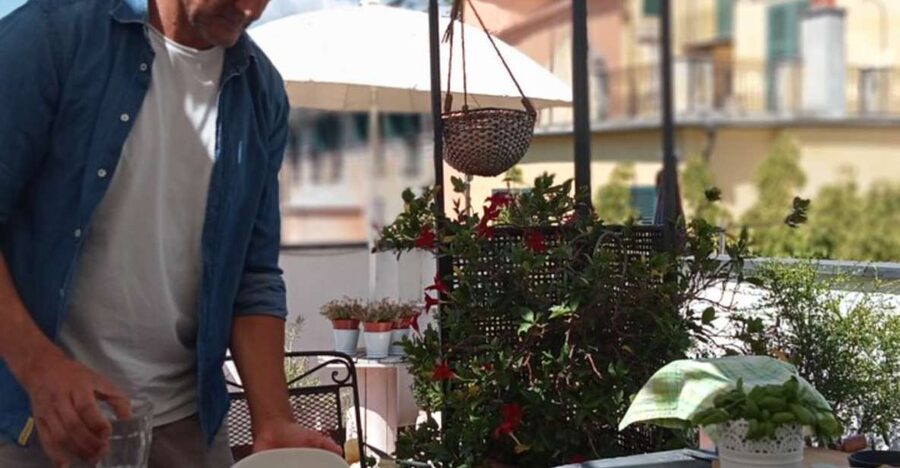
- Small group (up to 8) means you actually get hands-on help while you work
- Chef Alberto’s teaching style pairs technique with the Genoese meaning behind the dishes
- Pesto done the classic way with basil, pine nuts, garlic, Parmigiano-Reggiano, coarse salt, and olive oil
- Fresh pasta from scratch using a simple dough base, then rolling and shaping by hand
- Lunch on a terrace with regional tastings, wine, dessert, and a finishing Genoese liqueur
- Recipes sent after the class so you can repeat it at home
Entering the historic palazzo in central Genoa
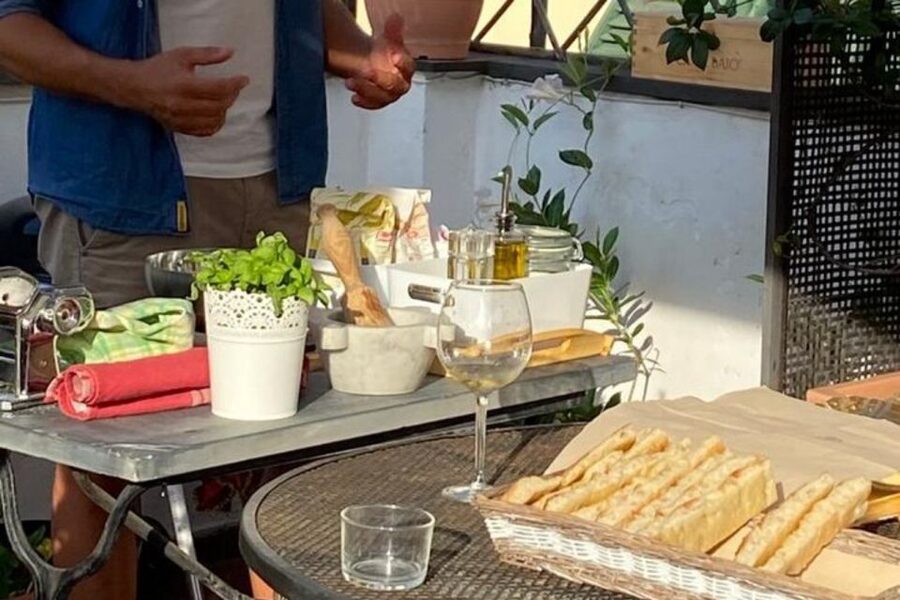
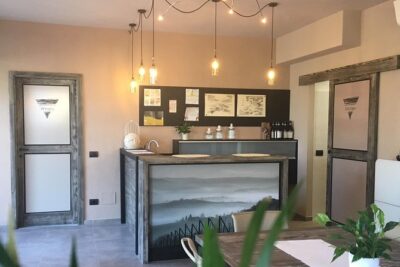
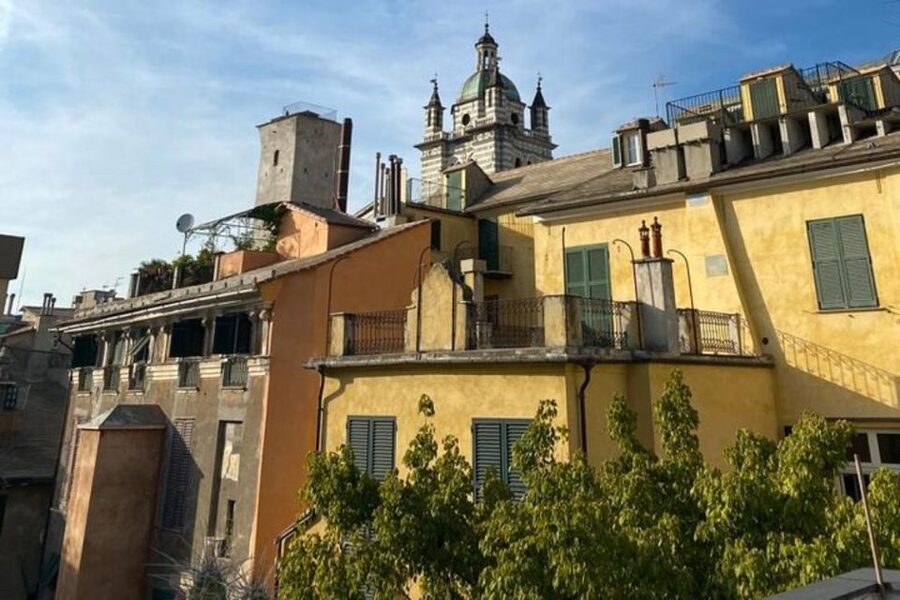
This class is set right in Genoa’s historic center, in a palazzo-style building that feels like part of everyday life, not a staged “tour kitchen.” The lesson takes place in a private apartment, with a terrace view over the city when weather cooperates. In plain terms: you’re not watching cooking from a distance. You’re cooking with real context around you.
The meeting point is also in the old lanes, which is part of the charm and part of the hassle. You’ll meet at Vico inferiore Valoria, Building 1, Apartment 11 (name: Granara). If you get stuck, the directions are simple: search for Cucina Valoria Restaurant on Google Maps, go to the square, then find the entrance of Vico inferiore Valoria and look for the little gate on the left marked with number 11, Granara.
For timing, plan for a smooth start by arriving a few minutes early. This kind of experience works best when you’re not sprinting to the stairs. And yes, you’ll face stairs: the apartment is on the 5th floor and there’s no elevator. If you book, pack light.
You can also read our reviews of more wine tours in Genoa
What you make first: Ligurian pesto that actually tastes like Liguria
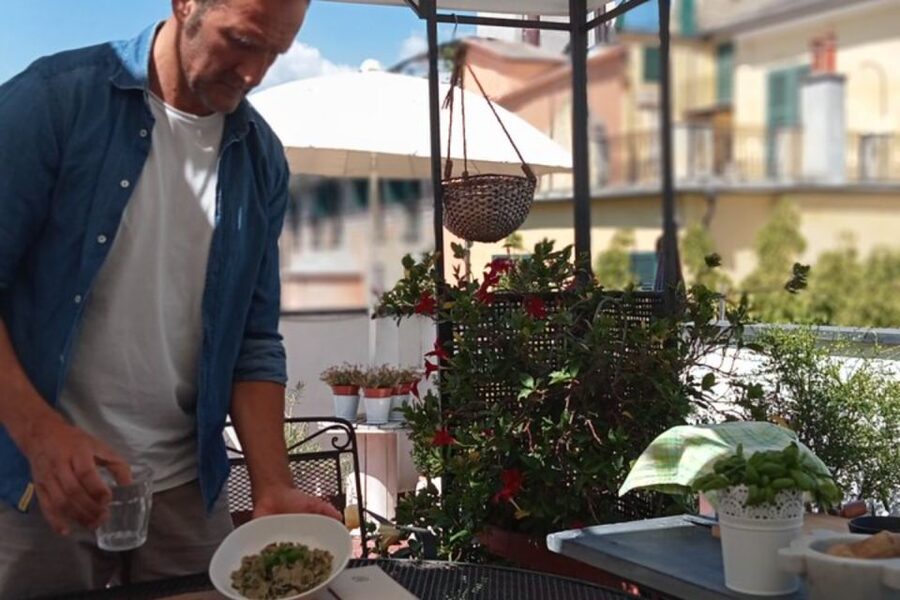
The meal’s main star begins before the pasta even hits the board: pesto, the famous Ligurian basil sauce. You start by preparing the traditional ingredients in the Genoese way. The classic pesto formula you’ll work with is basil leaves, garlic, pine nuts, coarse salt, Parmigiano-Reggiano (hard cheese), and olive oil.
The big value here is learning how pesto gets its character. It’s not just “blend basil and call it pesto.” You’re learning how the ingredients behave—how basil releases aroma, how pine nuts contribute sweetness and body, how salt and cheese sharpen the flavors, and how olive oil ties everything together.
Many classes rush pesto into a quick shortcut. This one leans traditional: you’ll crush and blend with attention. In a few sessions, people also mention using a mortar and pestle method. Either way, the pacing is geared toward you leaving with technique you can repeat.
And here’s the practical part: pesto is forgiving in one way and strict in another. It’s forgiving because it’s forgiving on timing—you can make it ahead and it will still taste great. It’s strict because the balance matters. Too much garlic overpowers. Too much oil blurs. Too little salt makes it flat. The chef’s job is to keep you in that sweet spot.
Making fresh pasta dough, then rolling and shaping
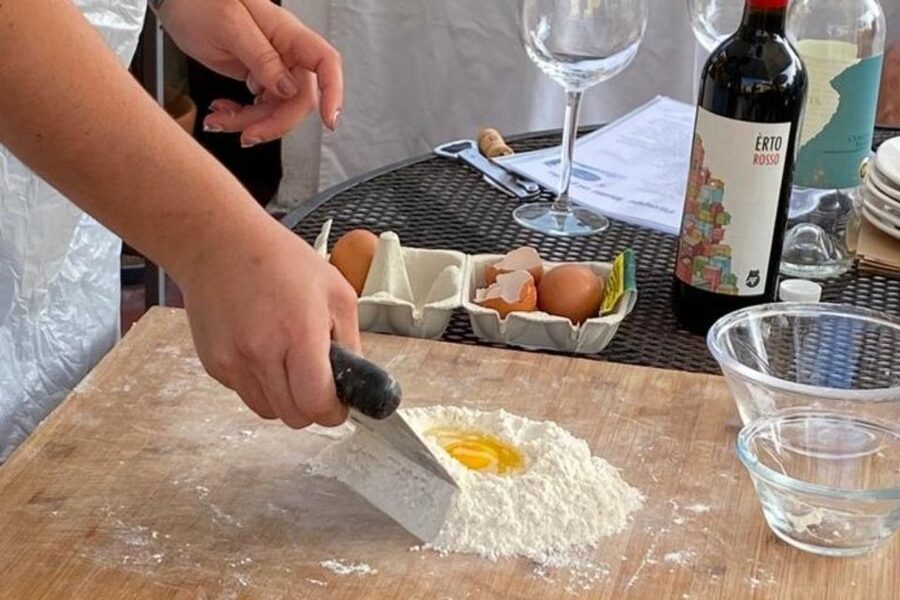
Once pesto is underway, you move to pasta fresca. You’ll learn to make the dough from scratch using the ingredients described for the class: water, eggs, and flavor additions, then forming and working it into pasta.
The hands-on part is where you’ll get the most out of the 3 hours. You’ll work at the table, then roll, then shape. The chef shares the kind of small tips that are hard to get from a cookbook: how dough should feel while you work it, how to keep the texture right, and how to handle the dough so your final pasta isn’t too thick, too thin, or uneven.
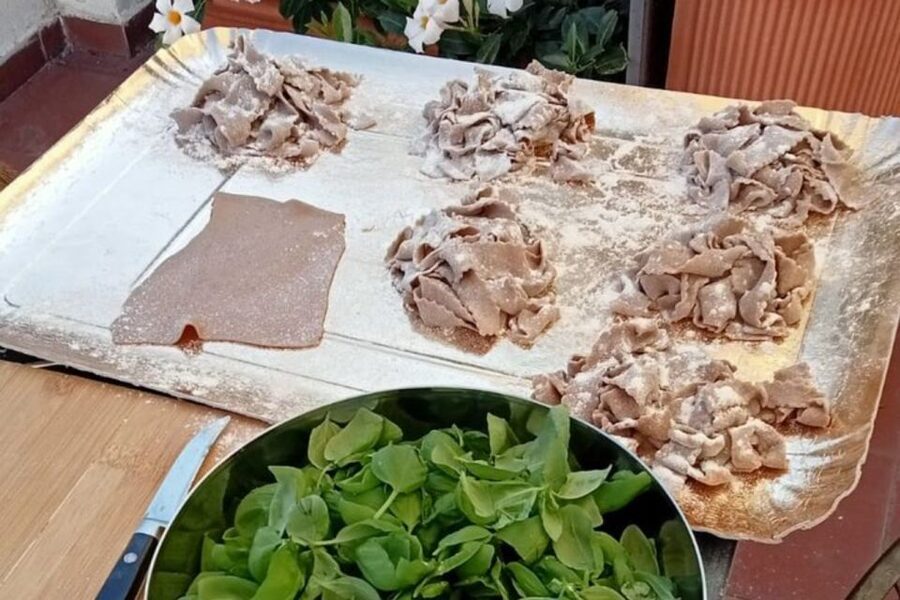
A fun detail from the experience: some sessions include shaping a type of pasta commonly referred to in the group as crazy napkins. It’s a playful way to describe the folded/cut style that gives bite-size character to the finished dish. If you’ve never made handmade pasta, you’ll be surprised how quickly your hands start to understand what your eyes are judging.
Also, the chef teaches with patience. A small group helps a lot, but the teaching matters too: you’re not left guessing while others move on. You’ll get the reasoning behind steps, not just the steps themselves.
The terrace lunch: wine, regional snacks, and eating what you made
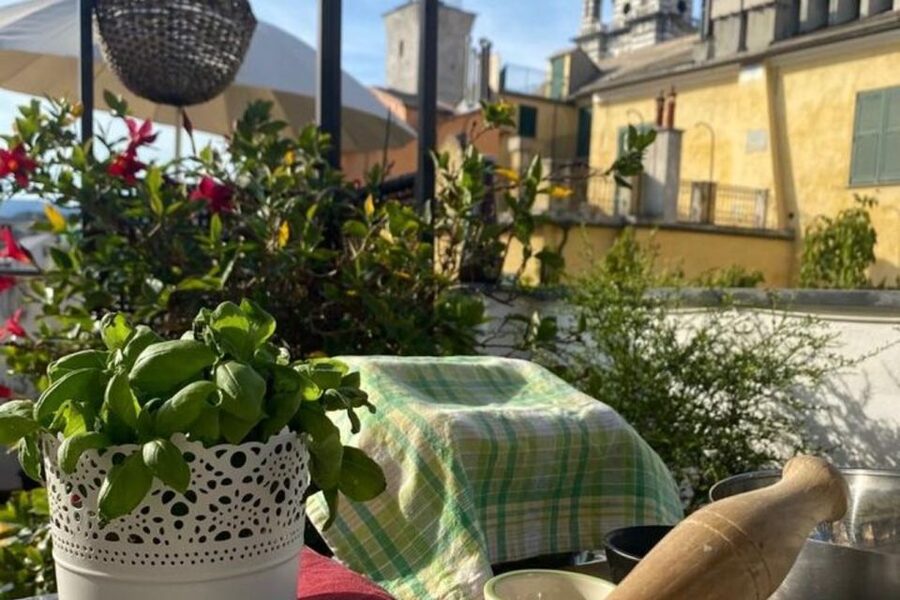
After the work comes the best part: slow down and eat. You’ll sit down for the fruits of your labor, with a convivial setup that’s meant to feel relaxed, not rushed.
Your table starts with regional tastings. Many sessions begin with welcoming drinks and snacks like espresso, fresh orange juice, and focaccia. During the class flow, you’ll also have an assortment of additional bites such as an aperitivo and other small plates (people mention items like quiche and additional homemade treats).
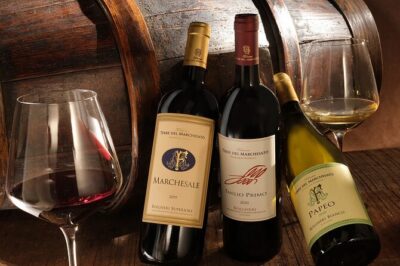
Then comes the pasta course made from what you prepared, paired with local wine. The wine pairing isn’t an afterthought here. It’s part of how Ligurian meals work—simple, ingredient-forward flavors with a glass that stays in rhythm with them.
Dessert is included too, plus a finishing touch: a traditional Genoese liqueur. A number of people call out tiramisu as the dessert highlight, so if that’s your favorite Italian sweet, it’s worth going with dessert expectations set high.
Why the small group (8 max) matters more than you think
At up to 8 participants, this isn’t a show. It’s a workshop with coaching. That’s a big deal for two reasons.
First, pasta dough is physical. You learn by touching it. If you’re working in a large group, you might get a demonstration and then wait your turn. Here, the pace is tight enough that you spend more time working and less time watching other people do the fun part.
Second, pesto is detail-heavy. Garlic strength, basil freshness, salt level, cheese punch—those are the things that separate good pesto from great pesto. In a big group, those adjustments are easy for the chef to miss. In a small group, the chef can steer you during the process.
You’ll feel it when you’re rolling and shaping. That’s also where the chef’s English and Italian guidance helps. If you’re not fluent in Italian, you’ll still understand the why behind the steps, and you’ll get corrections in time to fix your dough, not after it’s already cooked.
Price and value: is $105 fair for 3 hours?
At $105 per person for a 3-hour session, this isn’t a budget cooking class. Still, it can be very good value because you get more than one thing for the money.
You’re paying for:
- Chef-led, hands-on instruction for both pesto and handmade pasta
- Food and drinks across the full meal flow
- Wine
- Dessert and a Genoese liqueur finish
- Recipes sent afterward so you can reproduce it
The real value comes down to the combination: technique + ingredients + meal. You’re not just learning to cook; you’re eating the results with matching regional drinks in a setting that feels like someone’s home and terrace, not a restaurant seminar.
If you enjoy food with a hands-on twist—especially if you’re picky about pesto and love the idea of taking real steps toward making pasta from scratch—this price tends to land in the fair zone. If you’re the type who hates mess, hates food smells on your hands, or expects a passive tasting tour, you’ll feel the cost more than the benefit.
Practical tips before you go (especially finding Granara)
This experience is easiest when you treat it like an appointment, not a casual stroll.
Bring:
- Comfortable shoes for uneven historic streets
- A little patience for locating the exact building entrance
- Plan for stairs: no elevator, 5th floor
Getting there:
- Use the provided meeting point: Vico inferiore Valoria, Building 1, Apartment 11, Granara
- If you get lost, start with Google Maps for Cucina Valoria Restaurant, then find the entrance of Vico inferiore Valoria. The entrance is on the left side of the square, and you’re looking for the little gate labeled 11, Granara.
Weather:
- The terrace experience is a highlight, and it’s part of why the class feels special. If it rains, the setup shifts indoors in the host’s space, and the cooking still works. It’s still a warm, welcoming atmosphere even without outdoor views.
Who this class is best for in Genoa
This is a strong fit for:
- Couples and small groups who want an intimate local experience
- People who love Ligurian flavors and want the real deal basil pesto
- Beginners who want step-by-step guidance to build confidence
- Solo travelers who like meeting people while doing something practical
It may be a poor fit for:
- Anyone with mobility limitations, especially wheelchair users, since it’s not suitable and requires stairs
- People who want a high-speed sightseeing program rather than focused cooking and lunch
Should you book this Genoa pasta and pesto class?
If you want a true Genoa food moment—hands-on pasta fresca, classic Ligurian pesto, and a proper meal with wine—this is an easy yes. The small group size, Chef Alberto’s teaching style, and the fact that you leave with recipes make it one of those experiences you can turn into a repeatable memory, not just a photo.
If stairs and finding a specific entrance in the old streets stress you out, that’s the only thing I’d pause on. Otherwise, book it with confidence. You’ll spend your afternoon learning real technique, then eating something you made in the middle of the city that made it famous.
FAQ
What’s included in the class?
You get the cooking class plus food and drinks. Wine is included, along with dessert and a finishing Genoese liqueur.
How long is the Genoa pasta and pesto experience?
It lasts 3 hours.
How big is the group?
The group is small, limited to 8 participants.
Who teaches the class and what languages are used?
The instructor teaches in English and Italian.
What will I learn to cook?
You’ll learn to make Ligurian pesto and fresh pasta dough from scratch. You’ll roll and shape the pasta, then eat what you make.
Does the class include wine?
Yes. You’ll toast with a local wine as part of the meal.
Where does the class take place?
It takes place in a historic building in central Genoa. The meeting point is Vico inferiore Valoria, Building 1, Apartment 11 (Granara).
Is it accessible for wheelchair users?
No. It is not suitable for wheelchair users.
Can I get the recipes to make the dishes at home?
Yes. Recipes are sent to participants after the class.
What if I need help finding the meeting point?
If you can’t find the flat, go to Cucina Valoria Restaurant on Google Maps. In front of the restaurant at the square, go to the entrance of Vico inferiore Valoria on the left, then find the little gate marked with number 11 named Granara.