REVIEW · CATANIA
Catania: Volcanic Wine Tasting in a Metropolitan Market
Book on GetYourGuide →Operated by Kemedia · Bookable on GetYourGuide
If you like your wine with a story, this fits. This Catania tasting pairs Etna-influenced volcanic wines with small bites in Piazza Scammacca.
What I like most is the focus on how volcanic soils shape the smells and flavors, not just the grape names. And you’ll get four guided glasses, each matched with food made to go with it.
One thing to consider: the pacing can feel a bit slow between pours at times, so if you want nonstop action the whole 1.5 hours, you might wish for a tighter flow.
In This Review
- What You’ll Love in Piazza Scammacca
- Piazza Scammacca: The Market Start That Keeps It Real
- Volcanic Terroir, Explained Without the Fuss
- Your Four Glasses: How the Pours Build a Taste Story
- Wine + Food Pairings: The Chef Part You Should Plan For
- Meeting the Sommeliers: What “Guided” Feels Like Here
- Venue Vibe in Catania: Market Energy Meets Historic Space
- Price and Timing: Is $53 Worth It?
- Who Should Book This Volcanic Wine Tasting
- Should You Book? My Practical Take
- FAQ
- How long is the volcanic wine tasting in Catania?
- What is included in the price?
- Where do I meet for the experience?
- Is the tour offered in English?
- Are there any age or health restrictions?
- Is it wheelchair accessible?
- Do I need to eat beforehand?
- Are extra drinks or extra food included?
- Can I cancel for a refund?
- Can I reserve without paying right away?
- Final Call: Book It or Skip It?
What You’ll Love in Piazza Scammacca
- Four Sicilian volcanic wines poured with a sommelier’s explanation
- Food pairings included (so don’t plan a full dinner first)
- Market setting in Piazza Scammacca, Catania’s first metropolitan market
- A volcanic-wine lesson tied to real soil and eruption influence
- English or Italian guidance, with hosts who often go big on local culture
- A venue that has character, with descriptions ranging from church-like interiors to a cathedral-style space
Piazza Scammacca: The Market Start That Keeps It Real
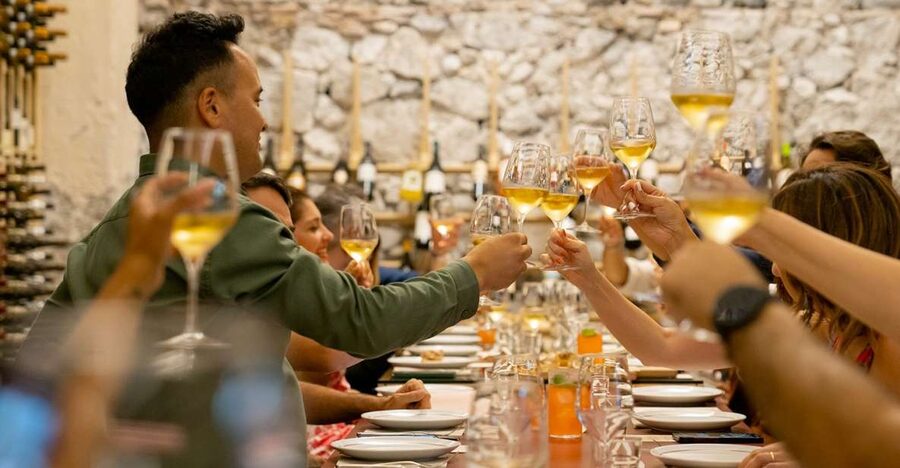
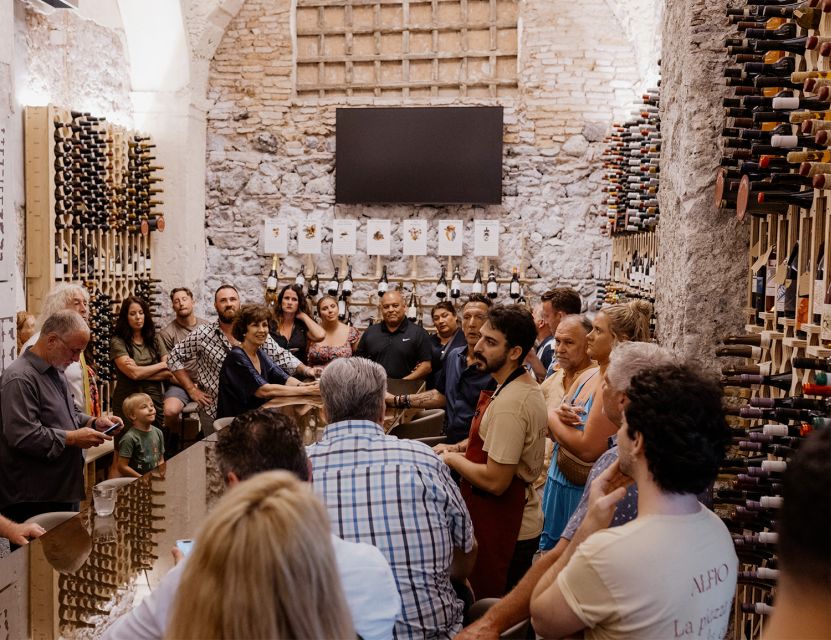
Catania has a way of making everything feel lived-in, and this tasting starts right in Piazza Scammacca, the city’s first metropolitan market. You’ll show your confirmation voucher at the entrance and then get pulled into the rhythm of the place—part market energy, part wine lesson.
This is not a vineyard classroom. The value here is that you taste and learn while staying in the middle of daily life. You also get people-watching built into the setting, which is handy if you want your evening to feel like Catania, not an imported wine bubble.
You can also read our reviews of more food & drink experiences in Catania

Volcanic Terroir, Explained Without the Fuss
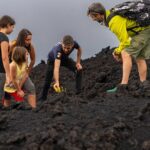
The theme is simple and smart: volcanic wines from Sicily can taste surprising because volcanic activity helped shape the soil. During the guided portion, you’ll hear how different volcano origins and the volcano’s composition influence what ends up in the glass.
That matters because it changes the way you taste. Instead of thinking only about sweetness or acidity, you start noticing the kinds of mineral notes, smoky edges, or aromatic quirks that people associate with volcanic terroirs. And when the explanation is done well, four glasses become a mini road trip through the island’s geology—right there in the market.
The tasting is built around this idea: volcano eruptions didn’t just make Sicily dramatic. They helped create soils with distinct characteristics, which in turn shape the wine’s smell and flavor.
Your Four Glasses: How the Pours Build a Taste Story
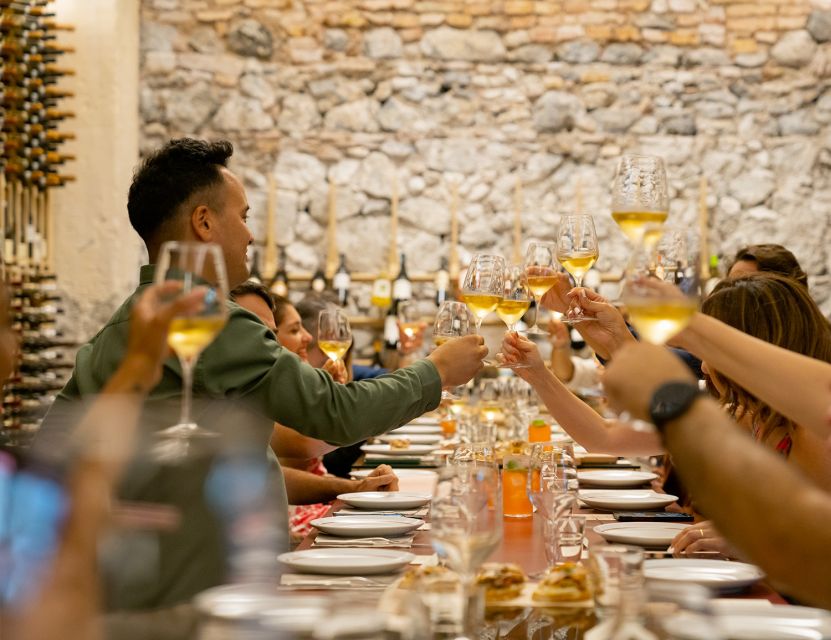
You’ll sample four glasses of Sicilian volcanic wine over about 1.5 hours. Each pour comes with a guiding explanation (so you’re not just drinking blindly), and each is paired with food chosen to match it.
One review highlights a bubbly-style white that wasn’t champagne or prosecco, which hints at the variety you can expect—sparkling or sparkling-leaning starts can happen, depending on the lineup. The key is that the flight is meant to show how volcanic influence can show up in more than one style.
Also, since the format is guided, you’re encouraged to taste in stages: look, smell, sip, then connect it back to what the sommelier is describing. This is where the experience tends to win people over—the glass order and the explanations are designed to make the differences feel obvious, not academic.
Wine + Food Pairings: The Chef Part You Should Plan For
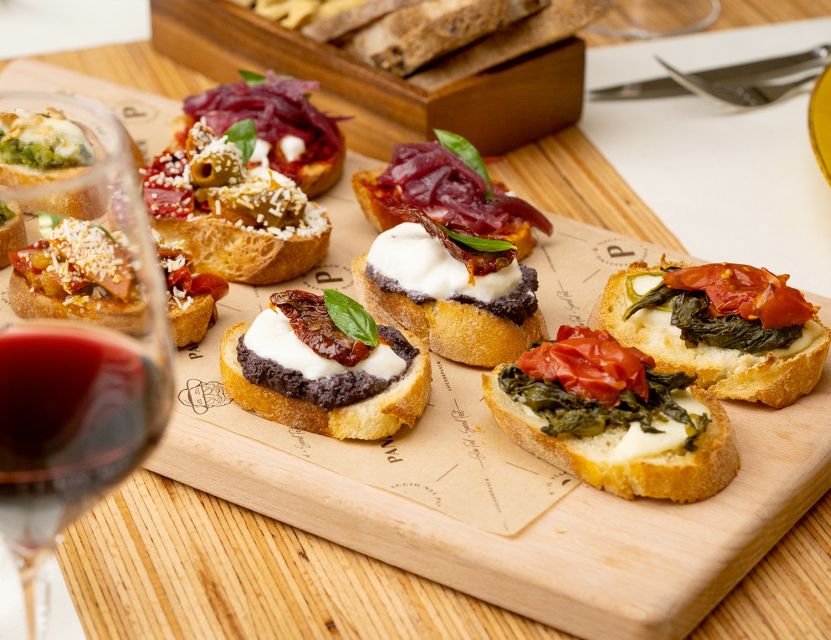
The pairing is included, and that’s a big part of the value. You’ll get food samples that aim to work in “synergy” with each wine, created by the sommelier and chefs for the tasting flow.
Don’t arrive hungry in the way that makes you think you’ll eat a full meal afterward. More than one comment emphasizes that you should not eat dinner beforehand, because the food during the tasting is meant to cover what you need for the session.
In plain terms: this is closer to a tasting-menu mindset than a simple drink-and-leave. If you’re the type who loves how food changes wine (and vice versa), you’ll get a lot out of the included bites.
Meeting the Sommeliers: What “Guided” Feels Like Here
The instruction is offered in English and Italian, and the experience is led by a wine expert/sommelier. Names that have come up include Luca, Dominico, Andrea, Gabrielle, and Frederico—so you’re likely to get a guide who can explain both wine technique and local context.
The best moments are when your host connects the dots:
- how volcanic soils influence aroma and taste
- what to pay attention to in the glass
- why the pairing makes sense
A small caution from the feedback: a few people felt there were longer pauses between pours than ideal, especially when the venue wasn’t crowded. That doesn’t mean the tasting is bad—it just means your enjoyment may depend on pacing and group size. If you prefer an always-on conversation, go with the attitude of enjoying the lesson, not chasing constant attention.
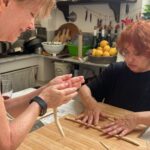
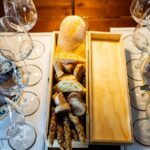


Venue Vibe in Catania: Market Energy Meets Historic Space
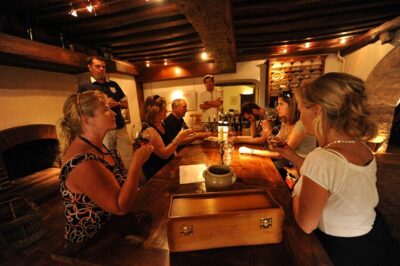
Piazza Scammacca is the anchor, but several accounts mention a distinctive interior feel—described as a church or cathedral-style setting with restaurant-like operations nearby. That combination is part of why this works as an evening plan: you get an atmosphere that feels tied to place, not just a standardized wine room.
In practical terms, this is also an advantage for timing. You’re not dealing with transportation back and forth to a countryside winery. You can build this around a Catania day—especially if you’re already walking the center and want a structured stop that doesn’t require a long commitment.
Price and Timing: Is $53 Worth It?
At $53 per person for 1.5 hours, the value mostly comes from what’s included: four glasses plus food samples. If you price it like a typical bar tasting, you’re not just paying for one or two drinks. You’re paying for the flight, the guidance, and the pairing component.
Also, the time is tight enough to fit into a travel schedule. You can do it without turning your day into a half-day mission. That matters in Catania, where evenings can get busy and dinner plans tend to multiply fast.
One caution: additional food and drinks are not included. So if you’re the type who tends to keep ordering during wine events, you’ll want to budget for that separately—or go with the tasting flight and treat it as the highlight.
Who Should Book This Volcanic Wine Tasting
This is a strong choice for:
- people who want an introduction to Sicilian volcanic wines with a guided narrative
- wine-and-food lovers who like pairing more than just sampling
- visitors who want to stay in the city and still learn something specific
It’s less of a fit for:
- anyone looking for a full dinner replacement (the food is included as samples, and the session is only 1.5 hours)
- people who want a guaranteed high-interaction pace the whole time
The activity also has clear limits: it’s not suitable for children under 18, pregnant women, or people with pre-existing medical conditions. If any of those apply, you’ll want to choose another kind of wine-focused experience.
Wheelchair access is listed as available, which is always a plus when you’re planning confidently.
Should You Book? My Practical Take
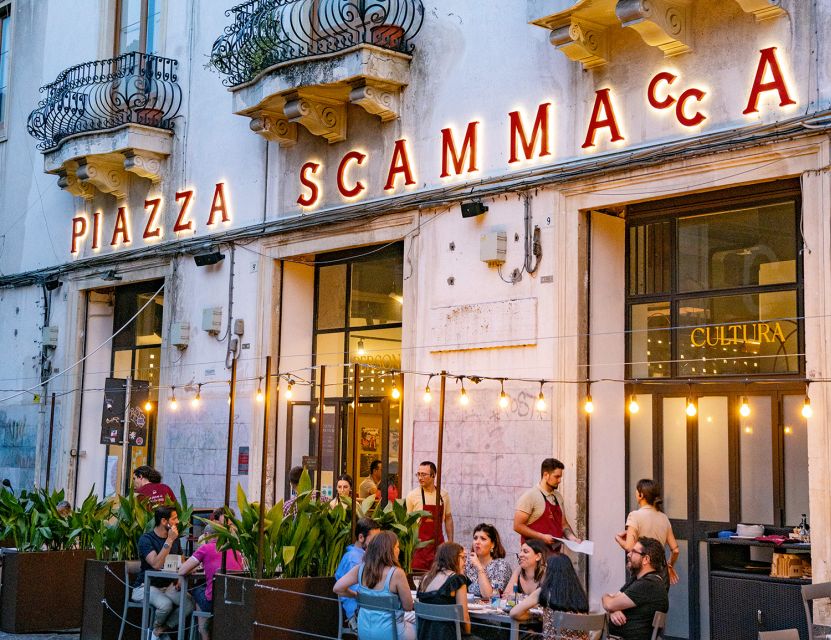
If your goal is to learn why Sicilian volcanic wines taste the way they do—while also eating well without hunting for pairing ideas—this is a solid booking. The combination of four guided pours and chef-made food samples at a city-market location is exactly the kind of “worth it” structure that makes a short experience feel complete.
Book it if you want a guided tasting that connects wine to geology and local culture, and you’re happy to let the host set the rhythm. Skip it if you’re extremely sensitive to pacing and you hate waiting between parts—because at least some people have flagged that the flow between pours can drag a bit.
FAQ
How long is the volcanic wine tasting in Catania?
It lasts 1.5 hours.
What is included in the price?
You get 4 glasses of wine and food samples.
Where do I meet for the experience?
Show your confirmation voucher to staff at the entrance of Piazza Scammacca.
Is the tour offered in English?
Yes. The instructor offers English and Italian.
Are there any age or health restrictions?
Yes. It is not suitable for children under 18, pregnant women, or people with pre-existing medical conditions.
Is it wheelchair accessible?
Yes, it is listed as wheelchair accessible.
Do I need to eat beforehand?
Since food samples are included, it’s smart not to plan a full dinner beforehand. You’ll likely want to come ready to enjoy the pairing.
Are extra drinks or extra food included?
No. Additional food and drinks are not included.
Can I cancel for a refund?
Yes. Free cancellation is available up to 24 hours in advance for a full refund.
Can I reserve without paying right away?
Yes. It offers reserve now & pay later.
Final Call: Book It or Skip It?
I’d book this if you want an efficient Catania evening that blends volcanic-wine education with actual pairing food, all without leaving the city center. I’d skip it only if you’re expecting a nonstop, high-energy pace and you know you’ll get impatient during slower moments between pours.