REVIEW · LISBON
Food & Wine Lisbon Tour with Local Guide in Private Eco Tuk Tuk
Book on Viator →Operated by Eco Tuk Tuk - Portugal · Bookable on Viator
Lisbon tastes better at street level. This 3-hour Food & Wine Lisbon tour uses a private eco tuk tuk to glide through tight lanes and viewpoints while keeping wine-and-cheese tastings part of the ride. One catch: the food side can feel more like tastings than a full-on food tour, so go in expecting samples, not a guaranteed hot-food parade.
I love the logistics here. You start with no line-waiting, the driver-guide manages the rhythm of the neighborhoods, and the tuk tuk setup keeps you moving even when streets get steep or narrow. I also like that you’ll get pre-set photo stops, plus blankets and covers for wind and rain, which matters in Lisbon.
The other thing I found useful is how personal it can feel for a small private group. If you end up with Arthur, the vibe tends to be extra warm and Lisbon-loving, and that makes the history land better. If you’re picky about a very specific menu, keep it flexible.
In This Review
- Key things to know before you go
- Private, 100% electric tuk tuk: the smart way to cover Lisbon
- What you’ll taste (and what you might not get)
- From Cais do Sodré to Chiado: riverside energy and old-school café Lisbon
- Bairro Alto and Baixa: hill streets, earthquake rebuilds, and major squares
- Sé de Lisboa and Alfama viewpoints: where the city history and the views meet
- Graça, São Vicente de Fora, and the National Pantheon stop
- Chafariz de El-Rei and Praça do Comércio: old public water systems to the city’s big open stage
- Price and timing: is $107 per person a good deal?
- Who should book this eco tuk tuk food and wine tour
- Should you book it?
- FAQ
- How long is the Food & Wine Lisbon tour?
- What’s included in the tour price?
- Is there a vegetarian option?
- Where does the tour start and where does it end?
- Do they offer hotel pickup?
- What language is the tour conducted in?
- How many passengers can ride per tuk tuk?
- What happens if the weather is bad?
- Is cancellation free?
Key things to know before you go
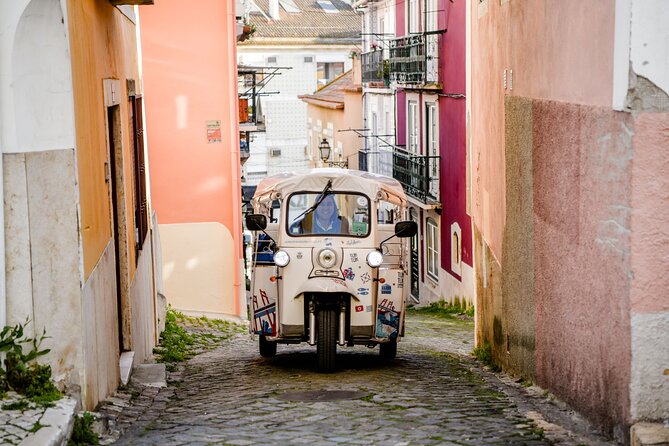
- Private electric tuk tuk: only your group rides, and you get the comfort of an eco-friendly vehicle.
- No queues at the start: the tour is designed to help you get going without waiting.
- Tastings with vegetarian options: the menu can be adapted for vegetarians.
- Photo stops are pre-selected: you don’t have to hunt for viewpoints on your own.
- Blankets and weather covers: helpful when Lisbon swings from sunny to breezy fast.
- Small-group flexibility: drivers help you get on, which is great for seniors.
Private, 100% electric tuk tuk: the smart way to cover Lisbon
Lisbon is a hill city. That sounds obvious, but it’s why a tuk tuk tour works so well here. A normal walking day can turn into a knee-and-calf test pretty fast, especially around Alfama and the higher viewpoints. On this tour, you get the best of both worlds: you still stop and look up close, but you’re not pushing through every steep climb.
The vehicle is 100% electric, and that’s not just a feel-good detail. Lisbon streets can be crowded, and an electric vehicle generally feels smoother and quieter in tight areas than a big bus. Even better, the tour includes blankets and protective covers, so you’re not forced to cut your day short when the wind picks up near the river or on exposed miradouros.
Because it’s private, your group controls the pace in a way group tours usually can’t. Tuk tuks are booked privately, and the legal passenger limit is 4 per tuk tuk. If you’re traveling as a party that needs more than one tuk tuk, that’s handled by fixed pricing by the number of tuk tuks required for your group.
Practical note: this is not hotel pickup. Pickup is offered only at the cruise port meeting point on the Jardim do Tabaco Quay side. If you’re not at the cruise terminal, you’ll want to plan how you’ll reach the start area.
You can also read our reviews of more food & drink experiences in Lisbon



What you’ll taste (and what you might not get)
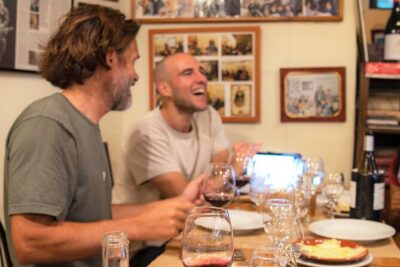
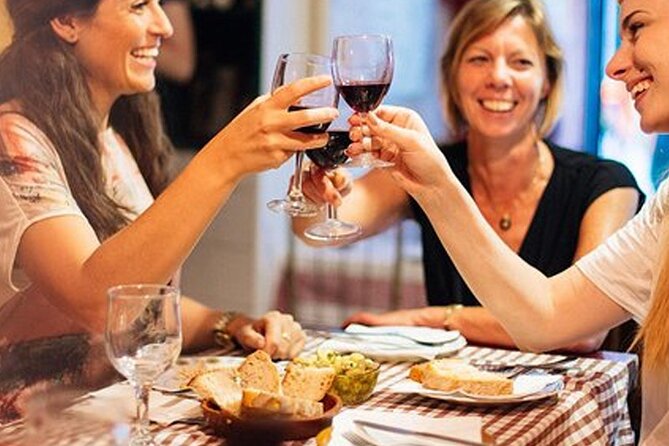
This is a Food & Wine tour, but the format is “samples and tastings” rather than a long sit-down meal. Included snacks cover different tastings like wine, cheeses, and other food items.
Here’s the most helpful way to set expectations: the tasting menu can be adjusted for vegetarians, but the exact lineup may vary by timing and routing. One clear theme is that you can expect small, curated bites paired with wines (and sometimes port). In at least one tasting example, the focus included things like olive oil tastings with bread, cheese tastings, and a local pork-based sausage prepared on the spot, along with wine samples (white and red) and port.
If you were hoping for a very specific set of Portuguese classics every time—like a particular sandwich or a promised assortment of hot items—don’t count on every item being guaranteed. For planning, think of it like this: you’ll come away knowing the flavors and traditions, but it’s still a short 3-hour sampler format.
If food is your main goal, I’d still book this, but with the mindset of discovery through tastings and pairings, not a guaranteed full menu.
From Cais do Sodré to Chiado: riverside energy and old-school café Lisbon
Your ride begins around Cais do Sodré, a riverside district known for restaurants and nightlife. It’s a good starting point because you get a taste of modern Lisbon atmosphere right away, then you’re guided into more historic neighborhoods.
In the Cais do Sodré area, a highlight is the Ribeira Market area. It’s famous for a food-court style setup where you’ll see an active mix of stalls. This is a smart “first stop” kind of place because it sets your palate and your eyes: you learn what locals gravitate toward and how Lisbon blends international options with Portuguese favorites.
Next comes Chiado, the central, stylish district between Baixa and Bairro Alto. This neighborhood is where Lisbon’s café culture really shows. Expect to see the landmarks that define the area’s intellectual-and-arts vibe, including Café A Brasileira, and Livraria Bertrand, which is the world’s oldest operating bookstore. You’ll also pass São Carlos Theater, a major cultural stop in Lisbon.
Why this matters on a food-and-wine tour: Chiado is a reminder that Lisbon’s cuisine isn’t only street food. It also lives in long-standing café traditions—ideas, conversations, and slow sips. Even if you’re full from tastings, the area makes sense because it explains the city’s “taste for culture.”
A possible drawback: Chiado and its nearby streets are popular. If you’re someone who hates crowds, this portion may feel a bit busy compared with quieter viewpoints.
Bairro Alto and Baixa: hill streets, earthquake rebuilds, and major squares

From Chiado, the route heads into Bairro Alto, the neighborhood that feels like Lisbon’s social engine. It’s known for nightlife and a bohemian vibe, but it also has a long story behind those narrow lanes—dating back to the 16th century. In daylight, you’ll notice the craft in the place: cobblestones, old facades, and a mix of traditional and modern spots along the streets.
Then you drop toward Baixa, Lisbon’s downtown heart. This area is especially important because it shows how the city rebuilt itself after the 1755 earthquake. Baixa was transformed into a more planned grid, guided by the Marquis of Pombal. That grid layout is why Baixa feels so “workable” compared with the twisting maze of Alfama.
Two Baixa favorites on this route:
- Praça do Comércio (Terreiro do Paço) by the Tagus River, huge and open, with a grand sense of space. You’ll understand why this square is a symbol of political power and state centralism.
- The Arco da Rua Augusta area is nearby and fits the visual story of Baixa’s reconstruction era. You’ll also be close to the Santa Justa Lift, another iconic iron structure.
If your legs like a break, Baixa is easier than the hilltop blocks. It’s also where the views shift: you go from high-angle lookouts to a more classic “river meeting the city” panorama.
Sé de Lisboa and Alfama viewpoints: where the city history and the views meet
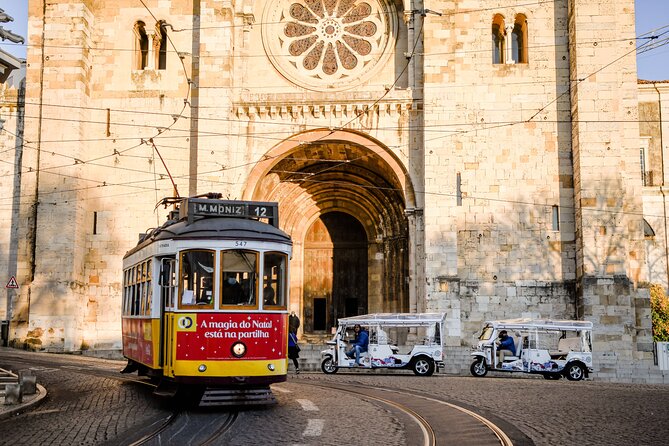
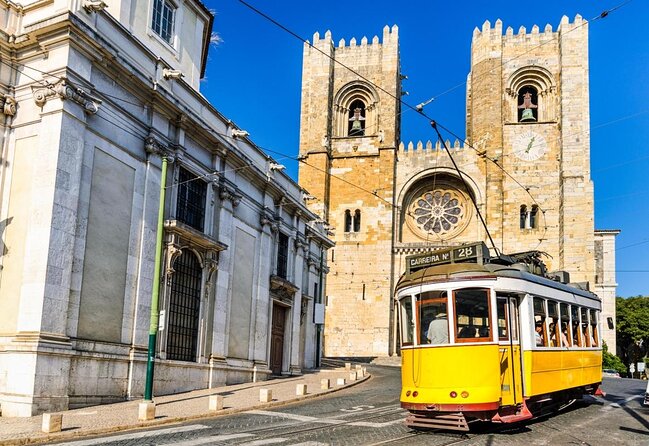
Next you’ll hit Sé de Lisboa, also called the Lisbon Cathedral (São Vicente/Seat-of-Lisbon identity). Construction began in 1148, shortly after the city was conquered under Afonso Enriques. This matters because it connects directly to why Lisbon feels layered: your tuk tuk stops aren’t random scenic points. They’re tied to older power centers and older stories.
From there, you move toward Largo das Portas do Sol in Alfama. This is one of Lisbon’s famous view squares. The name points back to old city walls and a gate that faced east—the rising sun. Translation for your travel day: it’s naturally bright, and it’s a classic sunset hangout spot. It’s also a great base for peeking into Alfama’s narrow lanes.
Then you’re guided to Miradouro Nossa Senhora do Monte in Graça. This is one of the most iconic panoramic viewpoints in Lisbon. The viewpoint includes the Chapel of Nossa Senhora do Monte, and it has a deep timeline behind it, including connections to the period after reconquest from the Moors and later repairs following the 1755 earthquake. There’s also free admission for the Miradouro stop, so you get one of Lisbon’s big-view moments without adding another ticket step.
Even if you’re not a church-or-architecture devotee, this stop is worth it. You see the river, the city’s rooflines, and the way Lisbon’s hills shape daily life.
A few more Lisbon tours and experiences worth a look




Graça, São Vicente de Fora, and the National Pantheon stop
Graça is often the “locals and viewpoints” side of Lisbon, and it fits perfectly between the more famous central districts and Alfama’s maze. This neighborhood is known for traditional streets, a strong community feel, and miradouros that locals actually use.
A key stop here is the Monastery of São Vicente de Fora, located on high ground at the intersection of Graça and Alfama. It’s called de fora because, historically, that parish was outside the city walls’ jurisdiction. That kind of detail makes the architecture feel less like a postcard and more like a map of how people once organized power.
Then you’ll reach the National Pantheon of Portugal (Panteão Nacional), housed in the Church of Santa Engrácia. The site has an older story: a church was ordered in 1568, and the current building began serving as a pantheon in 1916. If you like how Lisbon layers old religious sites into civic meaning, this will land well.
Chafariz de El-Rei and Praça do Comércio: old public water systems to the city’s big open stage
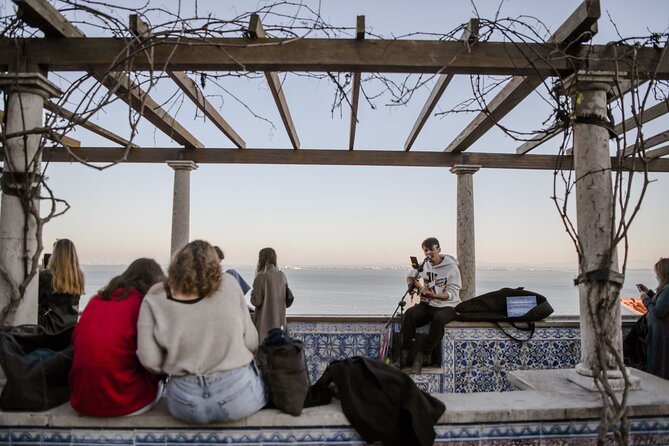
Back in Alfama territory, the tour includes Chafariz de El-Rei, the first public ornamental fountain in Lisbon. It was built in the 13th century during the reigns of Afonso III and Denis I, using groundwater from Alfama. That’s a surprisingly practical detail for a food-and-wine day: Lisbon’s food culture depends on water systems, markets, and where supplies moved.
This fountain also connects to the Age of Discovery. The channels that fed water to the exterior gutters date to 1487 and helped supply ships. The current façade is from 1864, and it used to have nine functioning gutters, each linked to a specific social group. Even if you don’t study fountains for fun, this stop gives you a strong sense of how daily life used to be structured.
Finally, you return to Praça do Comércio, one of the largest squares in Europe by size, with 79 arches along the borders. It’s a dramatic ending visual because it’s open, river-facing, and historically tied to Portuguese royal power. After hilltop miradouros, this feels like exhale time: you get space for photos and a clear sense of direction.
Price and timing: is $107 per person a good deal?
At about $107 per person for roughly 3 hours, the value depends on what you want out of Lisbon that day.
You’re paying for:
- a private eco tuk tuk (not a shared ride),
- an expert local driver-guide,
- included tastings (wine, cheeses, and more),
- built-in convenience (no queues at the start, photo stops pre-set),
- and comfort add-ons (blankets/covers).
If you’re trying to get multiple neighborhoods in a short window without spending the whole day hauling yourself up hills, this pricing makes sense. It’s also a strong option if your group wants a personal guide voice rather than hopping between audio-phone stops.
If you’re coming into Lisbon with a very strong food agenda and you want the kind of meal-by-meal focus you’d get from longer dedicated tastings, you may wish the food emphasis were heavier. But you do get a taste of Portuguese flavors plus a guide who can connect them to the city around you.
Planning tip: this tour is often booked about a month in advance on average, so if your dates are popular, don’t wait too long.
Who should book this eco tuk tuk food and wine tour
This works best for:
- couples or small groups who want big-view Lisbon without a full walking day,
- travelers who want food and wine as part of the story, not the entire story,
- people who value convenience: private vehicle, pre-set stops, and a guide managing the route,
- seniors (drivers help you get on, and the vehicle is designed to be suitable).
It may not be the best match if:
- you need hotel pickup (this tour uses the cruise port meeting point),
- you only like long, sit-down meals,
- you get stressed by changing photo stop pacing due to street closures or demonstrations (the route can vary that day).
Should you book it?
Yes, if you want a fun, efficient Lisbon day that mixes viewpoints, historic landmarks, and real tasting time in about 3 hours. The private electric tuk tuk setup is a big part of the value, and the comfort details (covers in wind/rain) keep the experience from feeling like a weather gamble.
Book with realistic expectations on the food side: you’ll get tastings and pairings, and vegetarian adjustments are possible, but this is not a multi-course marathon. If you’re okay with that, you’ll leave with better context for Lisbon’s neighborhoods and a stronger sense of how Portuguese flavors show up across the city.
FAQ
How long is the Food & Wine Lisbon tour?
It’s about 3 hours.
What’s included in the tour price?
Snacks and different tastings (including wine and cheeses), an expert local driver-guide, a private vehicle for your group, and photo stops. It also includes blankets and protective covers for rain and wind.
Is there a vegetarian option?
Yes. The menu can be adapted to vegetarians.
Where does the tour start and where does it end?
It starts at Lisbon Cruise Port, Jardim do Tabaco Quay (near the main building exit door). It ends back at the same meeting point.
Do they offer hotel pickup?
No. Pick-up at the hotel is not included.
What language is the tour conducted in?
The tour is offered in English.
How many passengers can ride per tuk tuk?
The legal maximum is 4 passengers per tuk tuk.
What happens if the weather is bad?
The tour runs in rain or heat and can only be cancelled under extreme conditions.
Is cancellation free?
Yes. You can cancel up to 24 hours in advance for a full refund.