REVIEW · BELGRADE
Belgrade Underground Tour w/ Sparkling Wine Along the River
Book on Viator →Operated by Serbia Excursions · Bookable on Viator
Belgrade has a second city under your feet. This 2.5-hour underground walk inside Belgrade Fortress lets you see layers of history you’d never spot from street level, then it ends with a glass of local wine on the Sava River bank.
I love that the route is built like a timeline you can physically move through: Roman well, an Army bunker, and an Austrian gunpowder warehouse. I also like the human side—guides such as Darko and Bojan get frequent praise for flow, clarity, and answering questions.
One possible drawback: this is an underground fortress circuit with stairs, and one review noted that a guest on crutches could only make it to the Roman Well. If you need very level ground, plan carefully.
In This Review
- Key highlights and details to know
- Belgrade Underground Tour: What This 2.5 Hours Feels Like
- Meeting at the Fortress and Ending by the Sava
- Stop 1: Belgrade Fortress Underground Circuit
- Roman Well: Why This First Stop Hooks You
- Stop 2: The Cold War Army Bunker and Tito-Era Power
- Stop 3: The Austrian Gunpowder Warehouse and Its Exhibits
- The Sava River Wine Stop: What You Get at the End
- Why This Tour Value Stacks Up
- Stairs, Heat, and Who This Fits Best
- Guide Tips: How to Get More From the Stories
- Price, Group Size, and Timing: Small Details That Matter
- Should You Book This Belgrade Underground Tour?
- FAQ
- Is this tour offered in English?
- How long is the Belgrade Underground Tour?
- What does the tour include?
- Where does the tour start and end?
- How big are the groups?
- Is it mostly underground the whole time?
- Are there stairs or mobility concerns?
- What drink is included at the end?
- What if weather is bad?
- What is the cancellation window?
Key highlights and details to know
- Roman well and Fortress underground layers you can actually walk through, not just look at
- Tito-era Cold War bunker that explains how power shaped these spaces
- Austrian gunpowder warehouse with a hands-on moment touching cave walls
- Artifacts and exhibits tied to Serbian archaeological collections
- Wine by the Sava River at the end, with options if sparkling wine isn’t your thing
Belgrade Underground Tour: What This 2.5 Hours Feels Like
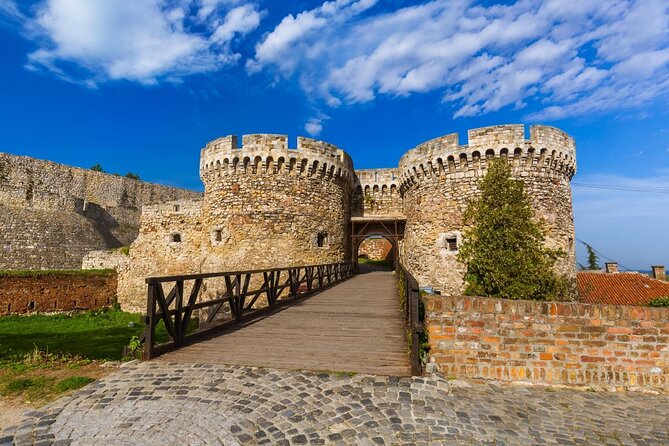
This tour is for people who like their sightseeing a little unusual. Instead of trading one landmark for another, you follow an underground path under Belgrade Fortress and watch the city’s past switch gears—Roman to Austrian to Cold War—sometimes in the span of a few minutes.
The timing works well if you’re trying to fit in something memorable without eating your whole day. It’s about 2 hours 30 minutes, and the tour finishes with a drink on the riverbank, so you don’t end “underground” and then scramble to find your own plan.
Price-wise, you’re paying around $35.09 per person (the info provided also mentions about 35 EUR). For that you get an expert guide, entrance fees, and a glass of alcohol at the end. In plain terms: you’re covering the cost of guided access to places you might not find alone.
You can also read our reviews of more wine tours in Belgrade
Meeting at the Fortress and Ending by the Sava
The start point is Osnovna škola Kralj Petar I, Kralja Petra 7 in Belgrade. The tour ends at Beton Hala, Karađorđeva 2.
That matters because your walking day has a clear arc. You begin near the Fortress area and finish near the riverside energy of the Sava. It’s an easy transition to whatever you feel like next—another meal, a riverside stroll, or calling it an early night after a lot of stairs and stories.
Also, this is a group tour with a maximum of 40 travelers. In practice, you’ll often get a smaller feel on many dates, and the tour notes that there’s a choice with shared group options (minimum 4 persons for that shared option). Smaller groups usually mean you can ask questions without shouting over everyone.
Stop 1: Belgrade Fortress Underground Circuit
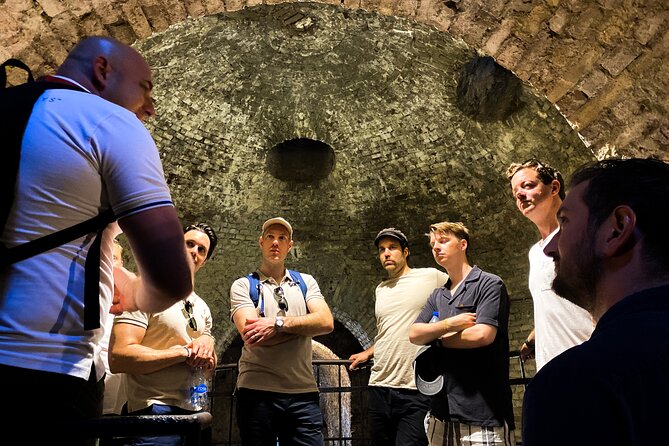
Belgrade Fortress is the big stage for this experience. Going underground changes the atmosphere fast. The air cools down a bit, light gets narrower, and the walls start doing the talking—stone, stonework, and the shapes of spaces built for defense and storage.
You’ll start with the Roman well. This isn’t a random photo spot; it’s presented as a key part of the Fortress’s long use over time. The well is described as being built in the 18th century, representing heritage connected to Austrian time. That blend—Roman-era setting paired with later building history—is part of why the tour works. It avoids treating the Fortress as one straight-line period.
One cool connection mentioned in the information you’re given: Alfred Hitchcock’s favorite spot in Belgrade is tied to this area. Even if you don’t care about Hitchcock trivia, it helps you see the Fortress as a living landmark, not just an old wall.
Roman Well: Why This First Stop Hooks You
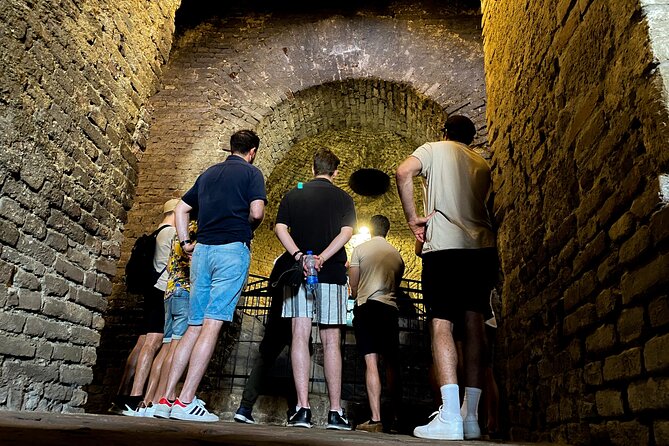
The Roman well stop sets expectations for the whole tour. You learn how the Fortress used water and structures strategically, and you also get the first taste of the “layers” theme—how one era’s needs get built into what comes later.
If you’re the type who gets bored when tours jump too far ahead in time, this start helps. It gives you a concrete anchor (the well) before the guide moves on to defense spaces like bunkers and gunpowder storage.
Practical note: the visit involves stairs and movement. One review explicitly noted that a guest using crutches could only complete the Roman Well part. That’s not a deal-breaker for everyone, but it’s a good reality check if mobility is a concern.
Stop 2: The Cold War Army Bunker and Tito-Era Power
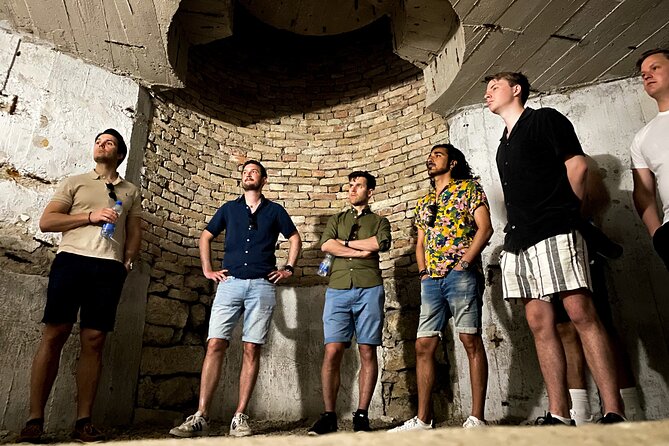
Next you move to the Army bunker tied to the era of President Tito and the broader Cold War period. The tour frames it as a window into how politics and conflict played out in physical underground spaces.
What you should expect here is interpretation more than action. You’re not watching a movie. You’re hearing how these bunkers were used, why they were designed the way they were, and what the guide draws out about the relationship between local leadership and bigger powers. If you like the “why would they build it like this?” style of history, this stop will likely be your favorite.
This is also where a strong guide makes a real difference. Several guides have been praised by name—Novica in one review and Darko in another. The common thread: good English delivery and a knack for keeping the storyline clear while you’re standing in cramped, echoing rooms.
Stop 3: The Austrian Gunpowder Warehouse and Its Exhibits
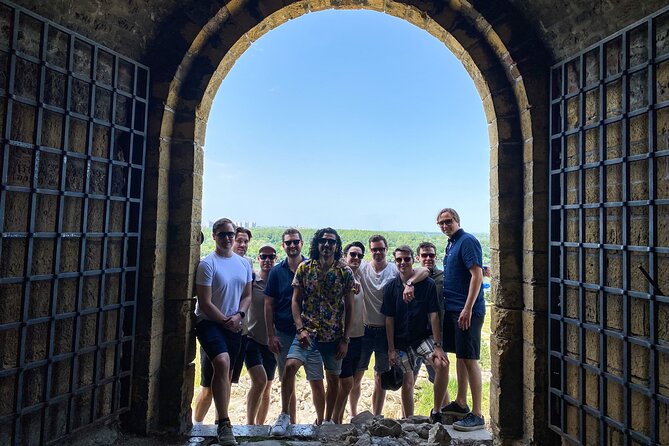
The final underground stop is the gunpowder warehouse built by the Austrians, described as part of the Fortress defenses in a war context against the Ottoman Empire.
This is the most tactile part. You’ll have a chance to touch the cave walls, which helps the space click into your brain as real industrial storage, not just a set piece. Even if you don’t usually care about military history, the physicality matters—you can feel how thick and built-up the architecture is.
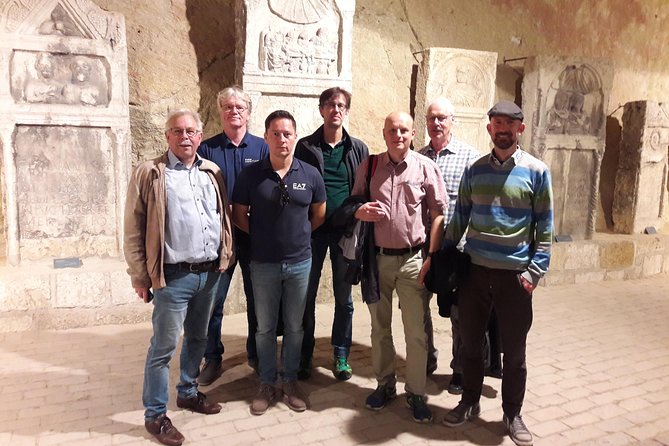
You’ll also see exhibition elements inside this area, including sarcophaguses and altars collected from different archaeological sites across Serbian territory. That detail is valuable because it connects defense history to earlier civilizations and what people left behind above ground.
The Sava River Wine Stop: What You Get at the End
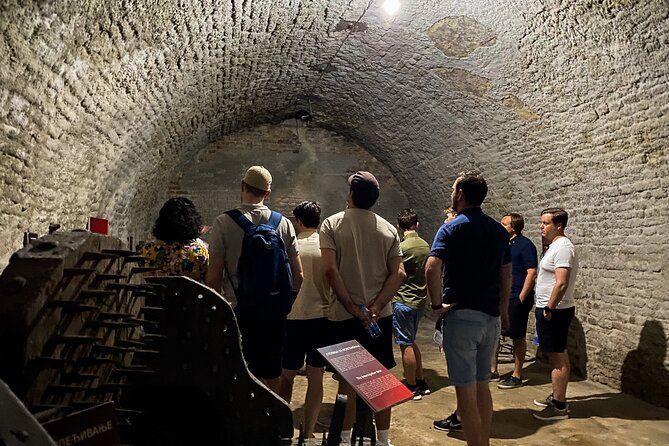
The tour ends with a glass of wine on the Sava River bank. The information provided describes it as local wine, and multiple reviews mention the drink as a pleasant finishing touch after walking and stairs.
Two helpful nuances from the feedback:
- One review noted the drink is served in a modern bar along the river, and the same review wished it had been more old-school.
- Another review said there are other drink choices at the end if sparkling wine isn’t your thing.
So yes, it’s tied to the tour title’s sparkling wine vibe, but the end feels flexible enough for most people. Either way, it’s a good time to catch your breath and ask last questions before you scatter back into Belgrade.
Why This Tour Value Stacks Up
For around $35 / 35 EUR, you’re paying for three things at once:
1) Access to underground spaces under the Fortress
2) Entrance fees included
3) A guided interpretation that ties Roman, Austrian, and Tito-era stories together
4) A drink included at the end
If you tried to do this on your own, you’d likely face two problems: finding the right underground sites and figuring out how they connect without a guide. This tour packages both, and the price is in line with a guided specialty access tour.
The guide quality also looks like a big part of why people rate this so highly. The rating data provided shows 4.8 with many five-star comments. Names keep showing up: Darko, Bojan, Kristina, and Novica. That doesn’t guarantee your specific guide, but it suggests the operator invests in getting the story right.
Stairs, Heat, and Who This Fits Best
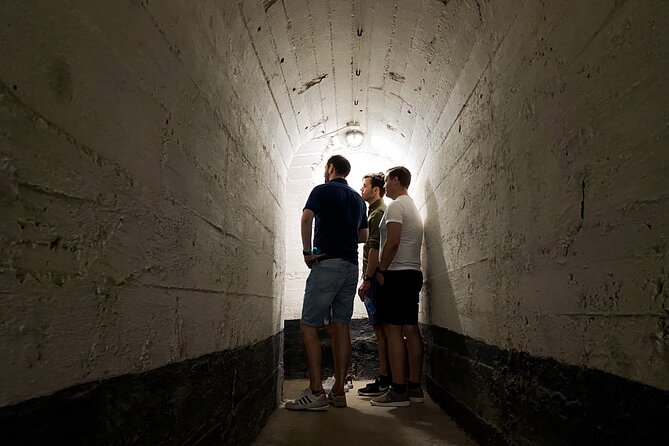
This is not a flat, stroller-friendly city walk. There are quite a lot of stairs in the route. That showed up in a review about someone using crutches, and another review emphasized the stamina needed but said it was fine for them.
It can be a great idea on hot days, though. One review mentioned 90 degrees Fahrenheit / 31 Celsius and praised the guide for staying fresh during a longer stretch. The underground sections can feel like a built-in break from the heat, even if the climb between stops is still real.
Who it suits best:
- History lovers who want a physical route under a major landmark
- People who like forts and defense architecture
- Travelers who appreciate a guide who explains the context clearly in English
Who might reconsider:
- Anyone who needs minimal steps or step-free routes (the tour includes stairs, and that’s not hidden)
- If you want a long, deep dive into only one era, you’re getting multiple periods here—Roman, Austrian, Cold War.
Guide Tips: How to Get More From the Stories
You’ll get the best experience if you treat the guide like your personal translator for the building. Ask questions like: why this room existed, what the materials were for, and how later eras reused earlier ground.
If you care about a certain theme—Roman artifacts, Austrian defense systems, or Cold War bunkers—tell the guide at the start. The feedback mentions guides who answer questions enthusiastically, including one review praising a responsive organizer and a guide eager to add stories.
Also, bring your “curious mindset” more than your “museum mindset.” You’re not doing a quiet gallery. You’re moving through functioning-looking spaces where the purpose feels obvious once you hear the explanation.
Price, Group Size, and Timing: Small Details That Matter
A few practical points that affect your day:
- Duration: about 2.5 hours
- Group size: max 40
- Most travelers can participate, but the stairs are part of the deal
- Mobile ticket is used
- Tour is offered in English
Booking 24 days in advance on average tells me this is popular enough to sell out certain slots. If you’re traveling in peak season, grab a date sooner rather than later.
One more timing note: the itinerary lists “2 hours” for the activity with admission included, but the overall experience is described as 2 hours 30 minutes. Expect the walk plus the drink at the end to stretch you closer to the longer number.
Should You Book This Belgrade Underground Tour?
I think this is a strong booking if you want something different from the usual surface-level sightseeing. The underground route through Roman, Austrian, and Tito-era spaces gives you a fast way to understand why Belgrade’s Fortress matters—and you’ll get explanations in English from guides like Darko and Bojan who have been repeatedly singled out for their delivery.
Skip it or plan carefully if you have mobility limits, because the stairs are real and you’re moving between underground stops. Also, if you only want one time period, you may feel the tour covers too much ground.
If you’re on a first or second visit and want your bearings quickly—literally and historically—this tour is a smart use of a half-day chunk.
FAQ
Is this tour offered in English?
Yes. The tour is listed as being offered in English.
How long is the Belgrade Underground Tour?
The duration is approximately 2 hours 30 minutes.
What does the tour include?
It includes a professional guide, entrance fees, and alcoholic beverages (a glass of local wine).
Where does the tour start and end?
It starts at Osnovna škola Kralj Petar I, Kralja Petra 7, Belgrade, and ends at Beton Hala, Karađorđeva 2, Belgrade.
How big are the groups?
The tour has a maximum of 40 travelers.
Is it mostly underground the whole time?
It’s an underground experience centered on Belgrade Fortress areas, but you should expect some walking around the Fortress as part of the tour route.
Are there stairs or mobility concerns?
Yes. There are quite a lot of stairs, and one review mentioned that a person on crutches could only do the Roman Well.
What drink is included at the end?
You get a glass of local wine. One review also noted there are other drink choices if sparkling wine isn’t your thing.
What if weather is bad?
The experience requires good weather. If it’s canceled due to poor weather, you’ll be offered another date or a full refund.
What is the cancellation window?
Free cancellation is available up to 24 hours in advance for a full refund.