REVIEW · MARSALA
Marsala: Historic winery tour with wine tasting
Book on GetYourGuide →Operated by cantine mothia srl · Bookable on GetYourGuide
Marsala wine has a real home here. I love how Cantine Mothia places you in an old baglio just a stone’s throw from the salt pans of Marsala, then walks you through how the wines are made before you taste.
What I like most is the people factor. Tours are family-managed, and guides such as Marialena can switch between Italian and English while keeping the whole pace relaxed and question-friendly.
One consideration: if there’s background work happening in the winery, the explanations can be harder to catch in a few moments.
In This Review
- Key things that make this tour worth your time
- Entering The 19th-Century Baglio Near Marsala’s Salt Pans
- Meeting Point in Marsala: 22 Giovanni Falcone Magistrate Street
- The Courtyard Stop: Where the Old Machinery of Wine Starts
- Steel Tanks, Oak Barrels, and What You’re Actually Learning
- The Ancient Cooperage: Marsala’s Story Told in Wood
- Tasting Room: White, Red, Sweet, and Marsala (Plus a Bonus Pour)
- What you should watch for during the tasting
- Family-Run Guidance Changes the Pace (and Often the Group Size)
- Price and Value: Why $29 Makes Sense for a One-Hour Stop
- Who This Tour Suits Best (and Who Might Want Another Option)
- Quick Practical Tips Before You Go
- Should You Book Cantine Mothia?
- FAQ
- How many wines are included in the tasting?
- What kinds of wines will I taste?
- How long should I plan for?
- Is there an English guide?
- Is the winery tour wheelchair accessible?
- Where is the meeting point in Marsala?
- What is the cancellation policy?
Key things that make this tour worth your time
- A 19th-century baglio with a working courtyard feel, including tuff interior details and marble paving marked by old wagon traffic.
- Owner-led guidance, so you get the story behind the wines, not just a scripted sales pitch.
- A tour route that matches the wine process, from courtyard to steel and oak aging, then to an ancient cooperage.
- A tasting built around real Marsala styles, including white, red, sweet, and Marsala (with some tours adding an extra wine).
- Sicilian pairings with the wines, including seasoned olives, sun-dried tomatoes, pizza rianata, and sesame cookies.
- Native-grape focus and production that doesn’t aim for mass distribution, meaning you may try wines not common in regular shops.
Entering The 19th-Century Baglio Near Marsala’s Salt Pans
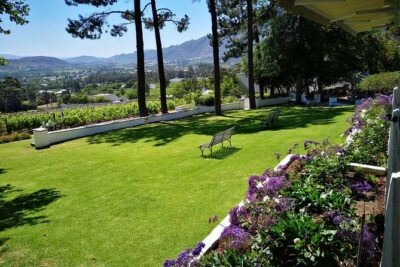
Cantine Mothia is set up for an experience that feels both historic and practical. You’re in Marsala’s orbit—close enough to the salt-pans scenery to understand why this area became so tied to wine, trade, and preservation.
The highlight right away is the building itself: a restored baglio from the 1800s. Even before the tasting, you’re meant to look around—an imposing wooden doorway, wrought ironwork above it, tuff decorations inside, and a courtyard where the past is still readable in the stonework.
I like that the setting doesn’t feel like a museum. It feels like a working cellar that happens to be housed in an old farmhouse structure.
You can also read our reviews of more food & drink experiences in Marsala
Meeting Point in Marsala: 22 Giovanni Falcone Magistrate Street
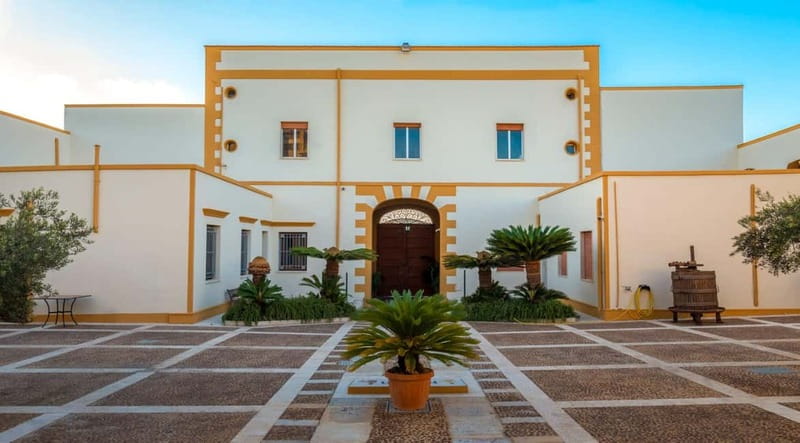
Getting there is straightforward if you follow the directions. Meet at 22 Giovanni Falcone Magistrate Street, and if you’re coming from downtown, go just past the traffic circle.
If you’re doing this alongside other Marsala stops, I’d plan a little buffer time. This kind of place is best when you arrive calm, so you can enjoy the courtyard details and hear the guide clearly right from the start.
The Courtyard Stop: Where the Old Machinery of Wine Starts
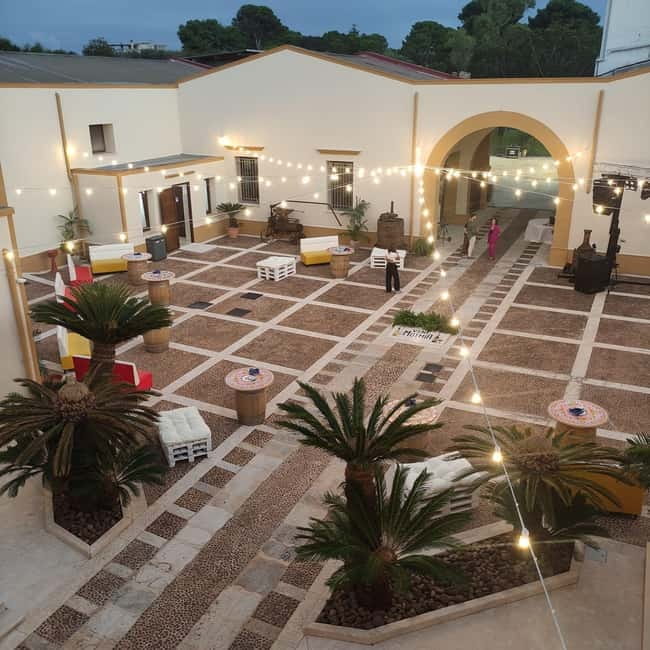
The tour begins by welcoming you into the courtyard of the baglio. This is more than a photo op. The courtyard shows 19th-century marble paving with visible signs of wagon traffic—exactly the kind of detail that turns history into something you can picture.
You’ll also hear the Bonomo family story: the winery was founded in 1997 by Francesco Bonomo, and the family bought and restored the baglio starting right away. That restoration matters, because it’s not only aesthetic—during renovation they also installed modern winemaking facilities and aging spaces.
So by the time you leave the courtyard, you understand the core idea: old stone with new tools, plus a production philosophy built around careful grape selection and careful attention to processing stages.
Steel Tanks, Oak Barrels, and What You’re Actually Learning
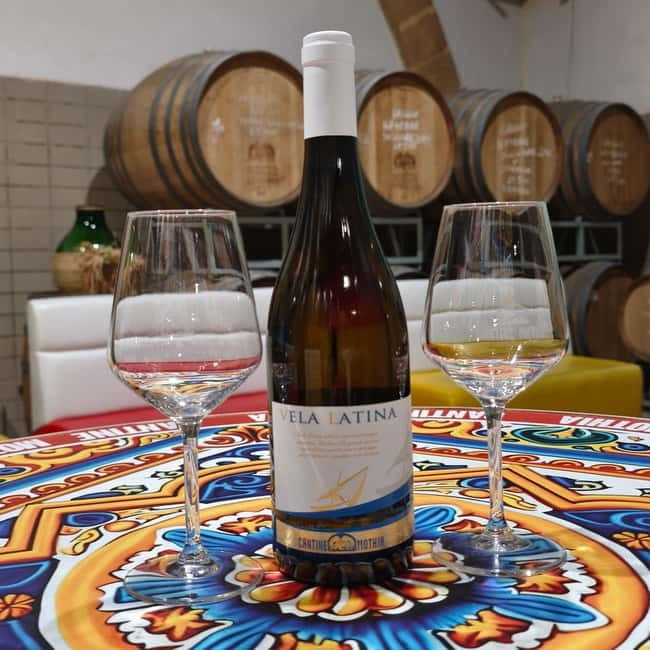
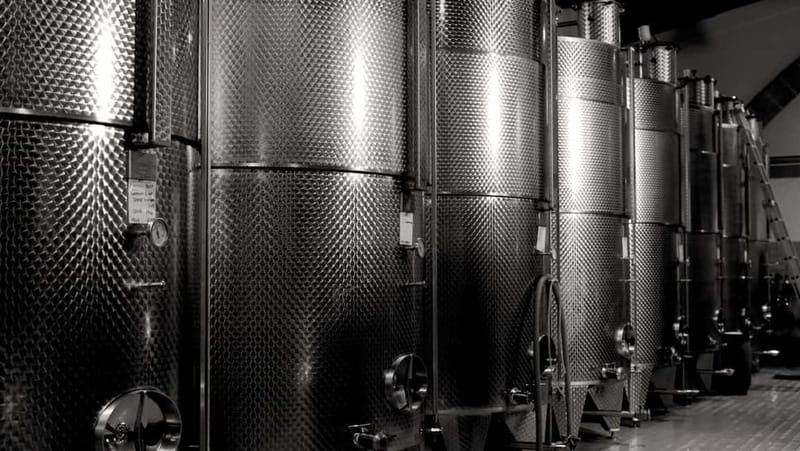
Next you’ll head through the working winemaking and aging areas, including rooms tied to both steel and wood. This is where the tour earns its time.
You’ll get an explanation of the wine-production workflow—how grapes move through processing stages, and how different aging materials affect what ends up in the glass. The tour is designed so you can connect the architectural choices to the final flavor styles you’ll taste later.
A practical tip: if you’re the type who likes specifics, come in with one question ready. Examples include how they talk about aging differences between their steel and oak approaches, or what they think helps a Marsala bottle age well. The guide’s job is to answer, and the small-group feel makes it easier to get a real back-and-forth.
The Ancient Cooperage: Marsala’s Story Told in Wood
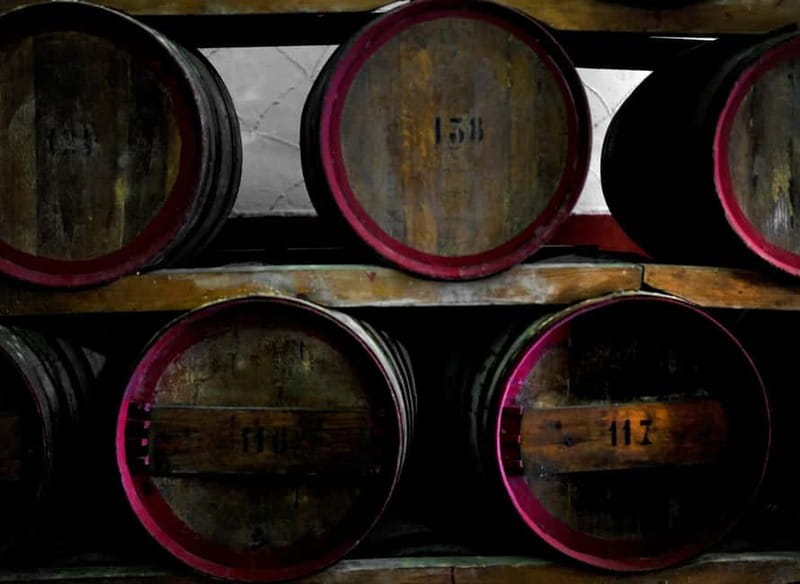
One of the tour’s most memorable stops is the ancient barrel cellar, where you’ll see fine oak and hear the story of Marsala wine. This part works because it gives context to everything you just saw in the production rooms.
It’s also where the tour format helps you. You’re not only observing barrels—you’re hearing how Marsala fits into the broader wine culture of the Trapani/Marsala district. If you’ve ever wondered why Marsala earned its reputation, this is the section that helps it click.
If you care about wine beyond the taste, you’ll probably enjoy how the cooperage stop ties history, aging, and the final styles together.
Tasting Room: White, Red, Sweet, and Marsala (Plus a Bonus Pour)
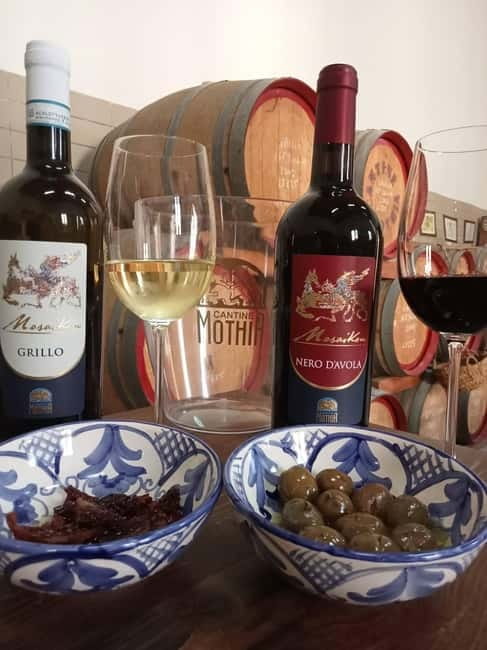
The tasting is the payoff, and it’s structured around four wines: a white, a red, a sweet wine, and a Marsala wine. You’ll taste them in personalized glassware, and you’ll get food pairings with typical Sicilian items.
The pairing lineup includes small tastings of:
- seasoned olives
- sun-dried tomatoes
- pizza rianata
- sesame cookies
That matters because fortified and sweet styles can sit heavy if you taste them on an empty stomach. The food helps keep things balanced and makes the sweet and Marsala portions easier to follow.
One nice surprise: some tours add an extra wine beyond the four. So if you hear that your tasting might be slightly expanded, it’s not unrealistic.
Also, don’t miss the guide’s serving advice if they share it. One highlight from the experience is learning good ways to store and serve Marsala so what you buy tastes right when you get home.
What you should watch for during the tasting
This tasting is short on frills and heavy on practical explanation. If you want to remember something later, jot down which style you liked most and ask the guide what they recommend for pairing or serving.
And keep expectations realistic about items: tasting glassware and anything used for tasting aren’t meant to be taken away.
Family-Run Guidance Changes the Pace (and Often the Group Size)
This tour is family-managed, and it shows in how it flows. You’re welcomed by an owner, not just a staff member reading from a card.
The bilingual element helps too. Guides can switch between Italian and English, and in one standout case the tour paired that translation with patient, relaxed explanations and time for questions. That’s a big deal when you’re trying to understand the differences among styles like white versus red, and sweet versus dry Marsala.
Group size can vary. Sometimes it’s only your group, and other times you share the experience with people from different countries. Either way, the format tends to stay conversational, not rushed.
One small snag to plan around: if renovation work is happening in the background, you might have moments where hearing is slightly tougher. It doesn’t change the tour’s structure, but it can affect how clearly you catch every detail.
Price and Value: Why $29 Makes Sense for a One-Hour Stop
At $29 per person for about one hour, you’re paying for more than a quick pour. You’re getting:
- a guided walk through the baglio and production areas
- an explanation of winemaking and aging steps
- a tasting of multiple Marsala styles
- Sicilian snacks paired to the wines
- an opportunity to shop at the end
If you compare this to tastings that only offer a couple of wines with no context, this one feels like better value. The architectural setting and the owner-led guidance add real substance, and the tasting isn’t just volume—it’s structured.
Also, one reason it can be a great deal is that the winery isn’t aiming for large-scale distribution. That means you have a shot at trying native-grape wines and Marsala styles you might not see every day in standard retail.
Who This Tour Suits Best (and Who Might Want Another Option)
This is a strong match if you want a short, high-return activity in Marsala. You’ll get enough production context to appreciate what you taste, without needing to spend half a day.
It’s also a good choice if you like tours where you can ask questions. The pace is relaxed, and the guide is positioned to answer rather than just talk at you.
You might want to consider something else if you’re extremely sensitive to noise during explanations. If there’s active work happening, you may need to lean in at times.
Quick Practical Tips Before You Go
Here are the moves that help the experience feel smooth:
- Arrive a few minutes early so you can settle in and actually hear the first explanations.
- During the tasting, pay attention to the order—white/red first makes it easier to understand how sweet and Marsala land on the palate.
- If you’re planning to buy a bottle, ask the guide how they recommend you store and serve it so you can replicate the tasting experience later.
- Dress comfortably for walking through indoor cellar spaces and moving between stops.
Should You Book Cantine Mothia?
If you’re in Sicily looking for a Marsala-focused winery stop that feels honest, family-run, and genuinely tied to place, I’d book this. The 19th-century baglio setting, the owner-led guidance, and the tasting lineup of white, red, sweet, and Marsala make it a strong mix of story and flavor.
It’s especially worth it if you care about the process—steel versus oak, aging spaces, and the cooperage story—because the tour is built to connect those dots. Just go in knowing there can be occasional background work, and you’ll be prepared to catch the details.
If your goal is a quick taste with no explanation, you might find it a bit more talk than you want. But if you want Marsala you can understand, this one is a very solid choice.
FAQ
How many wines are included in the tasting?
The tour includes tasting of 4 wines: a white, a red, a sweet wine, and a Marsala wine. Some tours may add an extra wine, so you could taste 5.
What kinds of wines will I taste?
You’ll taste a white, a red, a sweet wine, and a Marsala wine. The overall focus includes fortified and Passito styles as part of what the winery offers.
How long should I plan for?
The activity is listed at 1 hour. In practice, some tours may run a bit longer depending on timing and how the group proceeds.
Is there an English guide?
Yes. The live tour guide offers Italian and English.
Is the winery tour wheelchair accessible?
Yes, the experience is described as wheelchair accessible.
Where is the meeting point in Marsala?
Meet at 22 Giovanni Falcone Magistrate Street, coming from downtown just after the traffic circle.
What is the cancellation policy?
Free cancellation is available up to 24 hours in advance for a full refund.