REVIEW · DRIOS
Greek Cooking Class with a Local Chef, Wine, & Meal in Drios
Book on GetYourGuide →Operated by Maria Anousaki - Anezina Village · Bookable on GetYourGuide
Cooking, dancing, and wine in a tiny Paros village. In Drios, Paros, you spend 3.5 hours at Anezina Village turning a local chef’s family recipes into a full 6-dish meal, with wine, souma, and a little Greek dancing built in.
What I like most is how hands-on it feels. You are not just watching; you are working together at the prep stations and learning techniques you can actually repeat later.
The other big win is the take-home help. You get recipes after the class, so you can recreate the appetizer, salad, meat, fish, vegetarian main dishes, and dessert at home.
One consideration: transportation to the meeting point is not included, so you’ll want a plan for getting yourself to Anezina Village in Drios.
In This Review
- Key highlights at a glance
- Drios at Anezina Village: why this setting works
- How the 3.5 hours really unfold
- Welcome aperitif: Greek wine and souma before you cook
- Rolling up your sleeves: the full 6-dish menu
- What step-by-step help means in practice
- Dietary needs: how adjustments are handled
- Greek dancing comes in right on time
- Dinner paired with what you cooked
- The recipes you get after: how to actually use them
- Price and value: is $136 per person worth it?
- Who should book this cooking class in Paros
- Quick practical tips before you go
- Should you book this Paros cooking class with Maria in Drios?
- FAQ
- Where do we meet for the class in Drios?
- How long is the Greek cooking class?
- What will we cook and eat during the 3.5 hours?
- What drinks are included, and what is souma?
- Can they accommodate dietary restrictions like vegetarian or gluten free?
- How much does this experience cost?
- Is it wheelchair accessible and offered in other languages?
Key highlights at a glance
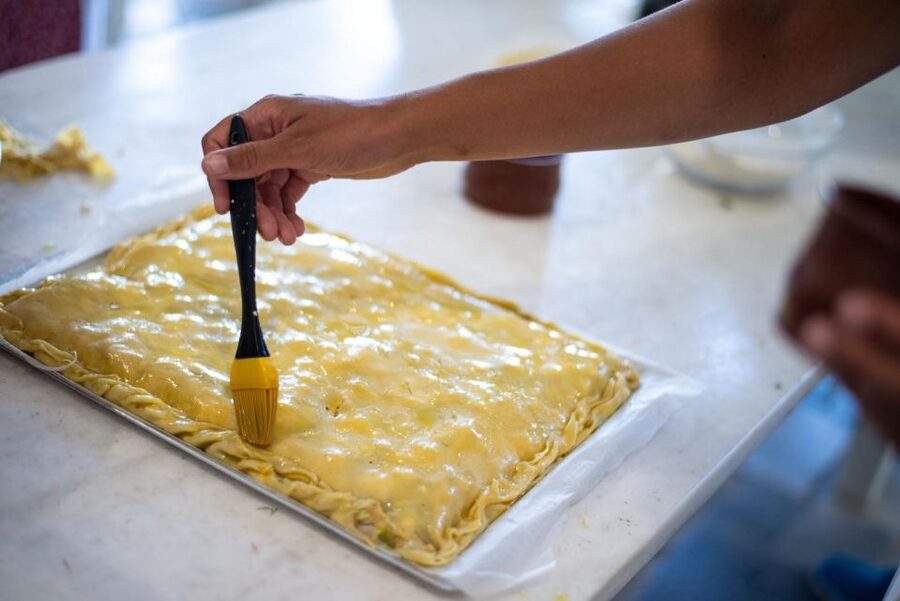
- 6 dishes you cook, not just taste: appetizer, salad, 3 mains, dessert
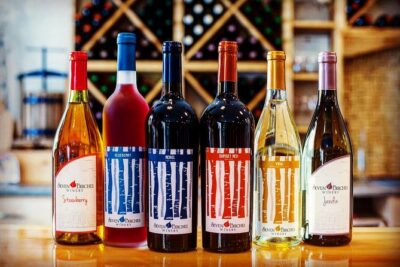
- Greek wine plus souma: a traditional liquor made from leftover winemaking remnants
- Dance break mid-experience: learn a traditional move with the group before dinner
- Diet changes are possible: vegetarian, vegan, gluten free, and allergies can be accommodated by menu adjustments
- Recipes sent to you: practical cooking notes to help you repeat the meal later
Drios at Anezina Village: why this setting works
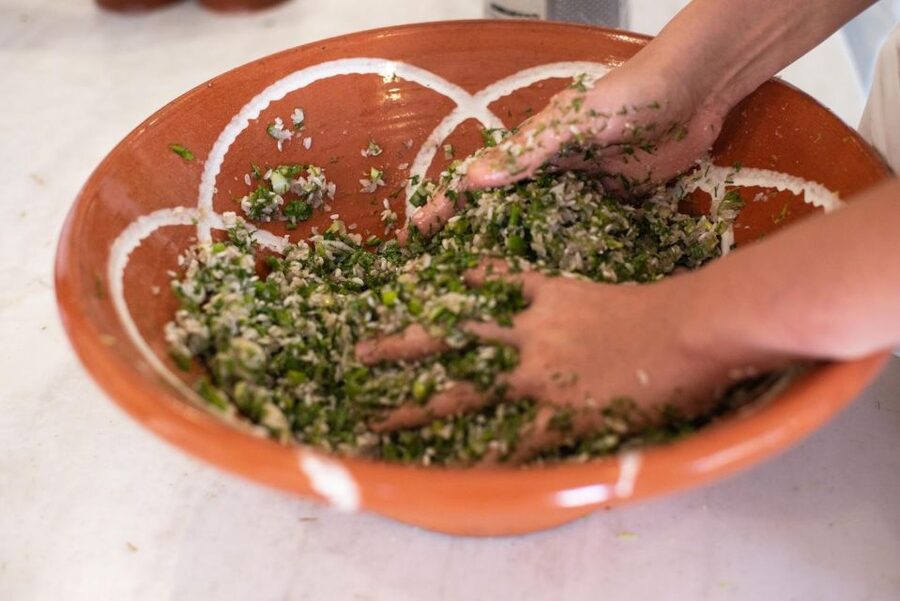
Drios is the kind of Paros village where life feels slower. It is also a smart choice for a cooking class. You get out of the tourist sprint and into a real neighborhood vibe, with a host-led experience that feels personal instead of scripted.
The class happens at Anezina Village (check in at the Anezina Hotel & Village area). That matters because you’re not constantly traveling between stops. Everything you need is in one place: ingredients, equipment, guidance, and then a meal that lands right after the cooking.
One more thing I appreciate: it is not presented like a “performance.” The energy stays practical. You learn while you work, then you sit down and eat what you made.
You can also read our reviews of more cooking classes in Drios
How the 3.5 hours really unfold
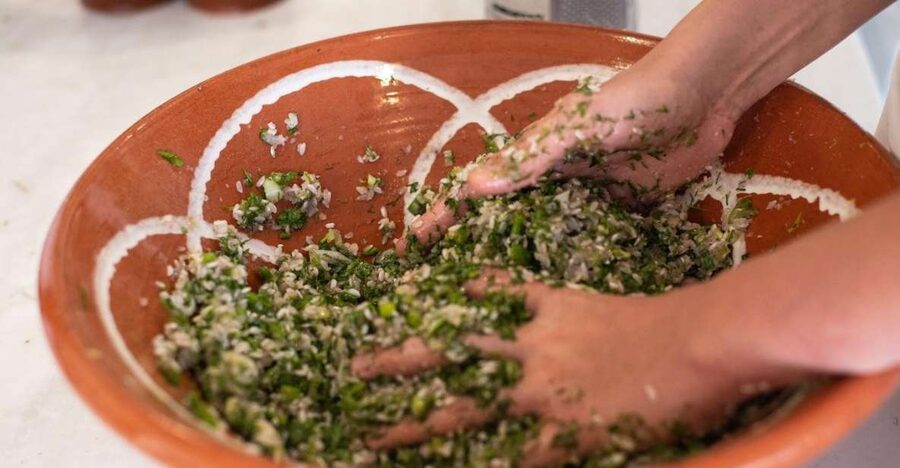
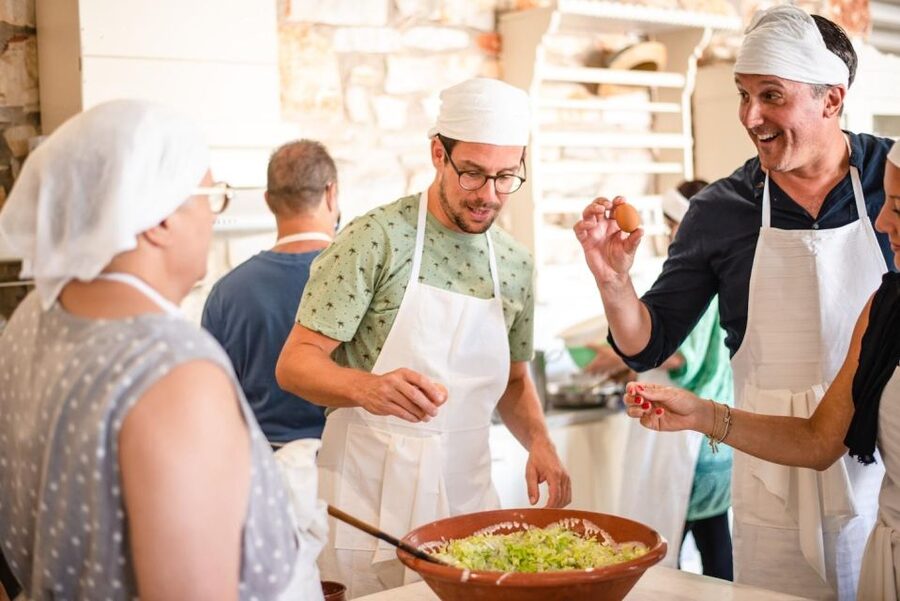
The whole experience is designed to keep momentum without rushing you into confusion. In 3.5 hours, you go from a welcome drink to multiple cooking steps, then to a group meal, plus a short dance lesson.
Here is the flow you can expect:
You start with a welcome aperitif. Then you cook as a group, dish by dish, with step-by-step help. After that, you learn the traditional dance. Finally, you eat your 6-course meal, paired with more local wine.
The timing makes sense for two reasons. First, you get to taste as you go, but the real payoff is sitting down together for the full meal. Second, the class keeps enough structure that even if you have zero cooking confidence, you still end up producing food you can be proud of.
Welcome aperitif: Greek wine and souma before you cook
The experience starts with a drink, and it is more than a casual hello. You begin with Greek wine and souma, a traditional liquor made from the remnants of the winemaking process. That detail is useful because it gives context to what you’re tasting and why locals treat it as part of the rhythm of a meal.
You also get a quick sense of the dishes you’ll be making and why they matter. That story piece helps you understand what you’re aiming for in flavor, not just how to chop or stir.
For me, the best part of starting with drinks and context is how it lowers the stress level. You walk in, settle, and then you jump into cooking with a calmer mindset.
Rolling up your sleeves: the full 6-dish menu
This is a real cooking class, built around doing the work. You prepare six dishes with guidance, using fresh, local ingredients.
You’ll make:
- an appetizer
- a fresh salad
- three main dishes: one meat, one fish, and one vegetarian
- a dessert
That mix is a smart way to learn Greek cooking across different styles. A meat main teaches you how Greek flavors show up in heartier dishes. A fish main shifts the focus to balance and freshness. The vegetarian dish gives you options you can recreate at home without changing the whole structure of the meal.
What step-by-step help means in practice
The class provides equipment and ingredients, so you’re not sorting supplies or hunting missing spices. More importantly, the support is built into the process. You’re guided through steps, then you move to the next course.
If you’re a beginner, this is exactly where you want to start. If you already cook, it’s still useful because you learn Greek-specific technique and flavor logic, not generic “how to cook pasta” advice.
Dietary needs: how adjustments are handled
The menu can change if you have dietary needs like vegetarian, vegan, or gluten free, or if you have allergies. I like this approach because it means you’re not forced into a compromise where you just eat bread and drink water.
If you have serious allergies, plan to communicate clearly. The class is designed to adjust, but you still want to be specific about what to avoid.
Greek dancing comes in right on time
After you cook, the class shifts gears. You learn a traditional Greek dance with the group, then you sit down to eat.
This is not just a gimmick. The timing works because your food is doing its own cooking while the group focuses on something physical. It breaks the tension between tasks. It also keeps the mood playful, which is part of why this feels like more than a lesson.
In the sessions I’m seeing reflected in the experience details, the dance often points toward classic styles like Syrtaki and the kind of group energy associated with older Greek dance favorites. Either way, you’re guided step-by-step, and you’re not expected to be a dancer to participate.
Dinner paired with what you cooked
Once your 6 dishes are ready, you eat together. This is where the whole class clicks.
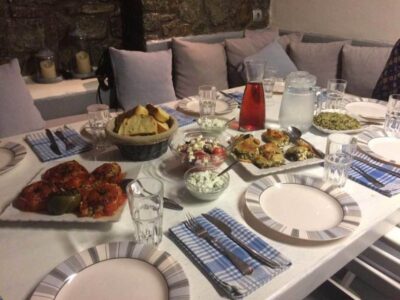
You are not just tasting a random sample of Greek food. You’re eating the appetizer, salad, mains (meat, fish, and vegetarian), and dessert that you helped make. That matters because your brain remembers effort. The flavors land differently when you know what you did to get them to that point.
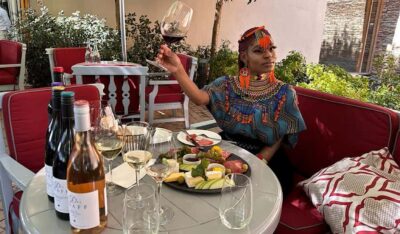
Drinks are part of the dinner too. You get Greek wine paired with your meal (in addition to the earlier aperitif). Wine pairing here is simple and practical. It supports the meal, it doesn’t complicate it.
Also, the class keeps the portion and variety feeling like a feast. Multiple courses plus wine is a lot to take in, so come hungry and plan for a later walk, not a heavy dinner after.
The recipes you get after: how to actually use them
One of the most valuable parts of this experience is what happens after you leave the kitchen. You get the recipes so you can recreate what you made.
For me, recipe handoff is where cooking classes either become useful or fade into memory. Here, the goal is that you can repeat the dishes at home, not just take a photo.
Based on the structure of the class, you should expect recipe notes that match the appetizer, salad, meat main, fish main, vegetarian main, and dessert. If you want to cook the whole menu at once, this is a nice way to build a Greek dinner that feels like it came from a Paros kitchen.
Practical tip: when your recipes arrive, save them in one place, then pick one course to test first. Perfect the salad or appetizer before you tackle the full lineup.
Price and value: is $136 per person worth it?
At $136 per person for about 3.5 hours, you are paying for more than “a cooking lesson.” You’re paying for ingredients, guided instruction across multiple dishes, local wine and souma, the group meal, and the recipe follow-up.
If you compare it to the cost of a nice dinner plus wine plus a paid activity, it starts to look fair. If you compare it to a basic demo-style class that only teaches a couple steps, it looks like a better deal.
The best value angle is the amount of food you make and eat. Six courses is the difference between sampling and doing. You leave with both skills and a finished meal, which is the kind of “you got your money’s worth” feeling I care about.
Who should book this cooking class in Paros
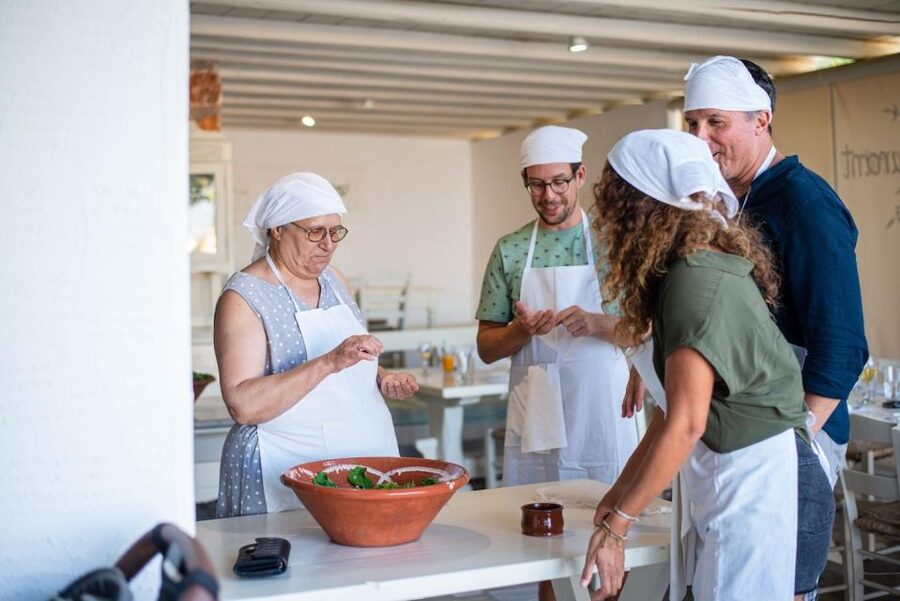
This is a great fit if you want an authentic Greek experience that feels social and hands-on. It works well for:
- couples who want a memorable night in Paros
- friends traveling together
- solo travelers who want an easy way to meet people while doing something real
It also suits people who like a structured class but still want freedom to learn by participating.
If you’re looking for a quiet, minimal-drama culinary lesson, the wine and dancing elements may feel like too much. Think of it as family-style cooking with celebration, not a museum tour of food.
Quick practical tips before you go
- Aim to arrive on time for check-in at Anezina Hotel & Village. The class flow is tight, and you’ll want to start with the aperitif.
- Wear something you can get a little messy in. You’ll be cooking, not just tasting.
- If you have dietary needs, mention them clearly so the menu can be adjusted. The class can accommodate needs like vegetarian and gluten free, but you still need to flag your situation.
- Don’t plan a complicated timeline right after. You eat a full meal with wine.
Should you book this Paros cooking class with Maria in Drios?
If you want a Paros experience that mixes cooking skills, good food, and local hospitality in one block, I think it’s an excellent choice.
Book it if:
- you want to cook six dishes with real guidance
- you like local drinks as part of the meal (Greek wine and souma)
- you want recipes to bring home, not just memories
Skip it if:
- you only want a low-key, no-drinking cooking session
- you don’t have a way to reach the meeting point in Drios
For most people visiting Paros, this hits that sweet spot: useful skills, a real dinner, and a fun group mood in a village setting.
FAQ
Where do we meet for the class in Drios?
You meet by looking for the Anezina Village sign in Drios on the main road. From there, check in with the staff once you reach Anezina Hotel & Village.
How long is the Greek cooking class?
The experience lasts about 3.5 hours.
What will we cook and eat during the 3.5 hours?
You will prepare a 6-dish meal: an appetizer, a fresh salad, three main dishes (one meat, one fish, and one vegetarian), and a dessert. After cooking, you sit down to eat the meal you made.
What drinks are included, and what is souma?
You get a welcome aperitif with Greek wine and souma. Souma is a traditional liquor made from the remnants of the winemaking process. Greek wine is also included with your meal.
Can they accommodate dietary restrictions like vegetarian or gluten free?
Yes. The menu can be changed for food allergies and dietary needs, including vegetarian, vegan, or gluten free.
How much does this experience cost?
The price is $136 per person.
Is it wheelchair accessible and offered in other languages?
The experience is wheelchair accessible. The class is offered in English and Greek.