REVIEW · PIANILLO
Amalfi: Make Fresh Pasta, Mozzarella & Tiramisù with wine
Book on GetYourGuide →Operated by Giovanni's cooking class · Bookable on GetYourGuide
Food with a view beats most Amalfi plans. This class takes place at Luna d’Agerola, an Amalfi farmhouse with Gulf of Salerno views, where you learn tiramisu from Nonna Maria’s recipe and the real steps behind mozzarella and fresh pasta. You’re not just watching either—you get your hands involved, and the meal you eat comes from what you make.
One consideration: you’re not picked up from your hotel. The farmhouse sits above the coast, and the meeting point can vary, so plan extra time to find it and make the drive (parking is included on the property).
In This Review
- Key moments worth planning for
- Luna d’Agerola: an Amalfi farmhouse with real family roots
- What you actually make: tiramisù, mozzarella, and fresh pasta
- How tiramisù becomes a lesson, not a dessert workshop
- Mozzarella on farm milk: the hands-on part everyone talks about
- Fresh pasta: grandma’s method for tagliatelle-style dough
- Wine tasting and the meal you get to enjoy
- Farm tour views: why the setting matters as much as the food
- Price and value: what $34 buys you in real terms
- Who should book this class (and who might not)
- Practicalities: parking, meeting point, and getting there on time
- Should you book Amalfi: Make Fresh Pasta, Mozzarella & Tiramisù with wine?
- FAQ
- How long does the cooking experience last?
- What is the price per person?
- What’s included in the experience?
- Is hotel pickup and drop-off included?
- Where do I meet the group?
- Do the instructors speak English?
- Can the experience accommodate food restrictions?
- Is wine part of the experience?
- Is free cancellation available?
- Is there a private group option?
Key moments worth planning for
- Nonna Maria tiramisù from scratch, made step-by-step with the family chef
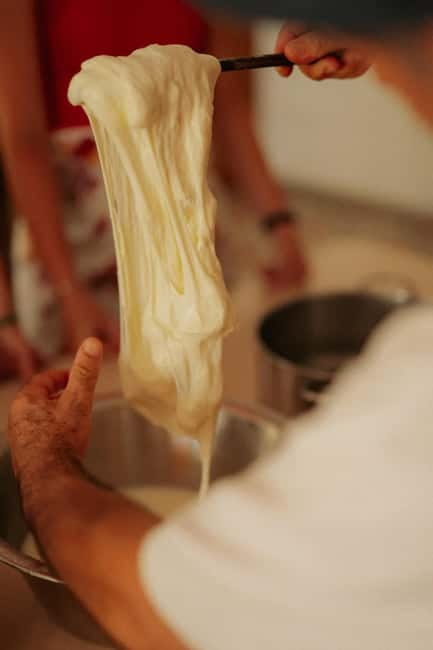
- Mozzarella with farm milk, including the hands-on stretching fun
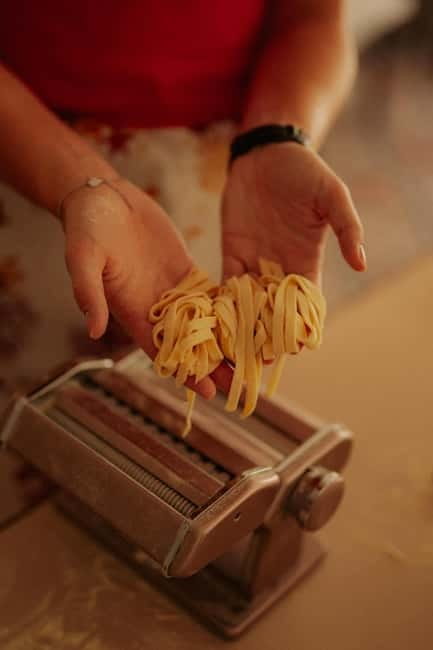
- Fresh pasta with grandma-style technique, aimed at helping you recreate it at home
- Farm tour + coast viewpoints, with a “slow down” feel in a working countryside place
- Organic wine tasting paired with the work you just did in the kitchen
- English support in the cooking class, with Italian hosts who guide clearly
Luna d’Agerola: an Amalfi farmhouse with real family roots
This experience is set in an authentic Amalfi farmhouse overlooking the upper part of the coast, with a view that stretches toward the Gulf of Salerno. It’s not just a scenic backdrop. The setting matters because you feel how this area is lived-in: the farm has been cared for for centuries by the Acampora family, and it even carried inspiration for poets, including Salvatore Di Giacomo and his Neapolitan poem Luna d’Agerola.
When you tour the farm here, it helps you connect the dots between “Italian food” and the place it comes from. You’ll see how the property is run and how the kitchen ties back to the land—especially since the class emphasizes organic products and ingredients grown/used on-site.
Also, you’ll notice the pace. This is the kind of activity that starts with atmosphere—then moves into technique—then ends with eating without rushing. That flow is one reason the class earns such strong ratings.
What you actually make: tiramisù, mozzarella, and fresh pasta
The menu is delightfully focused: tiramisu, mozzarella, and fresh pasta. In practice, that’s a great combo because each item teaches a different skill set.
- Tiramisu teaches you the “assembly logic”: timing, texture, and layering.
- Mozzarella teaches technique and touch: how milk becomes cheese, then how to work it.
- Fresh pasta teaches dough handling and cutting/portioning discipline: the part many people find intimidating becomes doable with guided steps.
And you’ll finish with an actual meal. Instead of “snacking for photos,” you sit down and eat the results of your work, plus you taste other organic products prepared by the farm team.
How tiramisù becomes a lesson, not a dessert workshop
The class starts with tiramisù, using a recipe attributed to Nonna Maria. That order is smart. Tiramisu needs time to set, so starting early gives you room to learn, participate, and not feel like you’re rushing toward the final taste.
You’ll work through the key steps at the right moments—mixing, layering, and handling components so the dessert holds its shape and tastes balanced. The effect is that you don’t just learn what goes in. You learn what it’s supposed to feel like as you build it.
This first segment also sets the tone for the rest of the class. The hosts keep things warm and funny, and you’ll see how they get even first-timers comfortable. I like that the experience doesn’t pretend you already know the kitchen language—English support is part of the setup, and the instructions are paced so you can follow.
Mozzarella on farm milk: the hands-on part everyone talks about
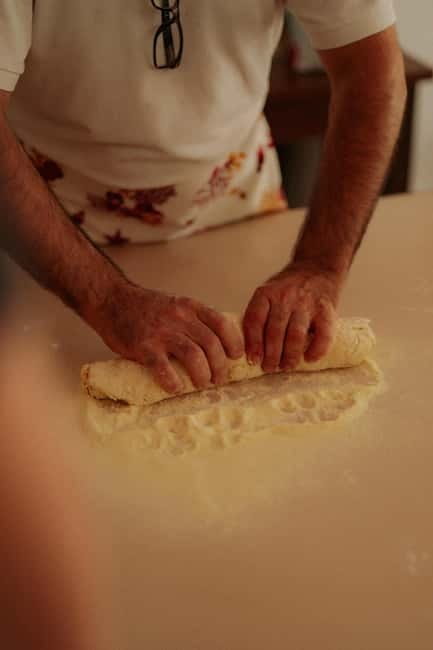
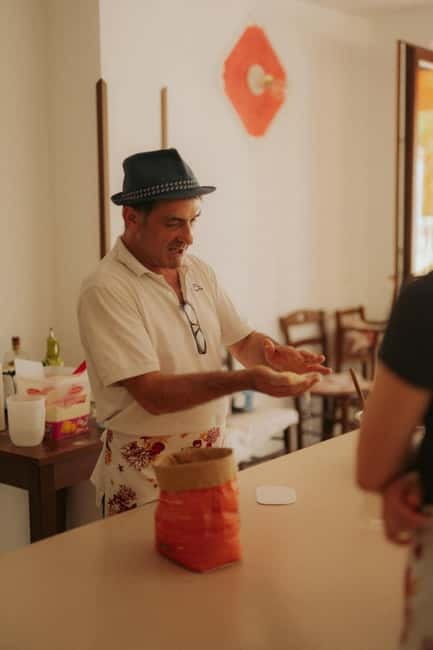
Next comes mozzarella, made with milk from their cow, raised and cared for on the farm. That detail isn’t marketing fluff. It changes the whole experience because you can smell and taste the freshness in what you’re learning.
You’ll participate in the process, and that includes the famous stretching stage. People remember this because it’s physical and oddly satisfying: you’re not only measuring ingredients—you’re shaping the cheese with your hands. Once you taste it, the difference between fresh mozzarella and what most people buy at home becomes obvious fast.
A plus in the room: the farm setup is spacious enough for people to move and work together, and many classes include communal participation where the chef shows the start, then helps you take over. You’ll also get the farm context while you work—so mozzarella doesn’t feel like an isolated “cooking trick.”
Fresh pasta: grandma’s method for tagliatelle-style dough
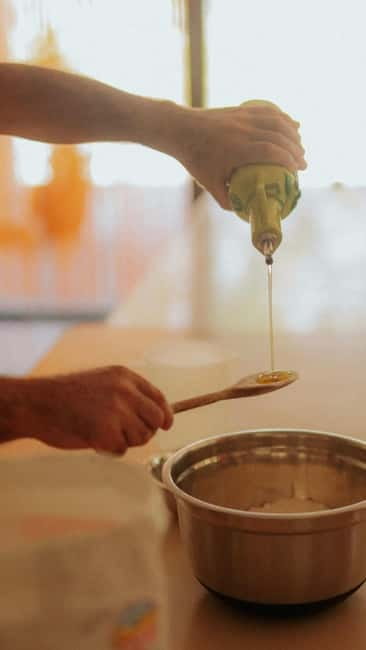
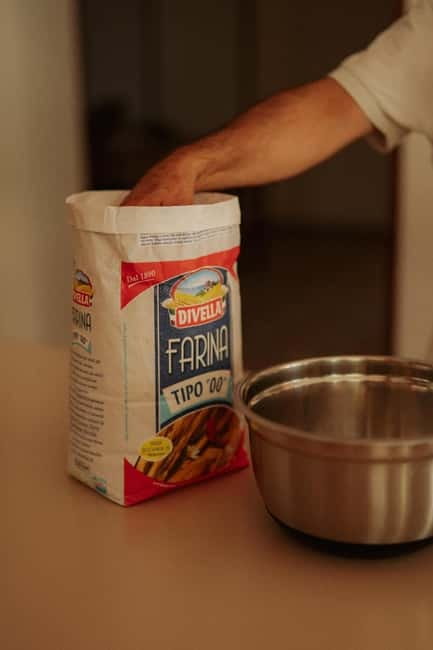
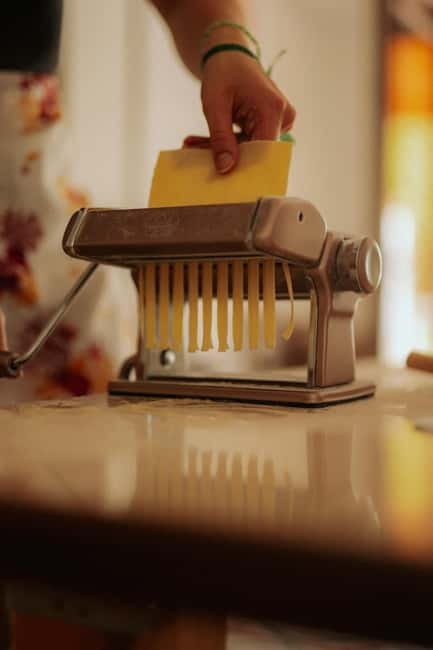
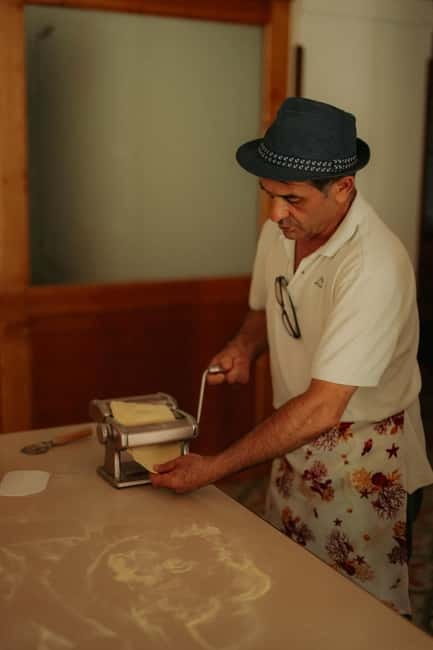
After dessert and cheese, you move into fresh pasta—often tagliatelle—made from scratch. The teaching focus here is practical dough technique: getting the texture right, handling the dough without panic, and learning how the shaping/cutting step fits into the recipe.
This is where the communal feel shows up again. You’ll likely work in turns or as a group, and you’ll get clear guidance on what to do next. The goal isn’t just to end with a plate—it’s to understand the logic so you can recreate it later.
One thing I appreciate about this kind of pasta lesson: it turns a “hard Italian food” into a repeatable skill. Many classes are best when you leave with muscle memory. Pasta dough is exactly that. If you care about cooking, you’ll walk away with confidence that you can tackle it again.
Wine tasting and the meal you get to enjoy
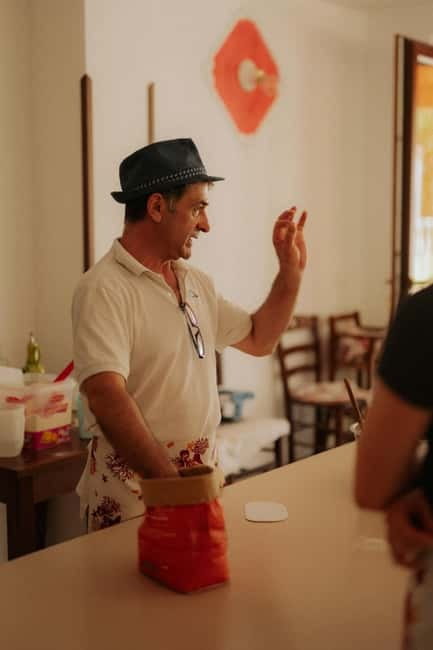
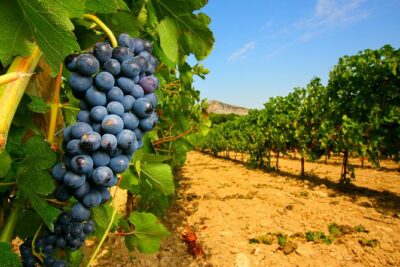
Between the cooking stations, you get to relax and taste the farm’s homemade organic wine. It’s included as an organic wine tasting, which makes the experience feel complete rather than like a short crash course that ends at the counter.
Then you eat. The meal is built from what you made plus other organic products from the farm. In other words, it’s not only about training; it’s about tasting what correct technique produces.
A nice touch: the food culture here comes with hospitality signals—people consistently mention how water is provided throughout the session, and how the hosts treat everyone like they belong in the kitchen for the day. You’ll also get the “eat what you made” satisfaction that turns cooking lessons into something you remember.
Farm tour views: why the setting matters as much as the food
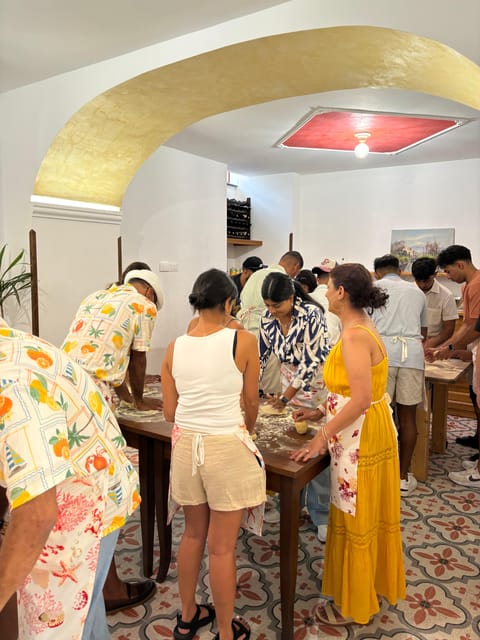
You’re also shown around the farm, and the views aren’t just scenery in the background. They’re part of how the day feels—slow, airy, and countryside-real. You’ll have moments where you step back, look out across the coast, and realize why this corner of Amalfi attracts artists and writers.
The poetic connection to the name Luna d’Agerola adds an extra layer. You’re not in a sterile cooking studio. You’re on land tied to an old family and old stories, and that makes the lesson feel less like a ticketed activity and more like a shared afternoon.
Some hosts also suggest a short digestion walk afterward, often toward a nearby castle viewpoint. It’s optional, but it’s the kind of add-on that turns the meal into a mini experience sweep across the coast.
Price and value: what $34 buys you in real terms
At $34 per person for a 1–2 hour experience, the value comes from what’s bundled in: farm tour, cooking lesson, organic wine tasting, and a meal that’s tied to what you made.
Many cooking classes charge for instruction but keep the eating light. Here, the meal is part of the experience arc. You also get ingredients linked to farm production, including mozzarella from farm milk and an emphasis on organic products.
So the math isn’t only “Is it cheap?” It’s “Did you get enough for your time?” For $34, you’re paying for hands-on technique plus a full sit-down payoff plus the setting, which is exactly what people tend to remember.
Private group options exist too, which can improve value if you’re a couple or a family who wants more time with the host and a more flexible pace.
Who should book this class (and who might not)
This works best for:
- Couples who want a hands-on Amalfi activity that feels authentic, not touristy
- Food lovers who want to learn technique they can repeat
- Families with kids who do well with interactive activities (the class is active, not just watch-and-learn)
- Solo travelers who want a social kitchen moment but also like the warmth of a family-style setup
You might think twice if:
- You don’t want to drive or manage navigation to a farmhouse above the coast
- You’re expecting a “quick tasting” style activity (this is hands-on cooking, with participation built in)
Practicalities: parking, meeting point, and getting there on time
No hotel pickup is included, so you’ll need to get there yourself. The meeting point can vary depending on the option booked, and that’s worth checking before you set off.
The good news is parking is included on the property, and that matters on the Amalfi coast where parking can be a headache. Still, the farmhouse can be a trek depending on where you’re starting from, so build in extra time rather than squeezing your schedule.
If you’re not already comfortable driving on winding roads, plan for it. Many people solve this with a rental car and a relaxed arrival window. Bring a little patience and you’ll enjoy the day more.
Should you book Amalfi: Make Fresh Pasta, Mozzarella & Tiramisù with wine?
Yes, if you want a high-value, hands-on Amalfi experience that mixes cooking technique with farm atmosphere and real views. The combination is unusually strong: tiramisù teaches assembly, mozzarella gives you a physical technique lesson, and fresh pasta makes you leave with a skill you can repeat.
Book it especially if you care about authenticity—this isn’t just a cooking demo. It’s a family-run farmhouse day where you work with what the farm provides, then sit down to eat it.
If the idea of driving to a farmhouse above the coast sounds stressful, then choose your timing carefully or consider whether another Amalfi activity fits your energy better. For the right fit, this class is the kind of afternoon that turns into a story you keep telling.
FAQ
How long does the cooking experience last?
The duration is listed as 1–2 hours. Check the available starting times when you book.
What is the price per person?
The price is $34 per person.
What’s included in the experience?
Included are an Amalfitan chef, a farm tour, organic wine tasting, the cooking lesson, a meal, and parking.
Is hotel pickup and drop-off included?
No, hotel pickup and drop-off are not included.
Where do I meet the group?
The meeting point may vary depending on the option you booked.
Do the instructors speak English?
Yes. The instructor speaks Italian and English.
Can the experience accommodate food restrictions?
Yes, you must advise them at the time of booking if you have food restrictions.
Is wine part of the experience?
Yes. Organic wine tasting is included.
Is free cancellation available?
Yes. You can cancel up to 24 hours in advance for a full refund.
Is there a private group option?
Yes. Private group availability is offered.